


The Effect of Post-Exercise Cryotherapy on Recovery Characteristics: A Systematic Review and Meta-Analysis
- PMID: 26413718
- PMCID: PMC4586380
- DOI: 10.1371/journal.pone.0139028
The Effect of Post-Exercise Cryotherapy on Recovery Characteristics: A Systematic Review and Meta-Analysis
Abstract
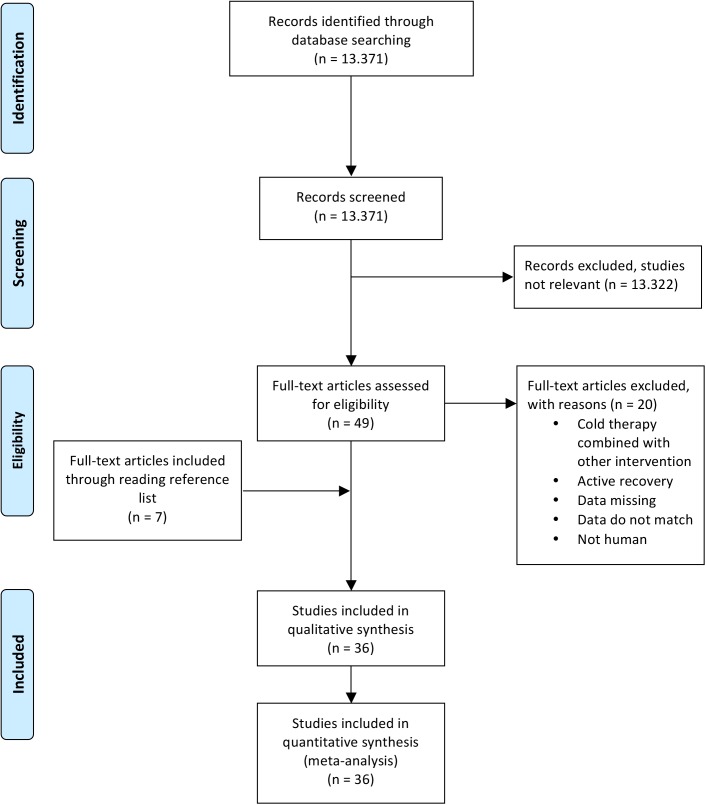
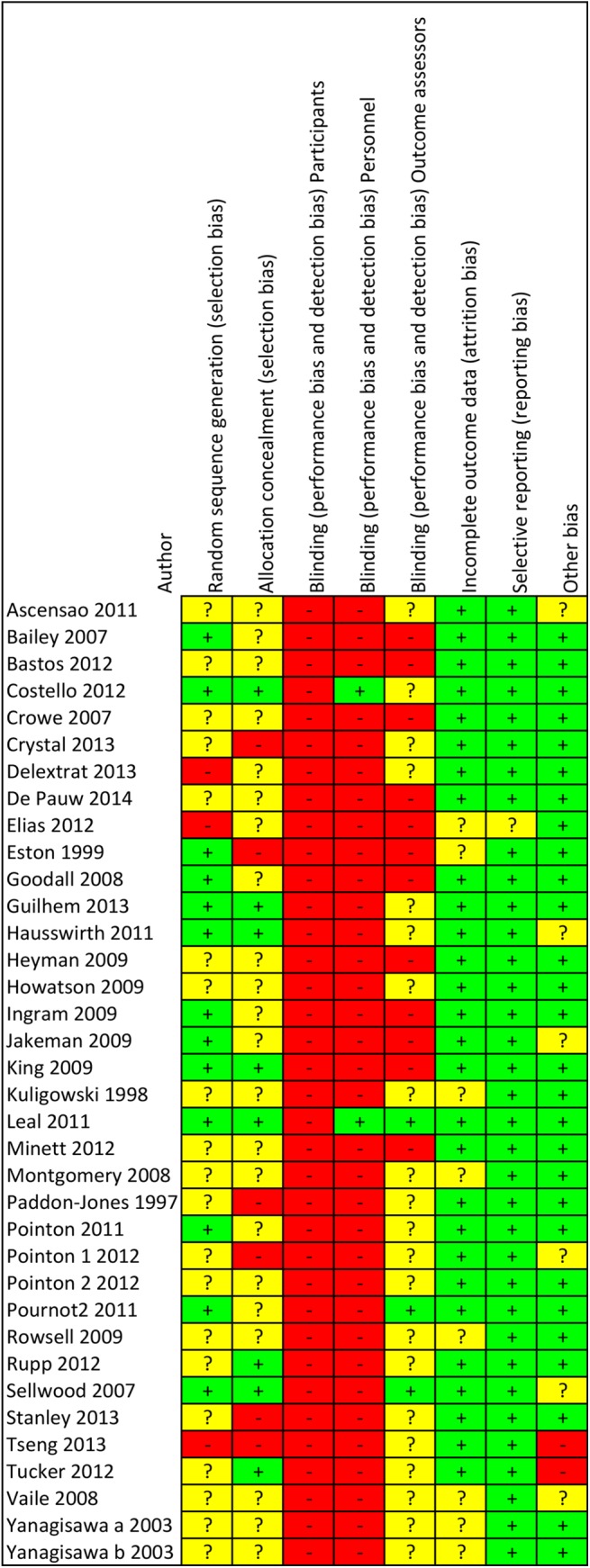
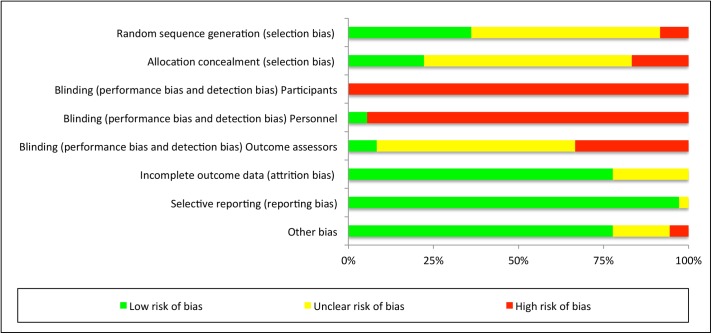
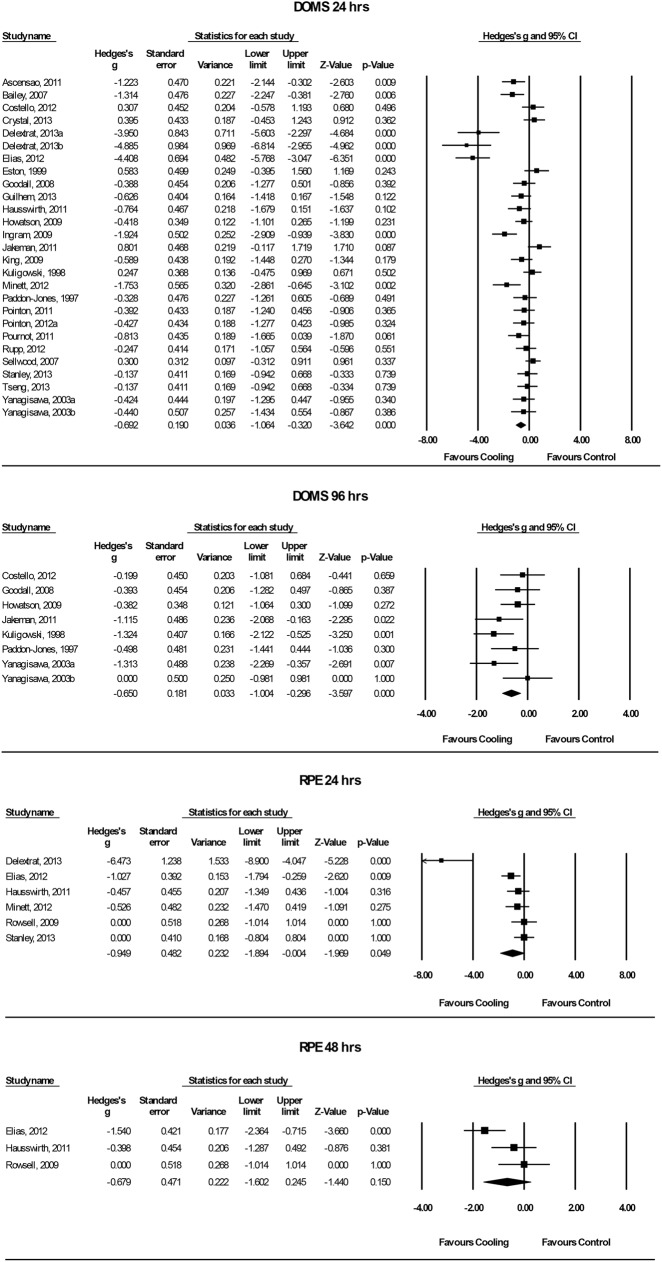
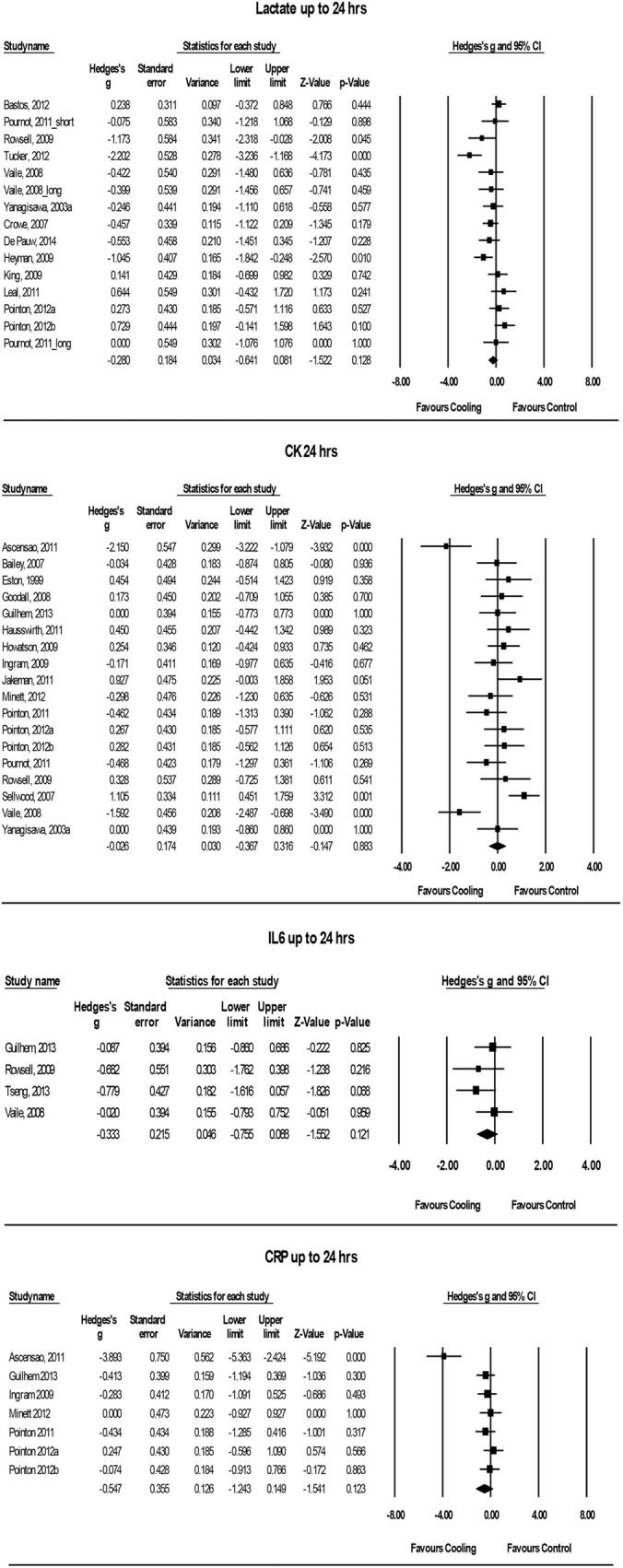
The aim of this review and meta-analysis was to critically determine the possible effects of different cooling applications, compared to non-cooling, passive post-exercise strategies, on recovery characteristics after various, exhaustive exercise protocols up to 96 hours (hrs). A total of n = 36 articles were processed in this study. To establish the research question, the PICO-model, according to the PRISMA guidelines was used. The Cochrane's risk of bias tool, which was used for the quality assessment, demonstrated a high risk of performance bias and detection bias. Meta-analyses of subjective characteristics, such as delayed-onset muscle soreness (DOMS) and ratings of perceived exertion (RPE) and objective characteristics like blood plasma markers and blood plasma cytokines, were performed. Pooled data from 27 articles revealed, that cooling and especially cold water immersions affected the symptoms of DOMS significantly, compared to the control conditions after 24 hrs recovery, with a standardized mean difference (Hedges' g) of -0.75 with a 95% confidence interval (CI) of -1.20 to -0.30. This effect remained significant after 48 hrs (Hedges' g: -0.73, 95% CI: -1.20 to -0.26) and 96 hrs (Hedges' g: -0.71, 95% CI: -1.10 to -0.33). A significant difference in lowering the symptoms of RPE could only be observed after 24 hrs of recovery, favouring cooling compared to the control conditions (Hedges' g: -0.95, 95% CI: -1.89 to -0.00). There was no evidence, that cooling affects any objective recovery variable in a significant way during a 96 hrs recovery period.
Conflict of interest statement
Figures
References
Publication types
MeSH terms
Substances
LinkOut - more resources
Full Text Sources
Other Literature Sources
Medical
