


The Complete Genome Phylogeny of Geographically Distinct Dengue Virus Serotype 2 Isolates (1944-2013) Supports Further Groupings within the Cosmopolitan Genotype
- PMID: 26414178
- PMCID: PMC4587552
- DOI: 10.1371/journal.pone.0138900
The Complete Genome Phylogeny of Geographically Distinct Dengue Virus Serotype 2 Isolates (1944-2013) Supports Further Groupings within the Cosmopolitan Genotype
Abstract
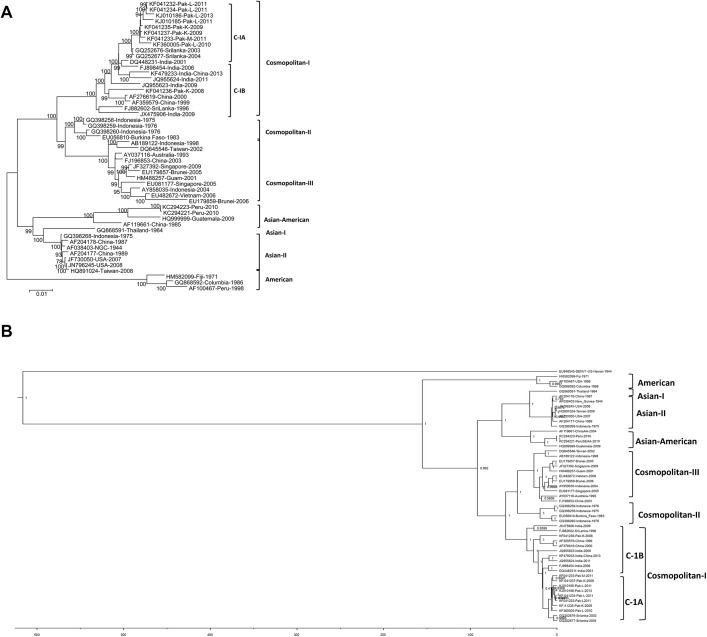
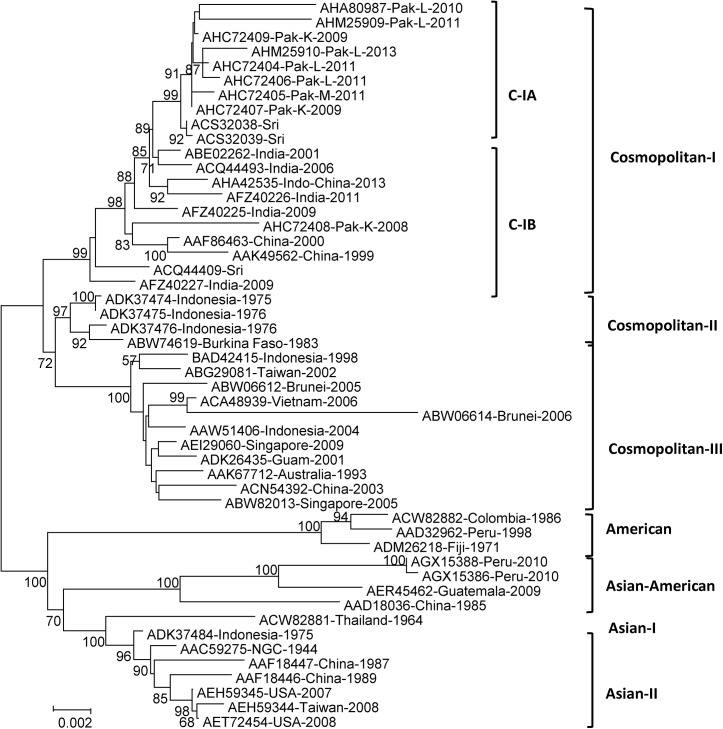
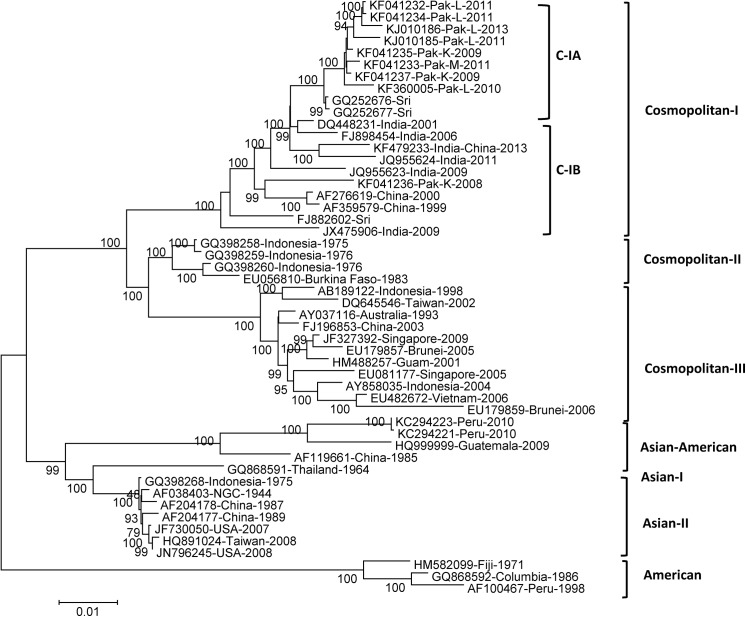
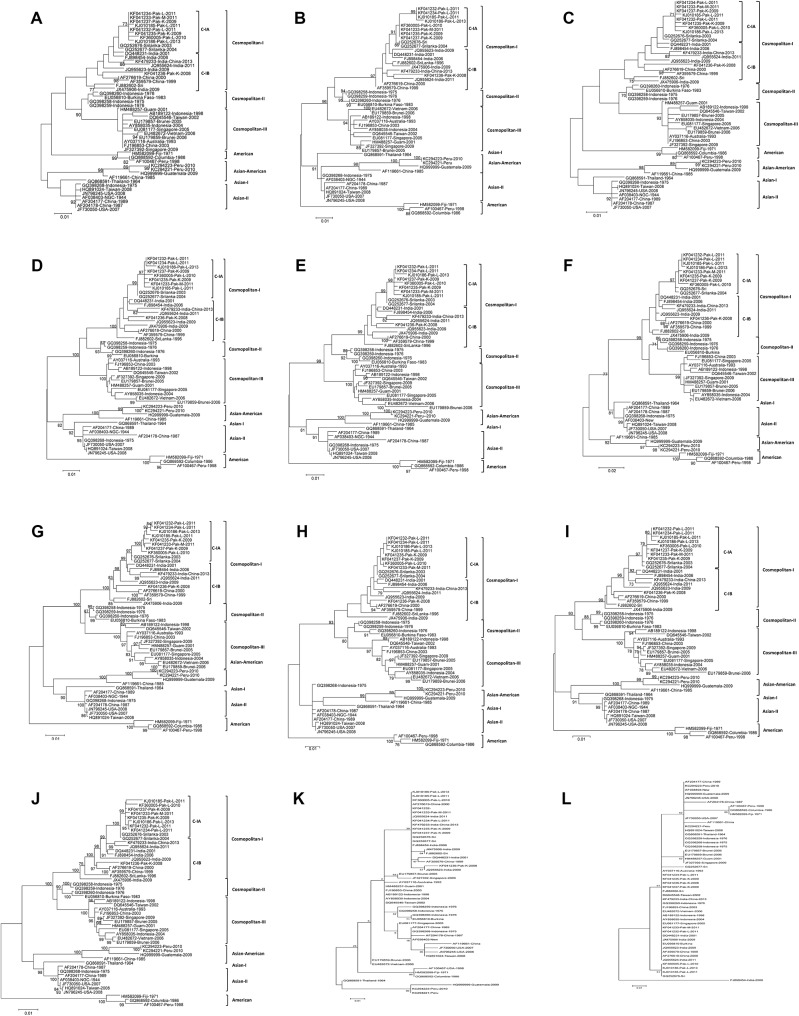
Dengue virus serotype 2 (DENV-2) isolates have been implicated in deadly outbreaks of dengue fever (DF) and dengue hemorrhagic fever (DHF) in several regions of the world. Phylogenetic analysis of DENV-2 isolates collected from particular countries has been performed using partial or individual genes but only a few studies have examined complete whole-genome sequences collected worldwide. Herein, 50 complete genome sequences of DENV-2 isolates, reported over the past 70 years from 19 different countries, were downloaded from GenBank. Phylogenetic analysis was conducted and evolutionary distances of the 50 DENV-2 isolates were determined using maximum likelihood (ML) trees or Bayesian phylogenetic analysis created from complete genome nucleotide (nt) and amino acid (aa) sequences or individual gene sequences. The results showed that all DENV-2 isolates fell into seven main groups containing five previously defined genotypes. A Cosmopolitan genotype showed further division into three groups (C-I, C-II, and C-III) with the C-I group containing two subgroups (C-IA and C-IB). Comparison of the aa sequences showed specific mutations among the various groups of DENV-2 isolates. A maximum number of aa mutations was observed in the NS5 gene, followed by the NS2A, NS3 and NS1 genes, while the smallest number of aa substitutions was recorded in the capsid gene, followed by the PrM/M, NS4A, and NS4B genes. Maximum evolutionary distances were found in the NS2A gene, followed by the NS4A and NS4B genes. Based on these results, we propose that genotyping of DENV-2 isolates in future studies should be performed on entire genome sequences in order to gain a complete understanding of the evolution of various isolates reported from different geographical locations around the world.
Conflict of interest statement
Figures
References
-
- Rice CM, Lenches EM, Eddy SR, Shin SJ, Sheets RL, Strauss JH (1985) Nucleotide sequence of yellow fever virus: Implications for flavivirus gene expression and evolution. Science 229: 726–733. - PubMed
-
- Posada D, Crandall K (1998) MODELTEST: Testing the model of DNA substitution. Bioinformatics 14: 817–18. - PubMed
Publication types
MeSH terms
Substances
LinkOut - more resources
Full Text Sources
Other Literature Sources
Research Materials
Miscellaneous
