


Glycolysis controls the induction of human regulatory T cells by modulating the expression of FOXP3 exon 2 splicing variants
- PMID: 26414764
- PMCID: PMC4868085
- DOI: 10.1038/ni.3269
Glycolysis controls the induction of human regulatory T cells by modulating the expression of FOXP3 exon 2 splicing variants
Abstract
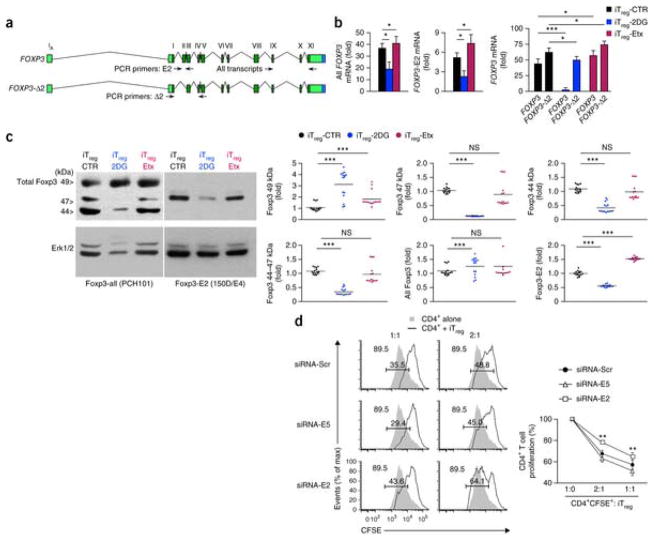
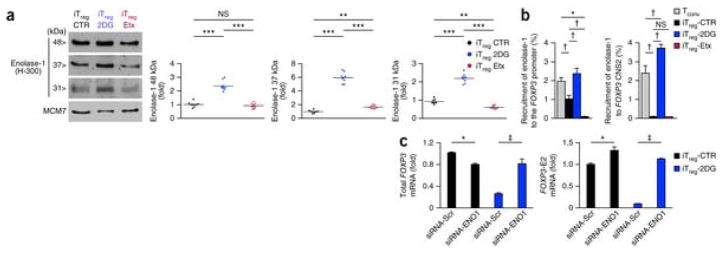
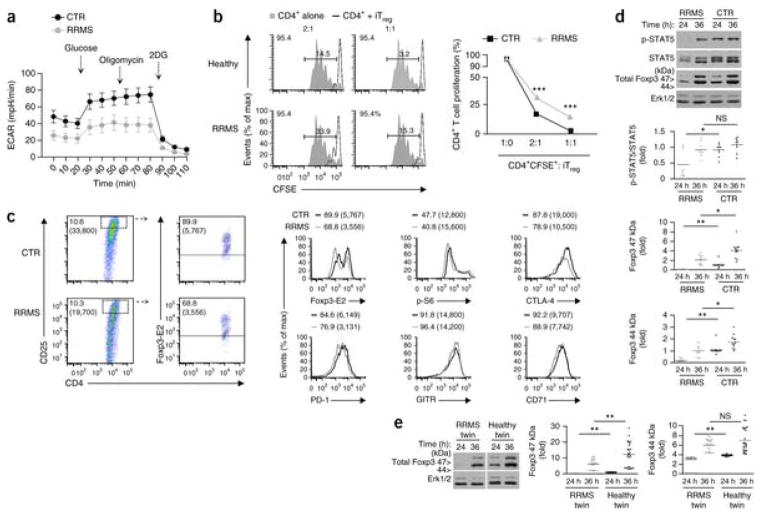
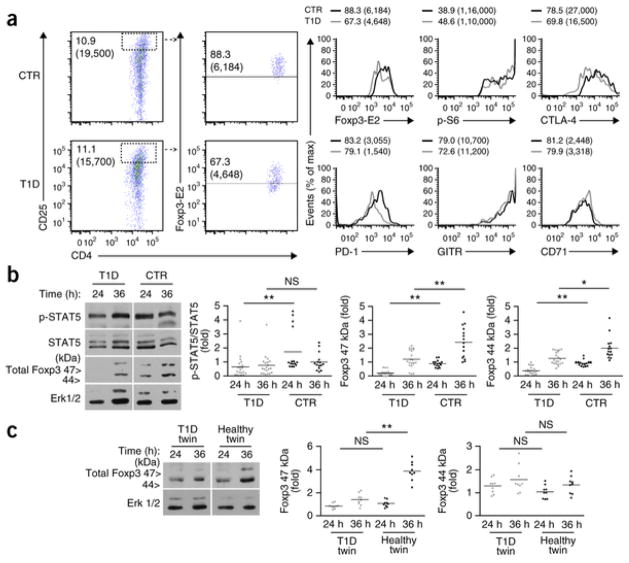
Human regulatory T cells (T(reg) cells) that develop from conventional T cells (T(conv) cells) following suboptimal stimulation via the T cell antigen receptor (TCR) (induced T(reg) cells (iT(reg) cells)) express the transcription factor Foxp3, are suppressive, and display an active proliferative and metabolic state. Here we found that the induction and suppressive function of iT(reg) cells tightly depended on glycolysis, which controlled Foxp3 splicing variants containing exon 2 (Foxp3-E2) through the glycolytic enzyme enolase-1. The Foxp3-E2-related suppressive activity of iT(reg) cells was altered in human autoimmune diseases, including multiple sclerosis and type 1 diabetes, and was associated with impaired glycolysis and signaling via interleukin 2. This link between glycolysis and Foxp3-E2 variants via enolase-1 shows a previously unknown mechanism for controlling the induction and function of T(reg) cells in health and in autoimmunity.
Conflict of interest statement
Competing financial interests:
The authors declare no competing financial interests.
Figures
References
-
- Ohkura N, Kitagawa Y, Sakaguchi S. Development and maintenance of regulatory T cells. Immunity. 2013;38:414–423. - PubMed
-
- Gavin MA, et al. Foxp3-dependent programme of regulatory T-cell differentiation. Nature. 2007;445:771–775. - PubMed
-
- Lin W, et al. Regulatory T cell development in the absence of functional Foxp3. Nat Immunol. 2007;8:359–368. - PubMed
-
- Bilate AM, Lafaille JJ. Induced CD4+Foxp3+ regulatory T cells in immune tolerance. Annu Rev Immunol. 2012;30:733–758. - PubMed
Publication types
MeSH terms
Substances
Grants and funding
LinkOut - more resources
Full Text Sources
Other Literature Sources
Medical
Miscellaneous
