


The effects of arginase inhibitor on lung oxidative stress and inflammation caused by pneumoperitoneum in rats
- PMID: 26415531
- PMCID: PMC4587728
- DOI: 10.1186/s12871-015-0112-y
The effects of arginase inhibitor on lung oxidative stress and inflammation caused by pneumoperitoneum in rats
Erratum in
-
Erratum to: The effects of arginase inhibitor on lung oxidative stress and inflammation caused by pneumoperitoneum in rats.BMC Anesthesiol. 2016 Dec 13;16(1):124. doi: 10.1186/s12871-016-0288-9. BMC Anesthesiol. 2016. PMID: 27964711 Free PMC article. No abstract available.
Abstract
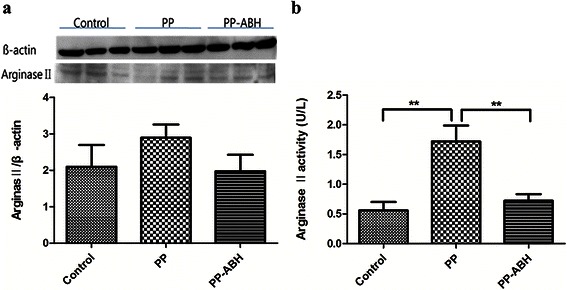
Background: Pneumoperitoneum-induced oxidative stress and organ injury are known to be associated with nitric oxide (NO) inactivation. Because arginase competes with NO synthase (NOS) for a common substrate, L-arginine, arginase inhibition may increase NO bioavailability. Therefore, we evaluated the ability of the arginase inhibitor, 2 (S)-amino-6-boronohexanoic acid (ABH), to attenuate pneumoperitoneum-induced decrease of NO bioavailability and lung injury.
Methods: Thirty rats were randomly divided into the following groups: 1) the PP-ABH group received a subcutaneous injection of ABH (5 mg/kg) 1 h before induction of pneumoperitoneum (insufflation to intraperitoneal pressure of 15 mmHg for 60 min); 2) the PP group received saline by subcutaneous injection 1 h before induction of pneumoperitoneum; and 3) the control group received saline by subcutaneous injection before a sham procedure with no gas insufflation. After desufflation, blood was collected to determine levels of plasma nitrite, NOS, inflammatory cytokines, and malondialdehyde, a marker of oxidative stress. Lung tissue was obtained for histological evaluation.
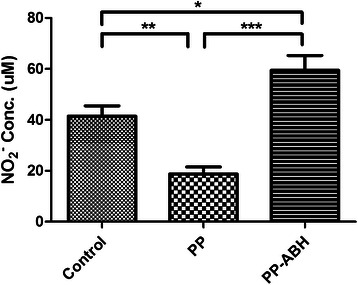
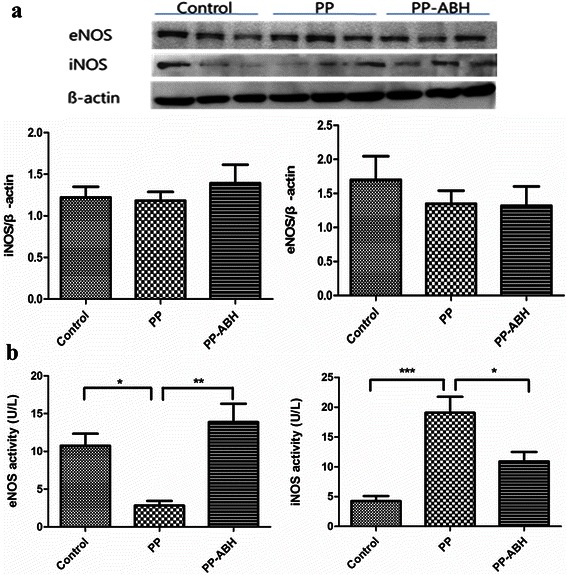
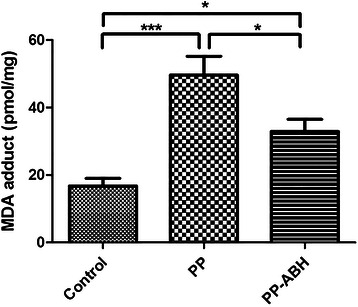
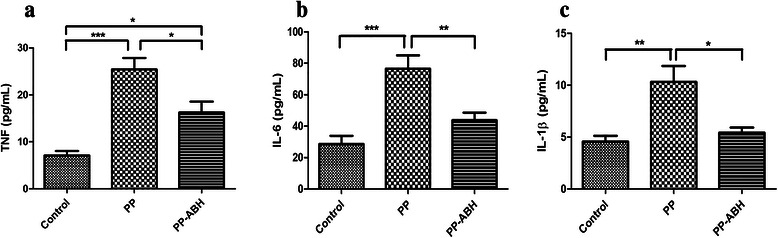
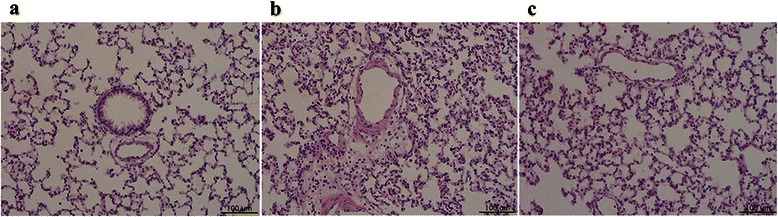
Results: We found that plasma nitrite levels were lower in the PP group and higher in the PP-ABH group, compared with controls (P <0.01 and P <0.05, respectively). In the PP group, endothelial NOS activity was decreased and inducible NOS activity was increased compared with the PP-ABH and control groups. Malondialdehyde levels increased 3-fold in the PP group and 2-fold in the PP-ABH group compared with controls. Tumor necrosis factor-α, interleukin-6, and interleukin-1ß levels were elevated in the PP group compared to the control group, but the increase in cytokine production was attenuated or blocked in the PP-ABH group. Lung injury scores were 4.8-fold higher in the PP group and 2-fold higher in the PP-ABH group compared with controls (P <0.001 and P <0.01, respectively).
Discussion: Pneumoperitoneum decreases NO bioavailability and increases the inflammation cytokines, resulting in organ injuries. Inhibition of arginase activity could maintain NO bioavailability by attenuating pneumoperitoneum-induced changes in NOS activity. In addition, arginase inhibition attenuated the oxidative stress and inflammation and decreased the severity of lung injury caused by pneumoperitoneum.
Conclusions: By increasing NO bioavailability and suppressing oxidative stress and inflammation, pretreatment with an arginase inhibitor may protect against lung injury caused by pneumoperitoneum.
Figures
References
-
- Koivusalo AM, Kellokumpu I, Ristkari S, Lindgren L. Splanchnic and renal deterioration during and after laparoscopic cholecystectomy: a comparison of the carbon dioxide pneumoperitoneum and the abdominal wall lift method. Anesth Analg. 1997;85:886–91. doi: 10.1213/00000539-199710000-00032. - DOI - PubMed
Publication types
MeSH terms
Substances
LinkOut - more resources
Full Text Sources
Other Literature Sources
Miscellaneous
