


Associations of infant milk feed type on early postnatal growth of offspring exposed and unexposed to gestational diabetes in utero
- PMID: 26415764
- PMCID: PMC5290064
- DOI: 10.1007/s00394-015-1057-0
Associations of infant milk feed type on early postnatal growth of offspring exposed and unexposed to gestational diabetes in utero
Abstract
Purpose: Infants on prolonged breastfeeding are known to grow slower during the first year of life. It is still unclear if such effects are similar in offspring exposed to gestational diabetes (GDM) in utero. We examined the associations of infant milk feeding on postnatal growth from birth till 36 months of age in offspring exposed and unexposed to GDM.
Methods: Pregnant mothers undertook 75 g 2-h oral glucose tolerance tests at 26-28 weeks of gestation for GDM diagnosis. Up to 9 measurements of offspring weight and length were collected from birth till 36 months, and interviewer-administered questionnaires were used to ascertain the duration of breastfeeding.
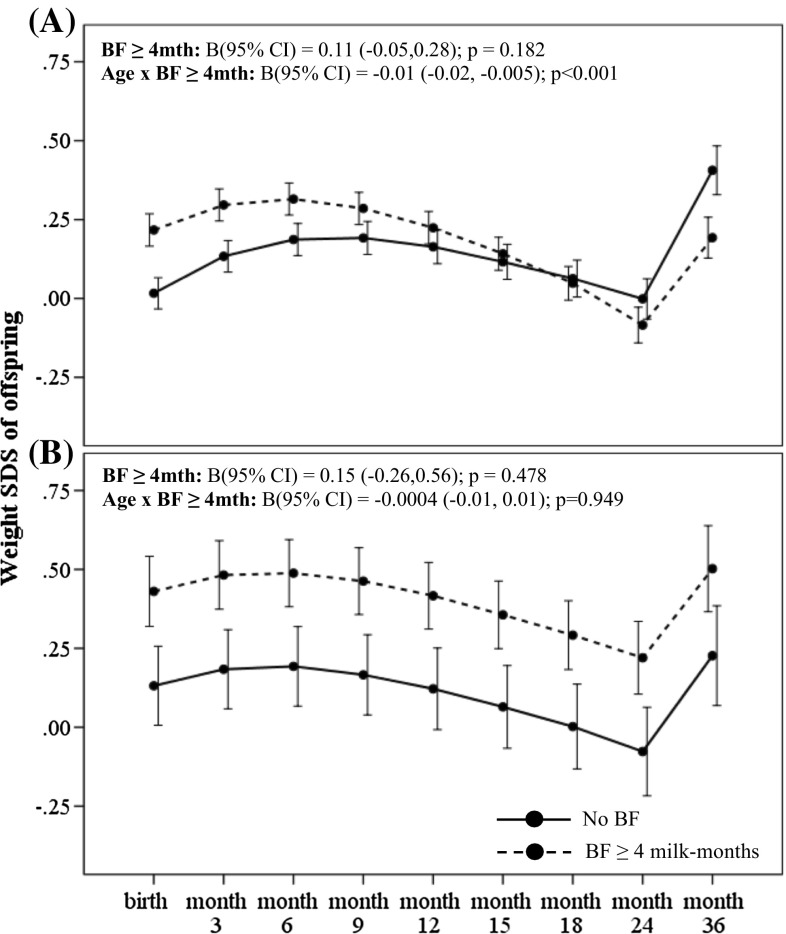
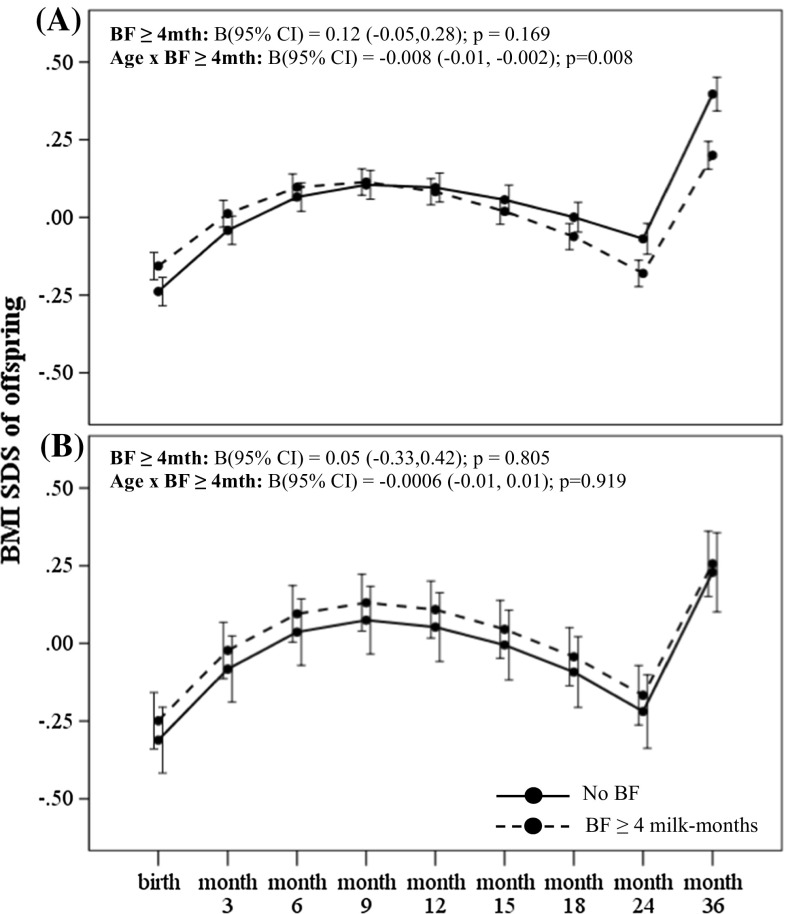
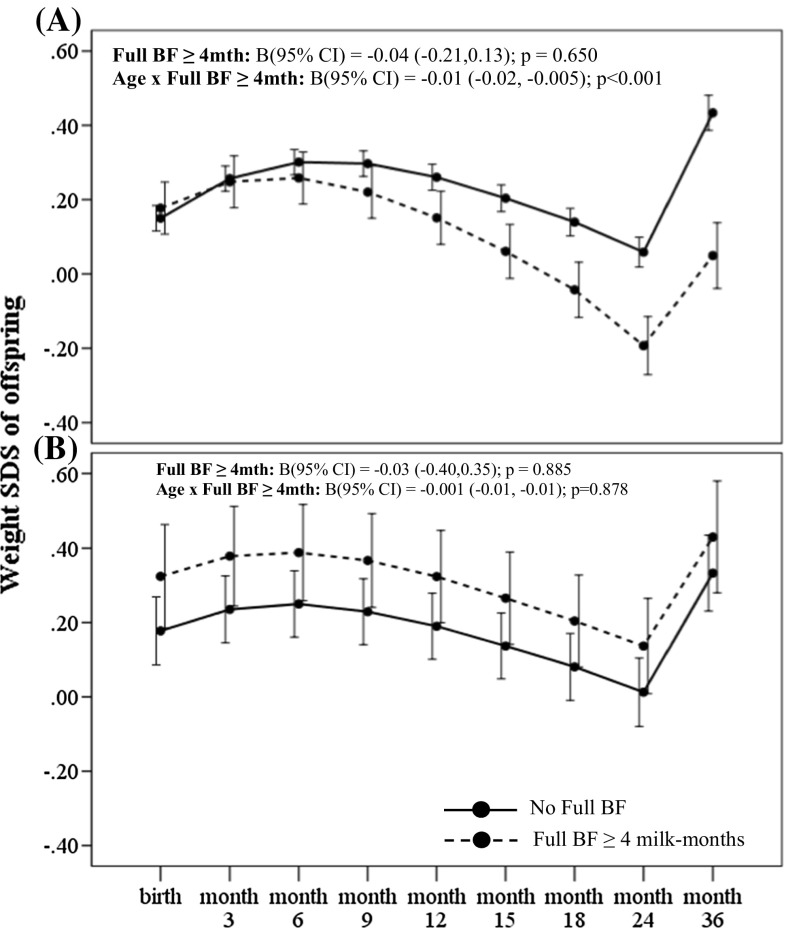
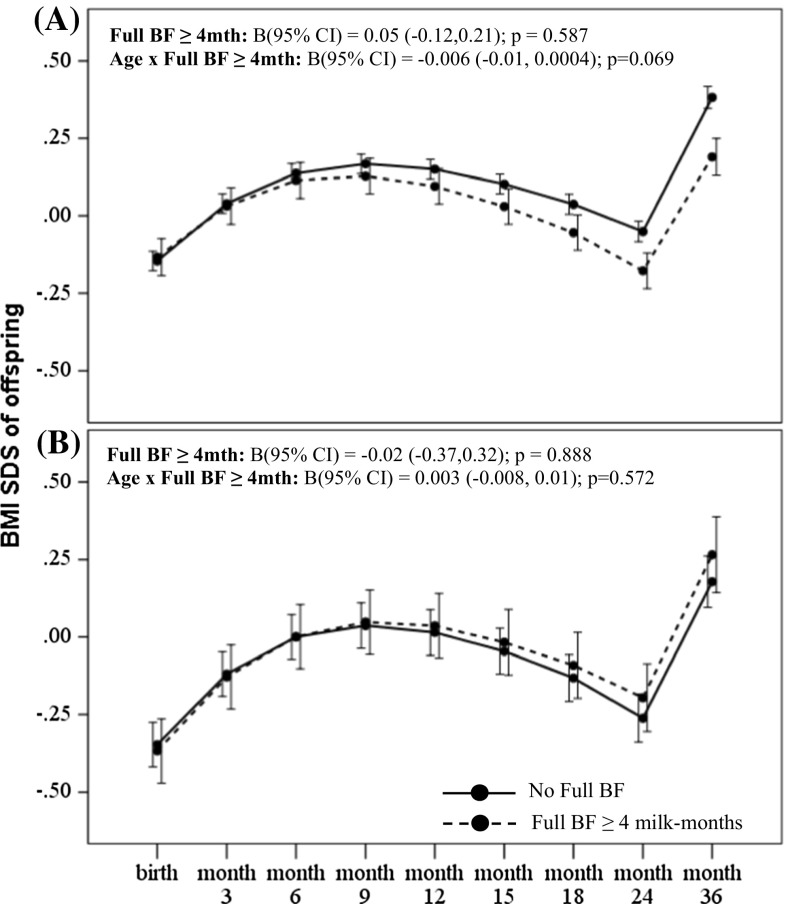
Results: There was a statistically significant interaction between GDM status and breastmilk intake by any (p interaction = 0.038) or exclusive/predominant breastfeeding (p interaction = 0.035) for the outcome of conditional weight gain. In offspring of non-GDM mothers (n = 835), greater breastmilk intake (BF ≥ 4 milk months) was associated with lower conditional gains in weight [B (95 % CI) -0.48 (-0.58, -0.28); p < 0.001] within the first year of life, as well as decreasing weight SDS velocity [-0.01 (-0.02, -0.005); p < 0.001] and BMI SDS velocity [-0.008 (0.01, -0.002); p = 0.008] across age in the first 36 months. In offspring of GDM mothers (n = 181), however, greater breastmilk intake was associated with increased conditional gains in weight [0.72 (0.23, 1.20); p = 0.029] and BMI SDS [0.49 (0.04, 0.95); p = 0.04] in the first 6 months and did not demonstrate the decreasing weight and BMI SDS velocity observed in offspring of non-GDM mothers.
Conclusions: The reduced weight gain in the first year of life conferred by greater breastmilk intake in non-GDM children was not observed in GDM children.
Clinical trial registration: This study is registered under the Clinical Trials identifier NCT01174875; http://www.clinicaltrials.gov/ct2/show/NCT01174875?term=GUSTO&rank=2 .
Keywords: Gestational diabetes; Infant milk feeding; Offspring growth.
Conflict of interest statement
Peter D. Gluckman, Keith M. Godfrey and Yap-Seng Chong have received reimbursement for speaking at conferences sponsored by companies selling nutritional products. They are part of an academic consortium that has received research funding from Abbot Nutrition, Nestec and Danone. No other authors declare a conflict of interest.
Figures
References
-
- Aris IM, Soh SE, Tint MT, Liang S, Chinnadurai A, Saw SM, Rajadurai VS, Kwek K, Meaney MJ, Godfrey KM, Gluckman PD, Yap FK, Chong YS, Lee YS. Effect of maternal glycemia on neonatal adiposity in a multiethnic Asian birth cohort. J Clin Endocrinol Metab. 2014;99(1):240–247. doi: 10.1210/jc.2013-2738. - DOI - PubMed
MeSH terms
Substances
Associated data
Grants and funding
LinkOut - more resources
Full Text Sources
Other Literature Sources
Medical
Miscellaneous
