Feasibility of Using the Mosquito Blood Meal for Rapid and Efficient Human and Animal Virus Surveillance and Discovery
- PMID: 26416112
- PMCID: PMC4674262
- DOI: 10.4269/ajtmh.15-0440
Feasibility of Using the Mosquito Blood Meal for Rapid and Efficient Human and Animal Virus Surveillance and Discovery
Abstract
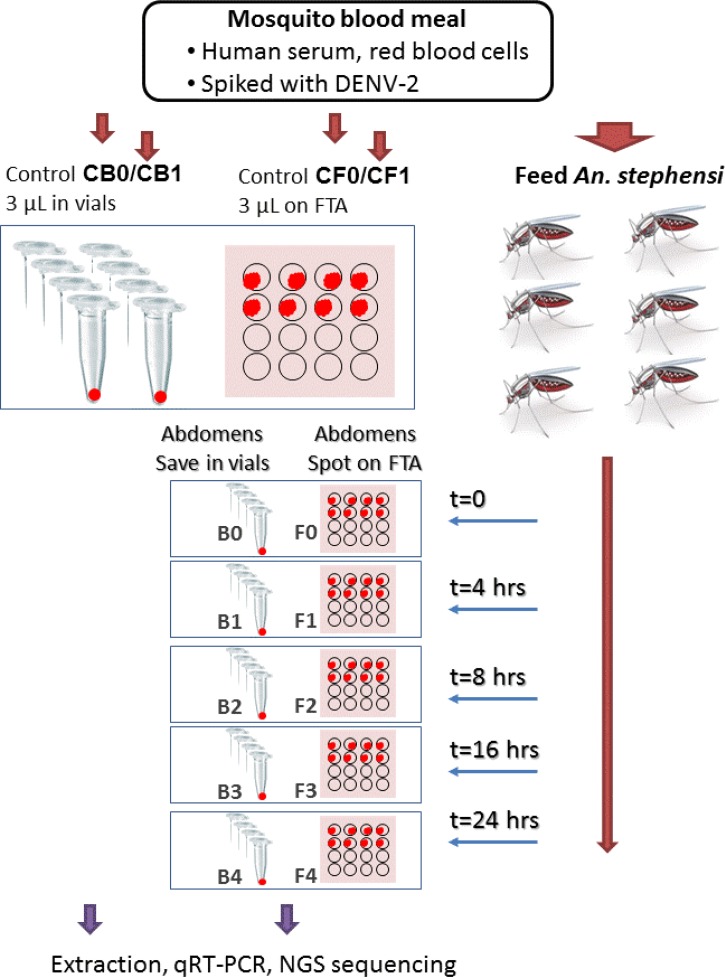
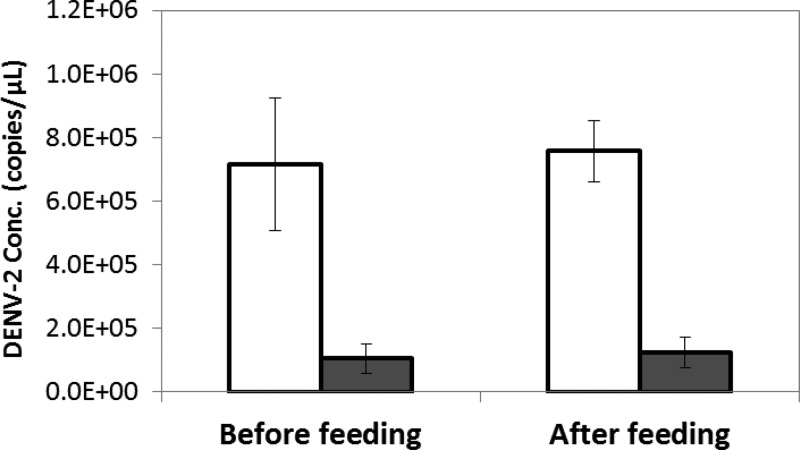
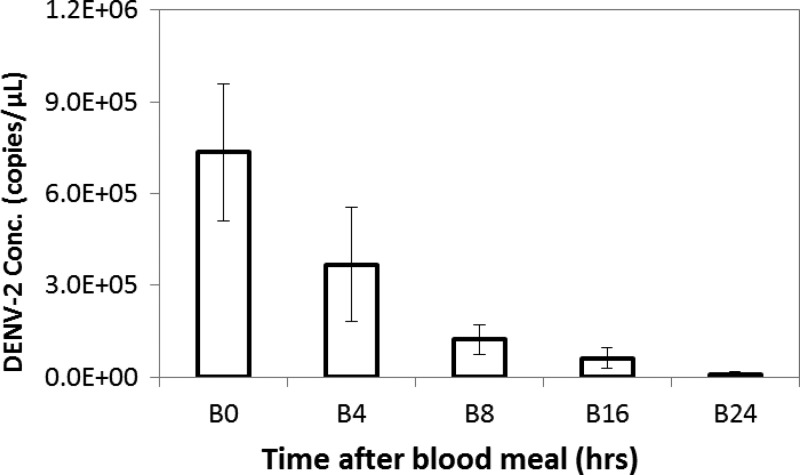
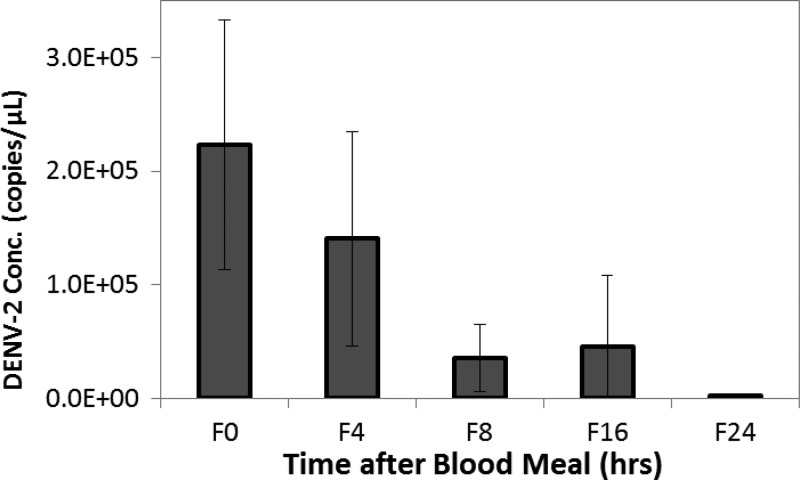
Mosquito blood meals taken from humans and animals potentially represent a useful source of blood for the detection of blood-borne pathogens. In this feasibility study, Anopheles stephensi mosquitoes were fed with blood meals spiked with dengue virus type 2 (DENV-2) and harvested at serial time points. These mosquitoes are not competent vectors, and the virus is not expected to replicate. Ingested blood was spotted on Whatman FTA cards and stored at room temperature. Mosquito abdomens were removed and stored at -80°C. Control blood meal aliquots were stored in vials or applied onto FTA cards. After 4 weeks of storage, the samples were extracted using beadbeating and QIAamp Viral RNA kit (Qiagen Sciences, Germantown, MD). Recovered viral RNA was analyzed by DENV-2 TaqMan RT-PCR assay and next-generation sequencing (NGS). Overall viral RNA recovery efficiency was 15% from the directly applied dried blood spots and approximately 20% or higher for dried blood spots made by blotting mosquito midgut on FTA cards. Viral RNA in mosquito-ingested blood decreases over time, but remains detectable 24 hours after blood feeding. The viral sequences in FTA-stored specimens can be maintained at room temperature. The strategy has the potential utility in expedited zoonotic virus discovery and blood-borne pathogen surveillance.
© The American Society of Tropical Medicine and Hygiene.
Figures
References
-
- Knope KE, Doggett SL, Kurucz N, Johansen CA, Nicholson J, Feldman R, Sly A, Hobby M, El Saadi D, Muller M, Jansen CC, Muzari OM. Arboviral diseases and malaria in Australia, 2011–12: annual report of the National Arbovirus and Malaria Advisory Committee. Commun Dis Intell Q Rep. 2014;38:E122–E142. - PubMed
-
- Tolle MA. Mosquito-borne diseases. Curr Probl Pediatr Adolesc Health Care. 2009;39:97–140. - PubMed
-
- Guillaumot L. Arboviruses and their vectors in the Pacific—status report. Pac Health Dialog. 2005;12:45–52. - PubMed
Publication types
MeSH terms
Substances
LinkOut - more resources
Full Text Sources
Other Literature Sources