


Dairy products consumption and metabolic syndrome in adults: systematic review and meta-analysis of observational studies
- PMID: 26416233
- PMCID: PMC4586521
- DOI: 10.1038/srep14606
Dairy products consumption and metabolic syndrome in adults: systematic review and meta-analysis of observational studies
Abstract
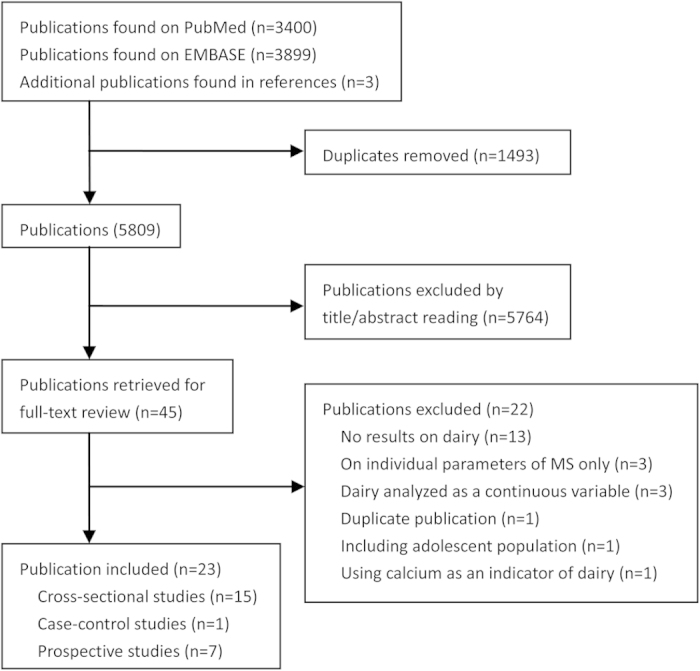
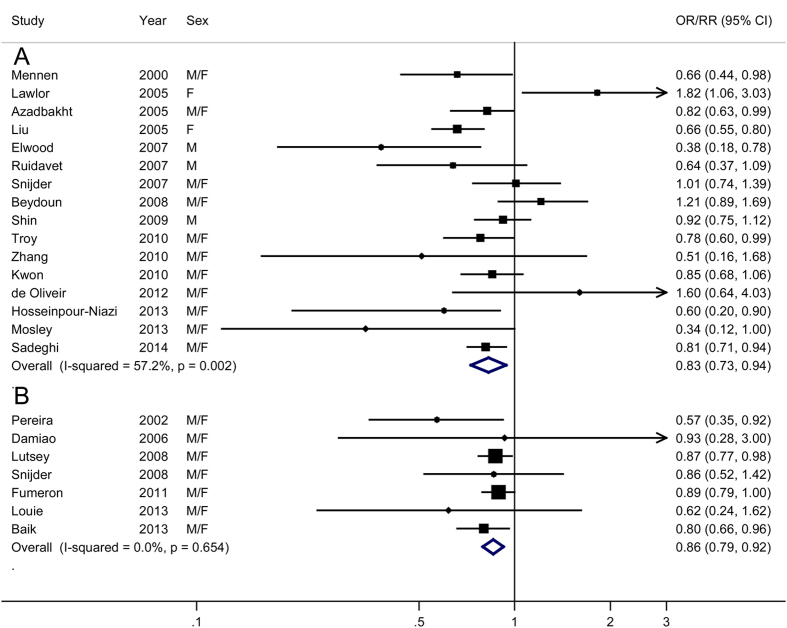
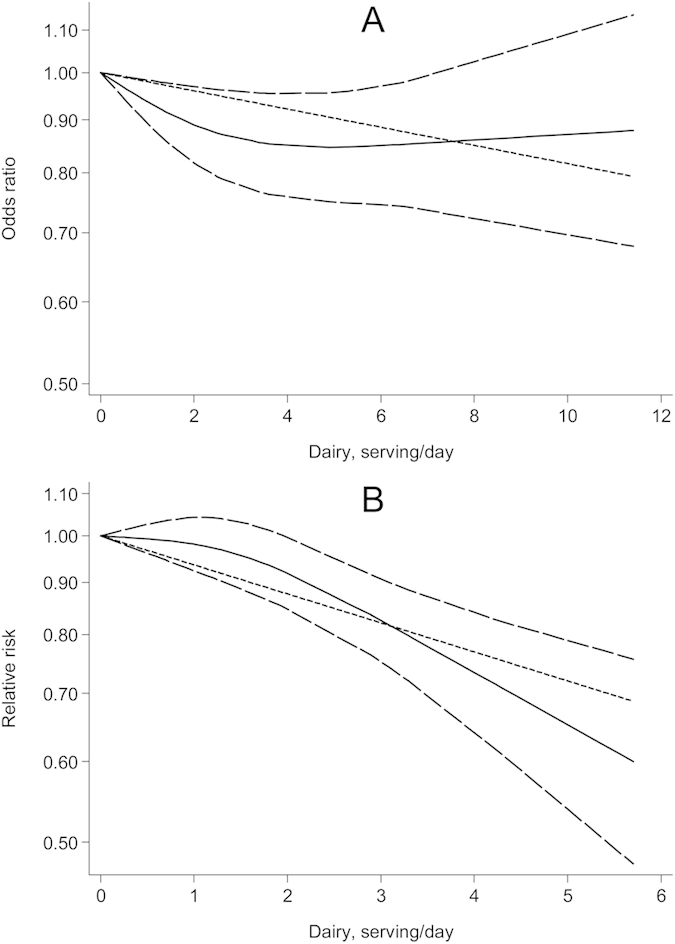
The association of dairy products consumption with risk of metabolic syndrome (MetS) has been inconsistently reported in observational studies. A systematic review and meta-analysis of published observational studies was conducted to quantitatively evaluate this association. Relevant studies were identified by searching PubMed and EMBASE databases and by carefully checking the bibliographies of retrieved full reports and related reviews. Eligible studies were observational studies that investigated the association between dairy products consumption and risk of MetS in adults, with risk estimates available. Random-effects model was assigned to calculate the summary risk estimates. The final analysis included 15 cross-sectional studies, one case-control study and seven prospective cohort studies. Higher dairy consumption significantly reduced MetS by 17% in the cross-sectional/case-control studies (odds ratio = 0.83, 95% confidence interval [CI], 0.73-0.94), and by 14% (relative risk [RR] = 0.86, 95% CI, 0.79-0.92) in cohort studies. The inverse dairy-MetS association was consistent in subgroup and sensitivity analyses. The dose-response analysis of the cohort studies conferred a significant 6% (RR = 0.94, 95% CI, 0.90-0.98) reduction in the risk of MetS for each increment in dairy consumption of one serving/d. No significant publication bias was observed. Our findings suggest an inverse dose-response relationship between dairy consumption and risk of MetS.
Conflict of interest statement
IM Szeto, Y-J Li and Rv Hekezen are employees of Inner Mongolia Yili Industrial Group Co., Ltd. The other authors declare no competing financial interests.
Figures
References
-
- Alberti K. G. et al. Harmonizing the metabolic syndrome: a joint interim statement of the International Diabetes Federation Task Force on Epidemiology and Prevention; National Heart, Lung, and Blood Institute; American Heart Association; World Heart Federation; International Atherosclerosis Society; and International Association for the Study of Obesity. Circulation 120, 1640–1645 (2009). - PubMed
-
- Saely C. H., Rein P. & Drexel H. The metabolic syndrome and risk of cardiovascular disease and diabetes: experiences with the new diagnostic criteria from the International Diabetes Federation. Horm Metab Res 39, 642–650 (2007). - PubMed
-
- Wu S. H., Liu Z. & Ho S. C. Metabolic syndrome and all-cause mortality: a meta-analysis of prospective cohort studies. Eur J Epidemiol 25, 375–384 (2010). - PubMed
-
- Dunkley A. J. et al. Effectiveness of interventions for reducing diabetes and cardiovascular disease risk in people with metabolic syndrome: systematic review and mixed treatment comparison meta-analysis. Diabetes Obes Metab 14, 616–625 (2012). - PubMed
Publication types
MeSH terms
LinkOut - more resources
Full Text Sources
Other Literature Sources
Medical
