


Determinants of patient-reported experience of cancer services responsiveness
- PMID: 26416612
- PMCID: PMC4587918
- DOI: 10.1186/s12913-015-1104-9
Determinants of patient-reported experience of cancer services responsiveness
Abstract
Background: In coming years, patient-reported data are expected to play a more prominent role in ensuring early and efficient detection of healthcare system dysfunctions, developing interventions and evaluating their effects on health outcomes, and monitoring quality of care from the patient's perspective. The concept of responsiveness relates to patient-reported experience measures that focus on the system's response to service users' legitimate expectations. We explored this concept in an effort to address unresolved issues related to measuring and interpreting patient experience. Our objectives in this study were to report on patients' perceptions of cancer services responsiveness and to identify patient characteristics and organizational attributes that are potential determinants of a positive patient-reported experience.
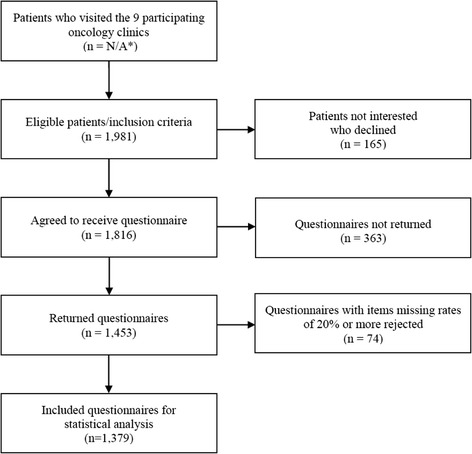
Methods: A cross-sectional survey was conducted of 1379 cancer patients in nine participating ambulatory cancer clinics in hospitals across the province of Quebec, Canada. They were invited to complete the Cancer Services Responsiveness tool, a 19-item questionnaire evaluating patients' perceptions of the responsiveness of cancer services. Sociodemographic data and self-reported clinical and organizational data were collected. Descriptive statistical analysis, univariate and multivariate logistic regressions were performed.
Results: The patients surveyed generally perceived cancer services as highly responsive. The individual determinants of overall responsiveness found to be significant were self-assessed health status, age, and education level; organizational determinants were academic affiliation and geographic location of the clinic.
Discussion: Responsiveness refers to distinctive indicators of healthcare quality focused on patient-provider interactions and presents a complementary picture to other patient-reported experience measures. The identified determinants of patients' positive experience with cancer services provide valuable information to guide care providers in targeting quality improvements.
Conclusions: Finally, our results suggest these determinants should be further studied to eliminate confounders and produce usable results.
Figures
References
-
- Howell D, Fitch M, Bakker D, Green E, Sussman J, Mayo S, et al. Core domains for a person-focused outcome measurement system in cancer (PROMS-Cancer Core) for routine care: a scoping review and Canadian Delphi Consensus. Value Health. 2013;16(1):76–87. doi: 10.1016/j.jval.2012.10.017. - DOI - PubMed
-
- Guidance for industry. Patient-reported outcome measures: use in medical product development to support labeling claims http://www.fda.gov/downloads/Drugs/GuidanceComplianceRegulatoryInformati.... Accessed 27 September 2015. - PMC - PubMed
Publication types
MeSH terms
LinkOut - more resources
Full Text Sources
Other Literature Sources
