


Structure and mechanism of the mammalian fructose transporter GLUT5
- PMID: 26416735
- PMCID: PMC4618315
- DOI: 10.1038/nature14909
Structure and mechanism of the mammalian fructose transporter GLUT5
Abstract
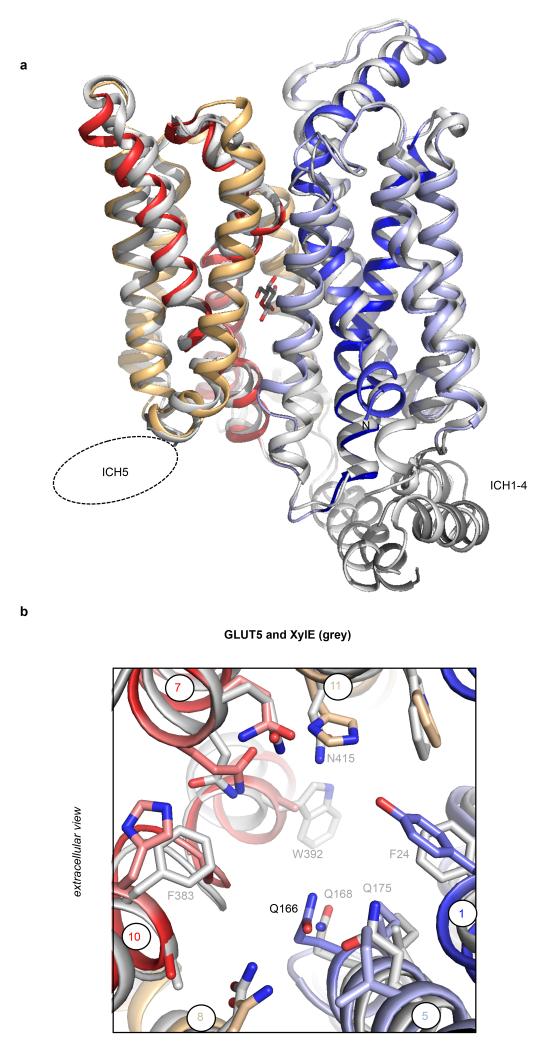
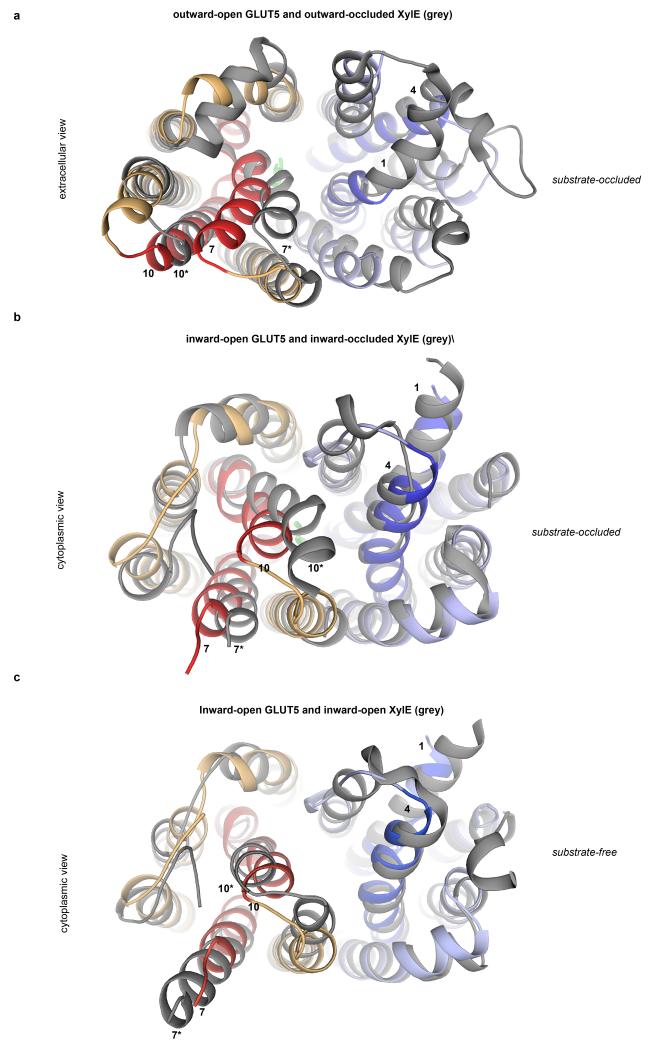
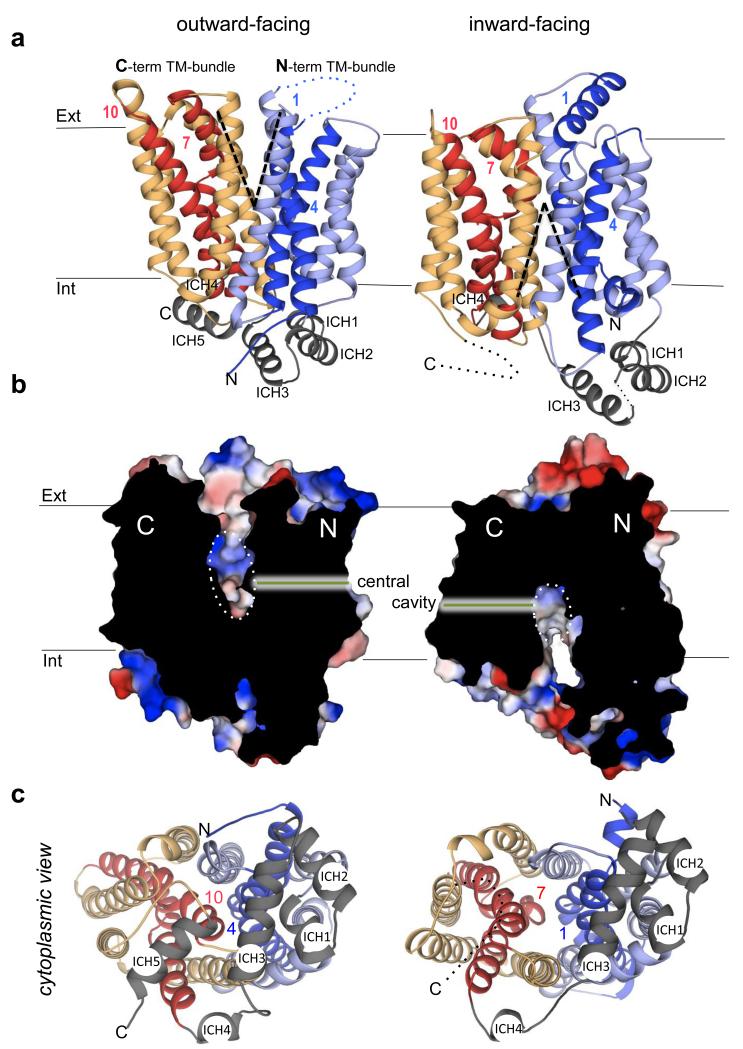
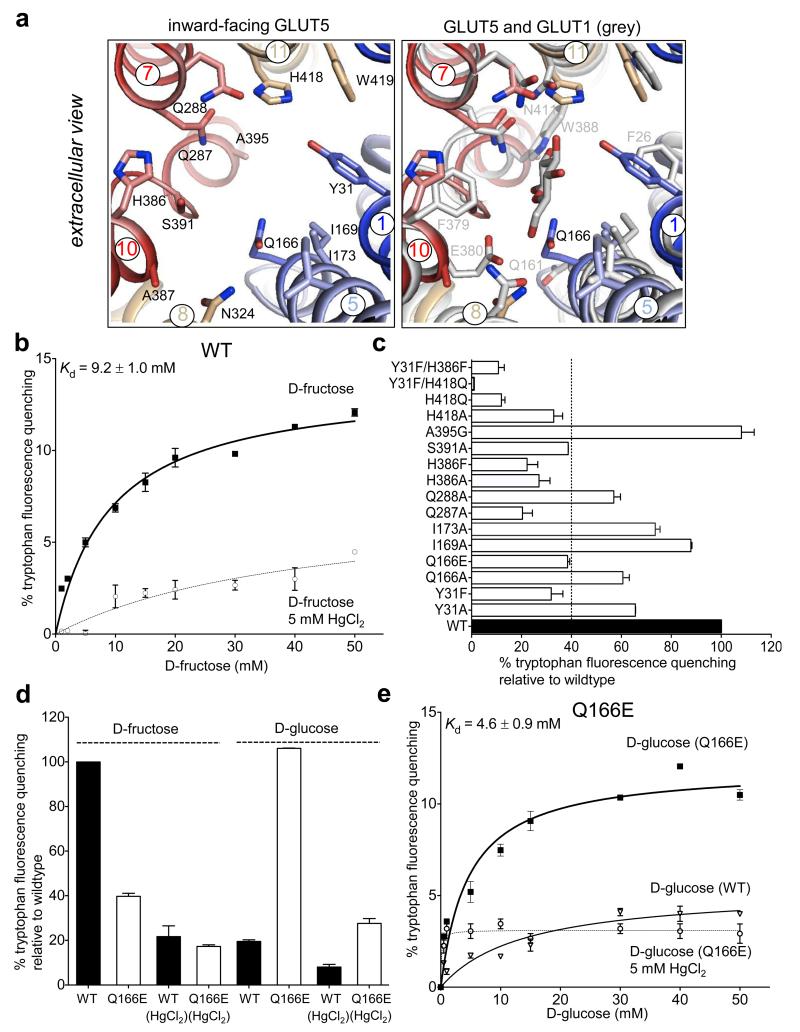
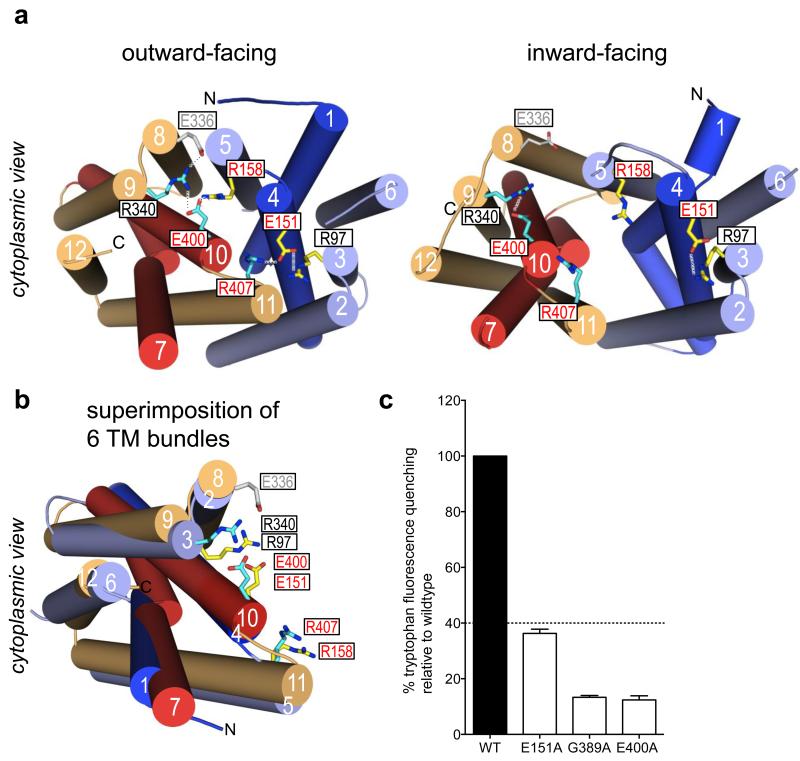
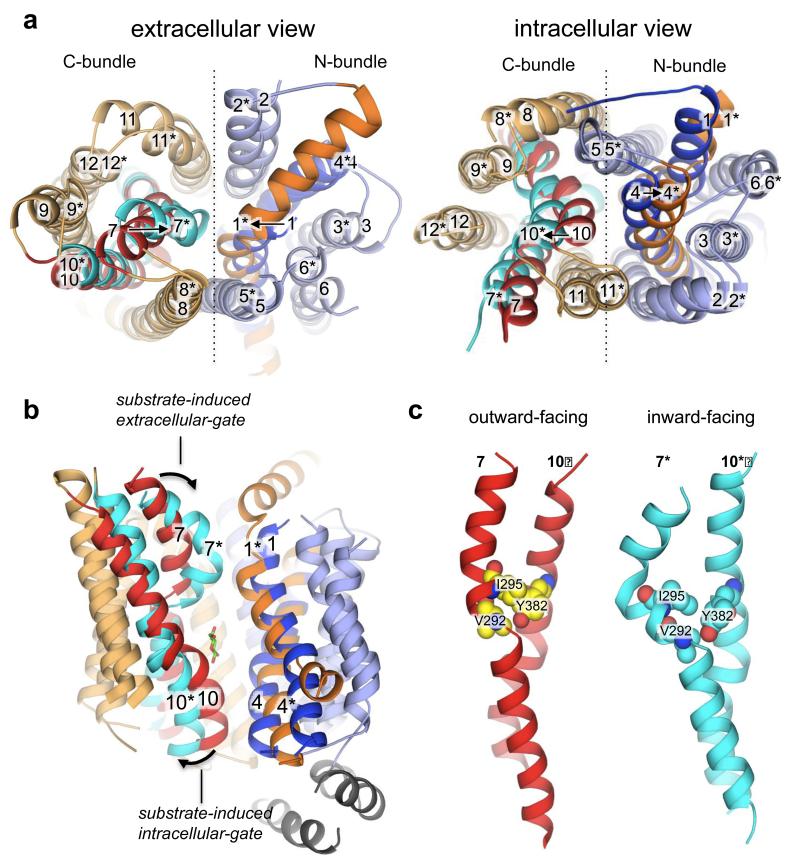
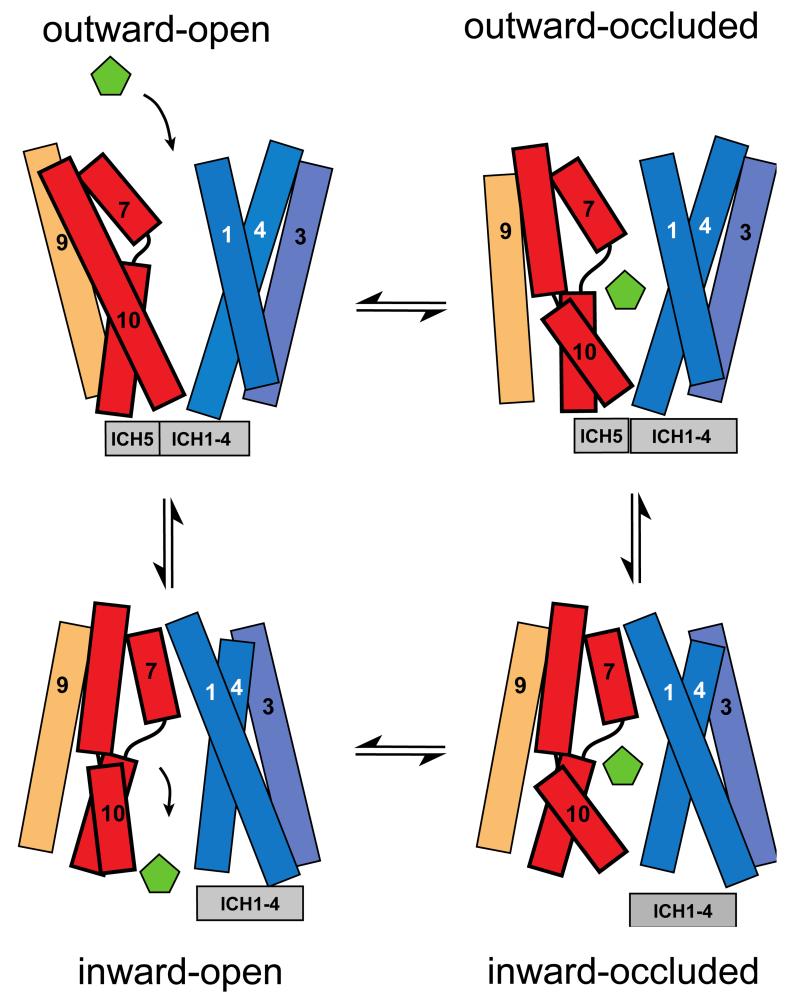
The altered activity of the fructose transporter GLUT5, an isoform of the facilitated-diffusion glucose transporter family, has been linked to disorders such as type 2 diabetes and obesity. GLUT5 is also overexpressed in certain tumour cells, and inhibitors are potential drugs for these conditions. Here we describe the crystal structures of GLUT5 from Rattus norvegicus and Bos taurus in open outward- and open inward-facing conformations, respectively. GLUT5 has a major facilitator superfamily fold like other homologous monosaccharide transporters. On the basis of a comparison of the inward-facing structures of GLUT5 and human GLUT1, a ubiquitous glucose transporter, we show that a single point mutation is enough to switch the substrate-binding preference of GLUT5 from fructose to glucose. A comparison of the substrate-free structures of GLUT5 with occluded substrate-bound structures of Escherichia coli XylE suggests that, in addition to global rocker-switch-like re-orientation of the bundles, local asymmetric rearrangements of carboxy-terminal transmembrane bundle helices TM7 and TM10 underlie a 'gated-pore' transport mechanism in such monosaccharide transporters.
Figures
References
-
- Simpson IA, Vannucci SJ, Maher F. Glucose transporters in mammalian brain. Biochemical Society transactions. 1994;22:671–675. - PubMed
-
- James DE, Strube M, Mueckler M. Molecular cloning and characterization of an insulin-regulatable glucose transporter. Nature. 1989;338:83–87. - PubMed
-
- Burant CF, Takeda J, Brot-Laroche E, Bell GI, Davidson NO. Fructose transporter in human spermatozoa and small intestine is GLUT5. The Journal of biological chemistry. 1992;267:14523–14526. - PubMed
Publication types
MeSH terms
Substances
Associated data
- Actions
- Actions
Grants and funding
LinkOut - more resources
Full Text Sources
Other Literature Sources
Molecular Biology Databases
Miscellaneous
