


Effects of depressive symptoms and peripheral DAT methylation on neural reactivity to alcohol cues in alcoholism
- PMID: 26418276
- PMCID: PMC5545640
- DOI: 10.1038/tp.2015.141
Effects of depressive symptoms and peripheral DAT methylation on neural reactivity to alcohol cues in alcoholism
Abstract
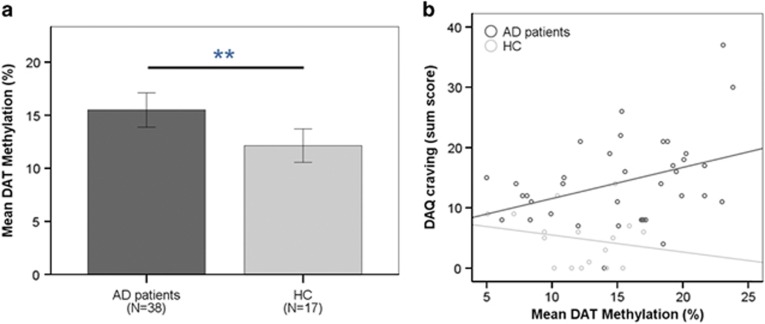
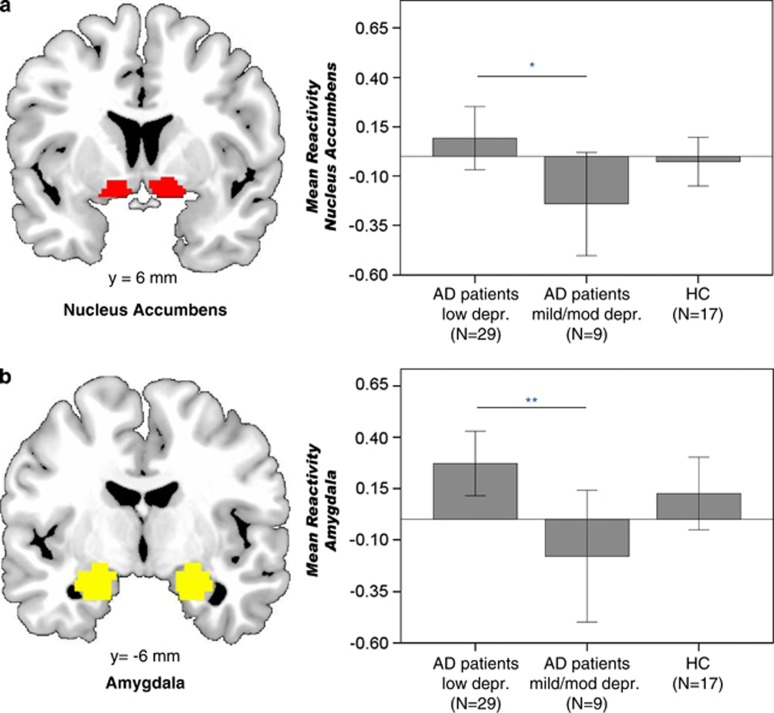
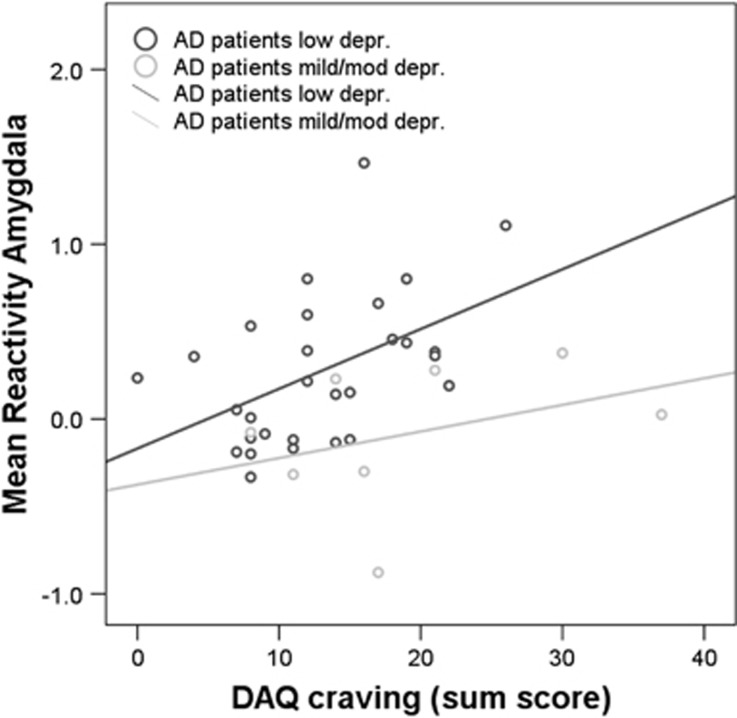
In alcohol-dependent (AD) patients, alcohol cues induce strong activations in brain areas associated with alcohol craving and relapse, such as the nucleus accumbens (NAc) and amygdala. However, little is known about the influence of depressive symptoms, which are common in AD patients, on the brain's reactivity to alcohol cues. The methylation state of the dopamine transporter gene (DAT) has been associated with alcohol dependence, craving and depression, but its influence on neural alcohol cue reactivity has not been tested. Here, we compared brain reactivity to alcohol cues in 38 AD patients and 17 healthy controls (HCs) using functional magnetic resonance imaging and assessed the influence of depressive symptoms and peripheral DAT methylation in these responses. We show that alcoholics with low Beck's Depression Inventory scores (n=29) had higher cue-induced reactivity in NAc and amygdala than those with mild/moderate depression scores (n=9), though subjective perception of craving was higher in those with mild/moderate depression scores. We corroborated a higher DAT methylation in AD patients than HCs, and showed higher DAT methylation in AD patients with mild/moderate than low depression scores. Within the AD cohort, higher methylation predicted craving and, at trend level (P=0.095), relapse 1 year after abstinence. Finally, we show that amygdala cue reactivity correlated with craving and DAT methylation only in AD patients with low depression scores. These findings suggest that depressive symptoms and DAT methylation are associated with alcohol craving and associated brain processes in alcohol dependence, which may have important consequences for treatment. Moreover, peripheral DAT methylation may be a clinically relevant biomarker in AD patients.
Conflict of interest statement
The authors declare no conflict of interest.
Figures
References
-
- Boileau I, Assaad JM, Pihl RO, Benkelfat C, Leyton M, Diksic M et al. Alcohol promotes dopamine release in the human nucleus accumbens. Synapse 2003; 49: 226–231. - PubMed
-
- Robinson TE, Berridge KC. Addiction. Annu Rev Psychol 2003; 54: 25–53. - PubMed
-
- Wiers CE, Stelzel C, Gladwin TE, Park SQ, Pawelczack S, Gawron CK et al. Effects of cognitive bias modification training on neural alcohol cue reactivity in alcohol dependence. Am J Psychiatry 2015; 172: 335–343. - PubMed
Publication types
MeSH terms
Substances
LinkOut - more resources
Full Text Sources
Other Literature Sources
Medical
