


Definitive Hematopoiesis in the Yolk Sac Emerges from Wnt-Responsive Hemogenic Endothelium Independently of Circulation and Arterial Identity
- PMID: 26418893
- PMCID: PMC4755868
- DOI: 10.1002/stem.2213
Definitive Hematopoiesis in the Yolk Sac Emerges from Wnt-Responsive Hemogenic Endothelium Independently of Circulation and Arterial Identity
Abstract
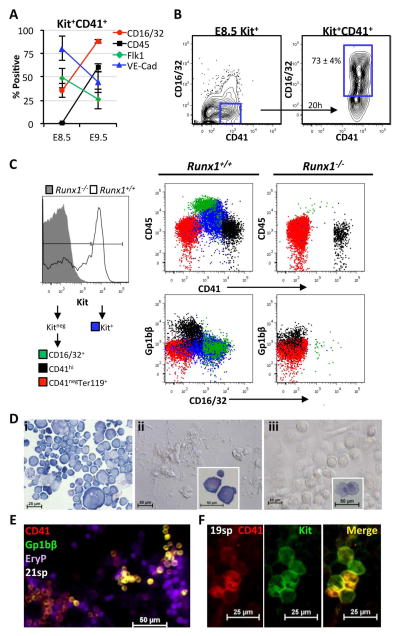
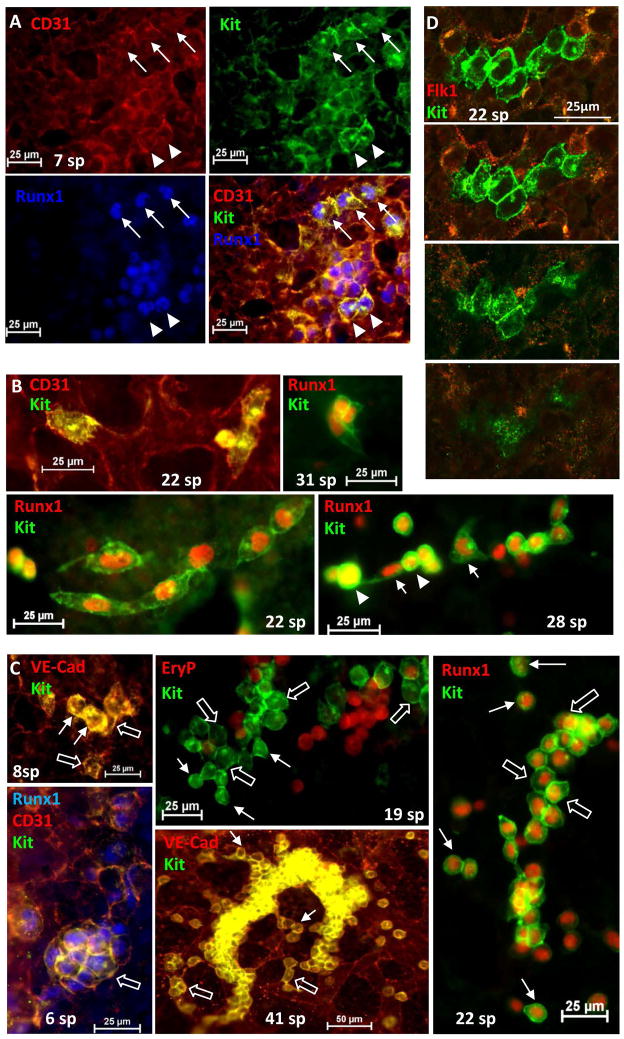
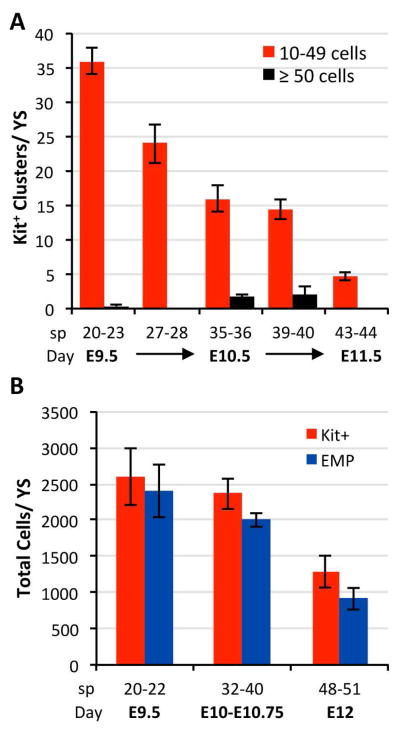
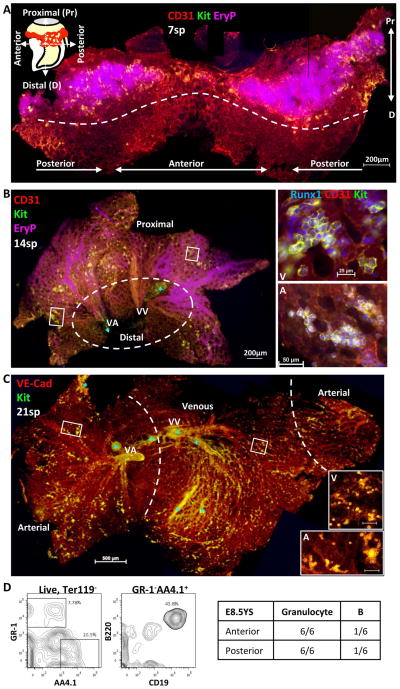
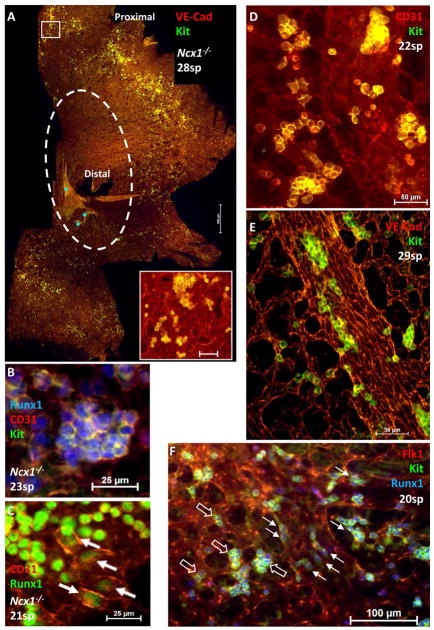
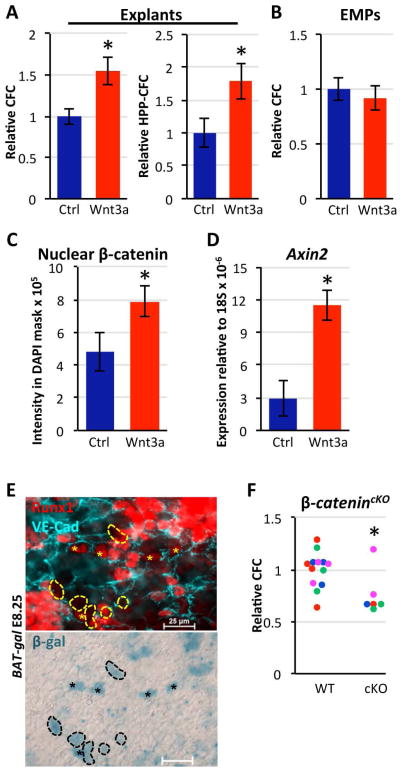
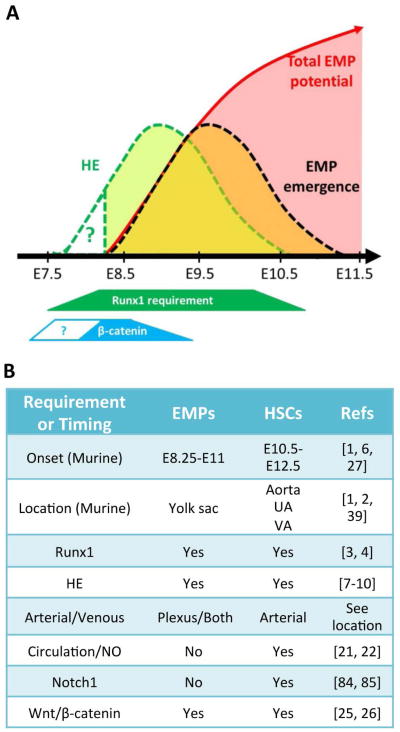
Adult-repopulating hematopoietic stem cells (HSCs) emerge in low numbers in the midgestation mouse embryo from a subset of arterial endothelium, through an endothelial-to-hematopoietic transition. HSC-producing arterial hemogenic endothelium relies on the establishment of embryonic blood flow and arterial identity, and requires β-catenin signaling. Specified prior to and during the formation of these initial HSCs are thousands of yolk sac-derived erythro-myeloid progenitors (EMPs). EMPs ensure embryonic survival prior to the establishment of a permanent hematopoietic system, and provide subsets of long-lived tissue macrophages. While an endothelial origin for these HSC-independent definitive progenitors is also accepted, the spatial location and temporal output of yolk sac hemogenic endothelium over developmental time remain undefined. We performed a spatiotemporal analysis of EMP emergence, and document the morphological steps of the endothelial-to-hematopoietic transition. Emergence of rounded EMPs from polygonal clusters of Kit(+) cells initiates prior to the establishment of arborized arterial and venous vasculature in the yolk sac. Interestingly, Kit(+) polygonal clusters are detected in both arterial and venous vessels after remodeling. To determine whether there are similar mechanisms regulating the specification of EMPs with other angiogenic signals regulating adult-repopulating HSCs, we investigated the role of embryonic blood flow and Wnt/β-catenin signaling during EMP emergence. In embryos lacking a functional circulation, rounded Kit(+) EMPs still fully emerge from unremodeled yolk sac vasculature. In contrast, canonical Wnt signaling appears to be a common mechanism regulating hematopoietic emergence from hemogenic endothelium. These data illustrate the heterogeneity in hematopoietic output and spatiotemporal regulation of primary embryonic hemogenic endothelium.
Keywords: Embryo; Endothelial cell; Hemangioblast; Hematopoiesis; Hematopoietic progenitors; Hematopoietic stem cells; Vascular development.
© 2015 AlphaMed Press.
Conflict of interest statement
The authors have no conflicts of interest.
Figures
References
-
- Muller AM, Medvinsky A, Strouboulis J, et al. Development of hematopoietic stem cell activity in the mouse embryo. Immunity. 1994;1:291–301. - PubMed
-
- Okuda T, Deursen J, van Hiebert SW, et al. AML1, the target of multiple chromosomal translocations in human leukemia, is essential for normal fetal liver hematopoiesis. Cell. 1996;84:321–330. - PubMed
-
- North T, Gu TL, Stacy T, et al. Cbfa2 is required for the formation of intra-aortic hematopoietic clusters. Development. 1999;126(11):2563–2575. - PubMed
Publication types
MeSH terms
Substances
Grants and funding
LinkOut - more resources
Full Text Sources
Other Literature Sources
Medical
Molecular Biology Databases
