Usual blood pressure, peripheral arterial disease, and vascular risk: cohort study of 4.2 million adults
- PMID: 26419648
- PMCID: PMC4586462
- DOI: 10.1136/bmj.h4865
Usual blood pressure, peripheral arterial disease, and vascular risk: cohort study of 4.2 million adults
Abstract
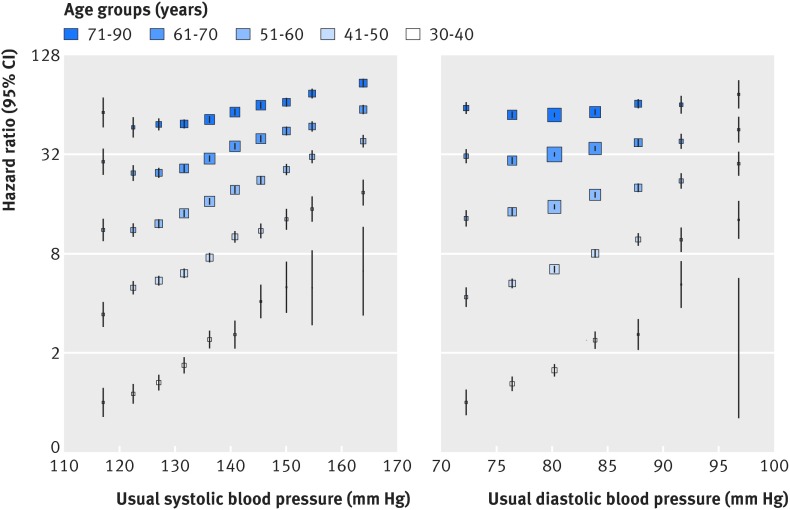
Objectives: To determine the subgroup specific associations between usual blood pressure and risk of peripheral arterial disease, and to examine the relation between peripheral arterial disease and a range of other types of vascular disease in a large contemporary cohort.
Design: Cohort study.
Setting: Linked electronic health records from 1990 to 2013 in the United Kingdom.
Participants: 4,222,459 people aged 30-90 years, registered at a primary care practice for at least one year and with a blood pressure measurement.
Main outcome measures: Time to first diagnosis of new onset peripheral arterial disease and time to first diagnosis of 12 different vascular events.
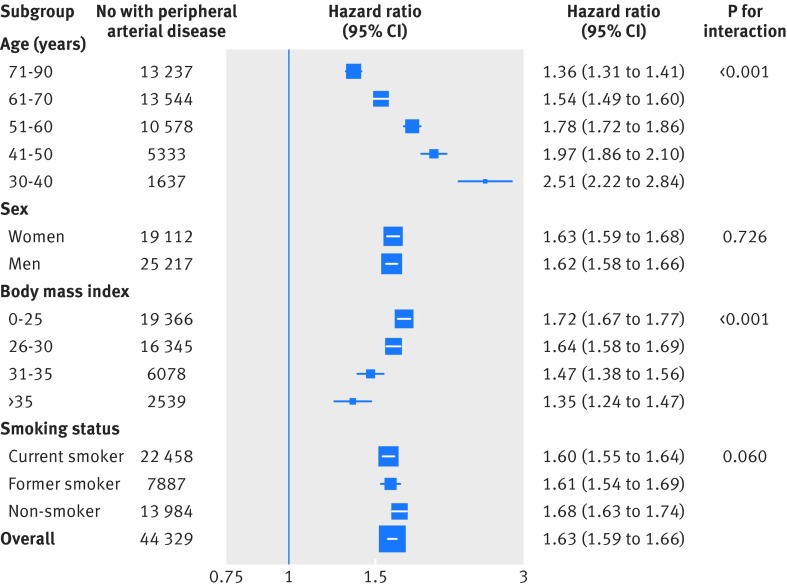
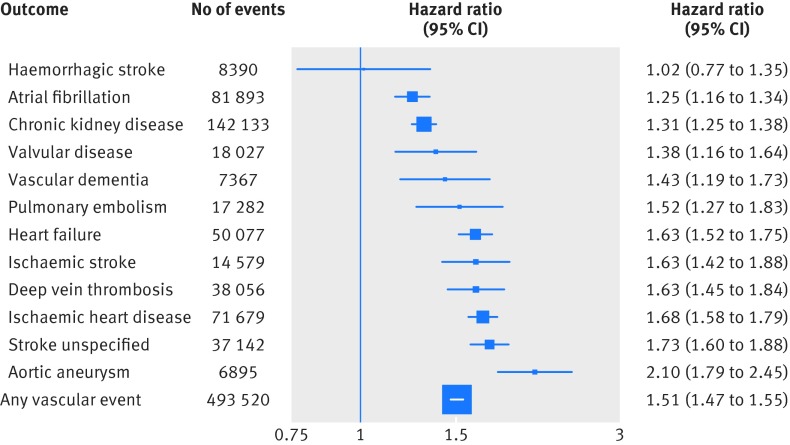
Results: A 20 mm Hg higher than usual systolic blood pressure was associated with a 63% higher risk of peripheral arterial disease (hazard ratio 1.63, 95% confidence interval 1.59 to 1.66). The strength of the association declined with increasing age and body mass index (P<0.001 for interaction) but was not modified by sex or smoking status. Peripheral arterial disease was associated with an increased risk of 11 different vascular events, including ischaemic heart disease (1.68, 1.58 to 1.79), heart failure (1.63, 1.52 to 1.75), aortic aneurysm (2.10, 1.79 to 2.45), and chronic kidney disease (1.31, 1.25 to 1.38), but not haemorrhagic stroke. The most common initial vascular event among those with peripheral arterial disease was chronic kidney disease (24.4% of initial events), followed by ischaemic heart disease (18.5% of initial events), heart failure (14.7%), and atrial fibrillation (13.2%). Overall estimates from this cohort were consistent with those derived from traditional studies when we pooled the findings in two meta-analyses.
Conclusions: Raised blood pressure is a strong risk factor for peripheral arterial disease in a range of patient subgroups. Furthermore, clinicians should be aware that those with established peripheral arterial disease are at an increased risk of a range of other vascular events, including chronic kidney disease, ischaemic heart disease, heart failure, atrial fibrillation, and stroke.
© Emdin et al 2015.
Conflict of interest statement
Competing interests: All authors have completed the ICMJE uniform disclosure form at
Figures
References
-
- Fowkes FGR, Rudan D, Rudan I, et al. Comparison of global estimates of prevalence and risk factors for peripheral artery disease in 2000 and 2010: a systematic review and analysis. Lancet 2013;382:1329-40. - PubMed
-
- Gregg EW, Sorlie P, Paulose-Ram R, et al. Prevalence of lower-extremity disease in the US adult population >=40 years of age with and without diabetes: 1999-2000 national health and nutrition examination survey. Diabetes Care 2004;27:1591-7. - PubMed
-
- Gu Q, Burt VL, Dillon CF, et al. Trends in antihypertensive medication use and blood pressure control among United States adults with hypertension: the National Health And Nutrition Examination Survey, 2001 to 2010. Circulation 2012;126:2105-14. - PubMed
Publication types
MeSH terms
Grants and funding
LinkOut - more resources
Full Text Sources
Other Literature Sources
Medical