


The influence of neighbourhood green space on children's physical activity and screen time: findings from the longitudinal study of Australian children
- PMID: 26419752
- PMCID: PMC4589082
- DOI: 10.1186/s12966-015-0288-z
The influence of neighbourhood green space on children's physical activity and screen time: findings from the longitudinal study of Australian children
Abstract
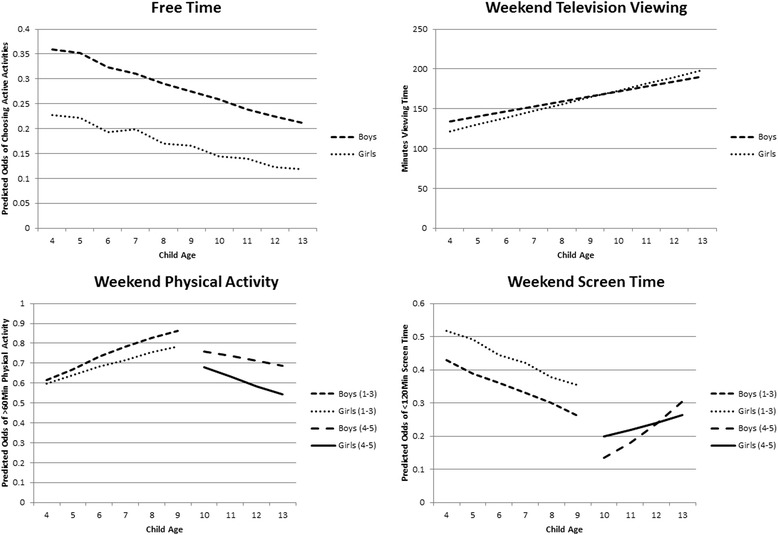
Objective: It is often hypothesised that neighbourhood green space may help prevent well-known declines in physical activity and increases in sedentary behaviour that occur across childhood. As most studies in this regard are cross-sectional, the purpose of our study was to use longitudinal data to examine whether green space promotes active lifestyles as children grow older.
Methods: Data came from participants (n = 4983; age = 4-5) of the Longitudinal Study of Australian Children, a nationally representative study on health and child development. Physical activity and screen time were measured biennially (2004-2012) using questionnaires and time use diaries. Quantity of neighbourhood green space was objectively measured using Australian Bureau of Statistics mesh block data for each participant's statistical area level 2. Multilevel regression was used to test for associations between physical activity and screen time with green space quantity, adjusting for socio-economic confounders.
Results: Boys living in areas with 10% more neighbourhood green space had a: 7% (95% CI = 1.02, 1.13) greater odds of choosing physically active pastimes; 8% (95 % CI = 0.85, 1.00) lower odds of not enjoying physical activity; 2.3 min reduction in weekend television viewing (95% CI = -4.00, -0.69); and 7% (95% CI = 1.02; 1.12) and 9% (95% CI = 1.03; 1.15) greater odds of meeting physical activity guidelines on weekdays and weekends, respectively. No statistically (or practically) significant results were observed for girls.
Conclusion: Current provisions of neighbourhood green space may be more amenable to promoting active lifestyles among boys than girls. Research is needed to explore what types of green space promote active lifestyles in all children.
Figures
References
-
- Astell-Burt T, Feng X, Kolt GS. Green space is associated with walking and moderate-to- vigorous physical activity (MVPA) in middle-to-older-aged adults: Findings from 203 883 Australians in the 45 and Up Study. Br J Sports Med. 2014:48(5):404-6. doi:10.1136/bjsports-2012-092006 - PubMed
Publication types
MeSH terms
LinkOut - more resources
Full Text Sources
Other Literature Sources
Research Materials
