


A cross-sectional study of the magnitude, barriers, and outcomes of HIV status disclosure among women participating in a perinatal HIV transmission study, "the Nevirapine Repeat Pregnancy study"
- PMID: 26420040
- PMCID: PMC4588248
- DOI: 10.1186/s12889-015-2345-6
A cross-sectional study of the magnitude, barriers, and outcomes of HIV status disclosure among women participating in a perinatal HIV transmission study, "the Nevirapine Repeat Pregnancy study"
Abstract
Background: HIV status disclosure is a difficult emotional task for HIV-infected persons and may create the opportunity for both social support and rejection. In this study, we evaluated the proportions, patterns, barriers and outcomes of HIV- 1 status disclosure among a group of women in Uganda.
Methods: An exit interview was conducted one year post-partum for 85 HIV-infected women who participated in a study of HIV-1 transmission rates among NVP-experienced compared with NVP-naïve women in "The Nevirapine Repeat Pregnancy (NVP-RP) Study" at the Makerere University-Johns Hopkins University Research Collaboration, Kampala-Uganda, between June 2004 and June 2006.
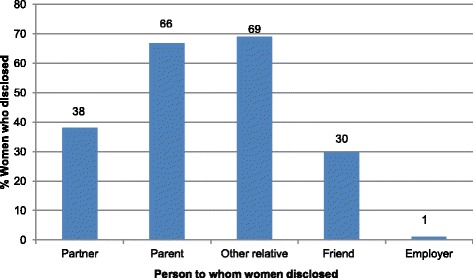
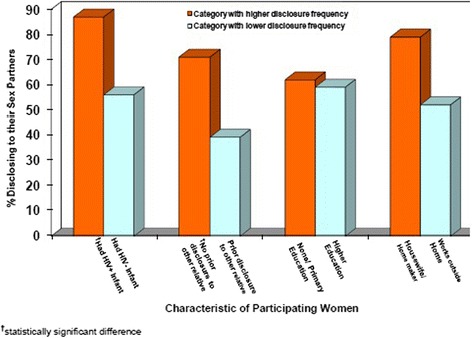
Results: Of the 85 women interviewed, 99 % had disclosed their HIV status to at least one other person. Disclosure proportions ranged between 1 % to employer(s) and 69 % to a relative other than a parent. Only 38 % of the women had disclosed to their sex partners. Women with an HIV-infected baby were more likely than those with an uninfected baby to disclose to their sex partner, OR 4.9 (95 % CI, 2.0 -11.2), and women were less likely to disclose to a partner if they had previously disclosed to another relative than if they had not, OR 0.19 (95 % CI, 0.14-0.52). The most common reasons for non-disclosure included fear of separation from the partner and subsequent loss of financial support 34 %, and not living with the partner (not having opportunities to disclose) 26 %. While most women (67 %) reported getting social support following disclosure, 22 % reported negative outcomes (neglect, separation from their partners, and loss of financial support). Following disclosure of HIV status, 9 % of women reported that their partner (s) decided to have an HIV test.
Conclusion: Results from this study show high overall HIV disclosure proportions and how this disclosure of HIV status can foster social support. However, proportions of disclosure specifically to male sex partners were low, which suggests the need for interventions aimed at increasing male involvement in perinatal care, along with supportive counseling.
Figures
References
-
- Connor EM, Sperling RS, Gelber R, Kiselev P, Scott G, O’Sullivan MJ, et al. Reduction of maternal-infant transmission of human immunodeficiency virus type 1 with zidovudine treatment. Pediatric AIDS Clinical Trials Group Protocol 076 Study Group. N Engl J Med. 1994;331(18):1173–80. doi: 10.1056/NEJM199411033311801. - DOI - PubMed
-
- Guay LA, Musoke P, Fleming T, Bagenda D, Allen M, Nakabiito C, et al. Intrapartum and neonatal single-dose nevirapine compared with zidovudine for prevention of mother-to-child transmission of HIV-1 in Kampala, Uganda: HIVNET 012 randomised trial. Lancet. 1999;354(9181):795–802. doi: 10.1016/S0140-6736(99)80008-7. - DOI - PubMed
Publication types
MeSH terms
Substances
LinkOut - more resources
Full Text Sources
Other Literature Sources
Medical
