


Best Practices in Adolescent and Young Adult Patients with Acute Lymphoblastic Leukemia: A Focus on Asparaginase
- PMID: 26421220
- PMCID: PMC4575545
- DOI: 10.1089/jayao.2015.0014
Best Practices in Adolescent and Young Adult Patients with Acute Lymphoblastic Leukemia: A Focus on Asparaginase
Abstract
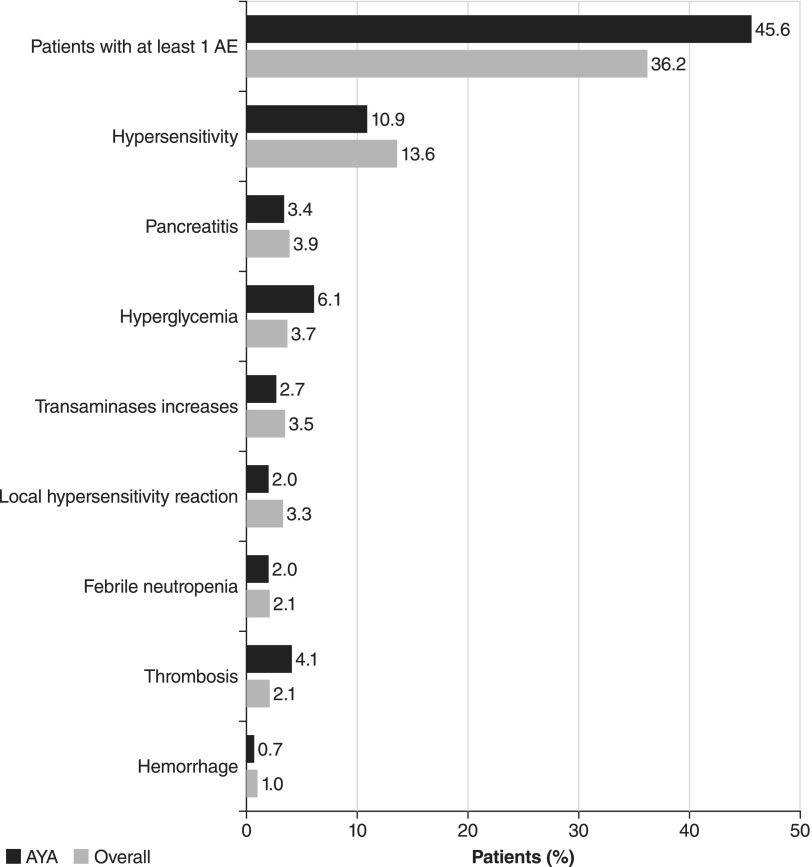
The inclusion of asparaginase in chemotherapy regimens to treat acute lymphoblastic leukemia (ALL) has had a positive impact on survival in pediatric patients. Historically, asparaginase has been excluded from most treatment protocols for adolescent and young adult (AYA) patients because of perceived toxicity in this population, and this is believed to have contributed to poorer outcomes in these patients. However, retrospective analyses over the past 12 years have shown that 2-, 5-, and 7-year overall survival of AYA patients is significantly improved with pediatric versus adult protocols. The addition of asparaginase to adult protocols yielded high rates of first remission and improved survival. However, long-term survival remains lower compared with what has been seen in pediatrics. The notion that asparaginase is poorly tolerated by AYA patients has been challenged in multiple studies. In some, but not all, studies, the incidences of hepatic and pancreatic toxicities were higher in AYA patients, whereas the rates of hypersensitivity reactions did not appear to differ with age. There is an increased risk of venous thromboembolic events, and management with anti-coagulation therapy is recommended. Overall, the risk of therapy-related mortality is low. Together, this suggests that high-intensity pediatric protocols offer an effective and tolerable approach to treating ALL in the AYA population.
Keywords: acute lymphoblastic leukemia; adolescent; asparaginase; young adult.
Figures

References
-
- Siegel R, Naishadham D, Jemal A. Cancer statistics, 2012. CA Cancer J Clin. 2012;62(1):10–29 - PubMed
-
- Pui CH, Robison LL, Look AT. Acute lymphoblastic leukaemia. Lancet. 2008;371(9617):1030–43 - PubMed
-
- Pulte D, Gondos A, Brenner H. Trends in 5- and 10-year survival after diagnosis with childhood hematologic malignancies in the United States, 1990–2004. J Natl Cancer Inst. 2008;100(18):1301–9 - PubMed
-
- Pui CH. Recent research advances in childhood acute lymphoblastic leukemia. J Formos Med Assoc. 2010;109(11):777–87 - PubMed
Publication types
MeSH terms
Substances
LinkOut - more resources
Full Text Sources
Other Literature Sources
Miscellaneous
