


Acute cardiac injury events ≤30 days after laboratory-confirmed influenza virus infection among U.S. veterans, 2010-2012
- PMID: 26423142
- PMCID: PMC4589211
- DOI: 10.1186/s12872-015-0095-0
Acute cardiac injury events ≤30 days after laboratory-confirmed influenza virus infection among U.S. veterans, 2010-2012
Abstract
Background: Cardiac injury is a known potential complication of influenza infection. Because U.S. veterans cared for at the U.S. Department of Veterans Affairs are older and have more cardiovascular disease (CVD) risk factors than the general U.S. population, veterans are at risk for cardiac complications of influenza infection. We investigated biomarkers of cardiac injury characteristics and associated cardiac events among veterans who received cardiac biomarker testing ≤30 days after laboratory-confirmed influenza virus infection.
Methods: Laboratory-confirmed influenza cases among veterans cared for at U.S. Department of Veterans Affairs' facilities for October 2010-December 2012 were identified using electronic medical records (EMRs). Influenza confirmation was based on respiratory specimen viral culture or antigen or nucleic acid detection. Acute cardiac injury (ACI) was defined as an elevated cardiac biomarker (troponin I or creatinine kinase isoenzyme MB) >99 % of the upper reference limit occurring ≤30 days after influenza specimen collection. EMRs were reviewed for demographics, CVD history and risk factors, and ACI-associated cardiac events.
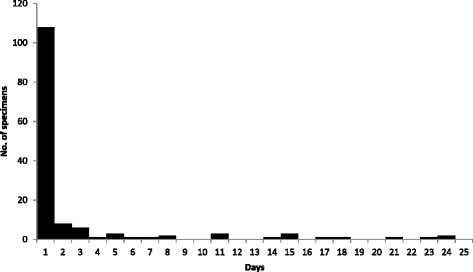
Results: Among 38,197 patients with influenza testing results, 4,469 (12 %) had a positive result; 600 of those patients had cardiac biomarker testing performed ≤30 days after influenza testing, and 143 (24 %) had one or more elevated cardiac biomarkers. Among these 143, median age was 73 years (range 44-98 years), and 98 (69 %) were non-Hispanic white. All patients had one or more CVD risk factors, and 98 (69 %) had a history of CVD. Eighty-six percent of ACI-associated events occurred within 3 days of influenza specimen collection date. Seventy patients (49 %) had documented or probable acute myocardial infarction, 8 (6 %) acute congestive heart failure, 6 (4 %) myocarditis, and 4 (3 %) atrial fibrillation. Eleven (8 %) had non-cardiac explanations for elevated cardiac biomarkers, and 44 (31 %) had no documented explanation. Sixty-eight (48 %) patients had received influenza vaccination during the related influenza season.
Conclusion: Among veterans with laboratory-confirmed influenza infection and cardiac biomarker testing ≤30 days after influenza testing, approximately 25 % had evidence of ACI, the majority within 3 days. Approximately half were myocardial infarctions. Our findings emphasize the importance of considering ACI associated with influenza infection among patients at high risk, including this older population with prevalent CVD risk factors.
Figures
References
-
- Caussin C, Escolando S, Mustafic H, Bataille S, Tafflet M, Chatignoux E, Lambert Y, Benamer H, Garot P, Jabre P, Delorme L, Vareene O, Teiger E, LIvarek B, Empana JP, Spaulding C, Jouven X, CARDIO-ARSIF Registry Investigators Short-term exposure to environmental parameters and onset of ST elevation myocardial infarction. The CARDIO-ARSIF registry. Int J Cardiol. 2015;183:17–23. doi: 10.1016/j.ijcard.2015.01.078. - DOI - PubMed
Publication types
MeSH terms
Substances
LinkOut - more resources
Full Text Sources
Other Literature Sources
Medical
Miscellaneous
