


Implications of NQO1 in cancer therapy
- PMID: 26424559
- PMCID: PMC4911202
- DOI: 10.5483/bmbrep.2015.48.11.190
Implications of NQO1 in cancer therapy
Abstract
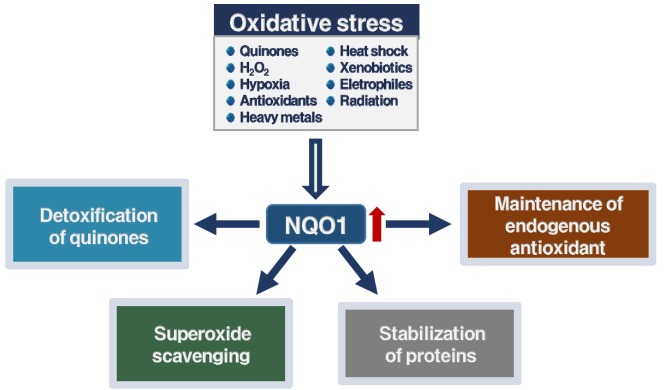
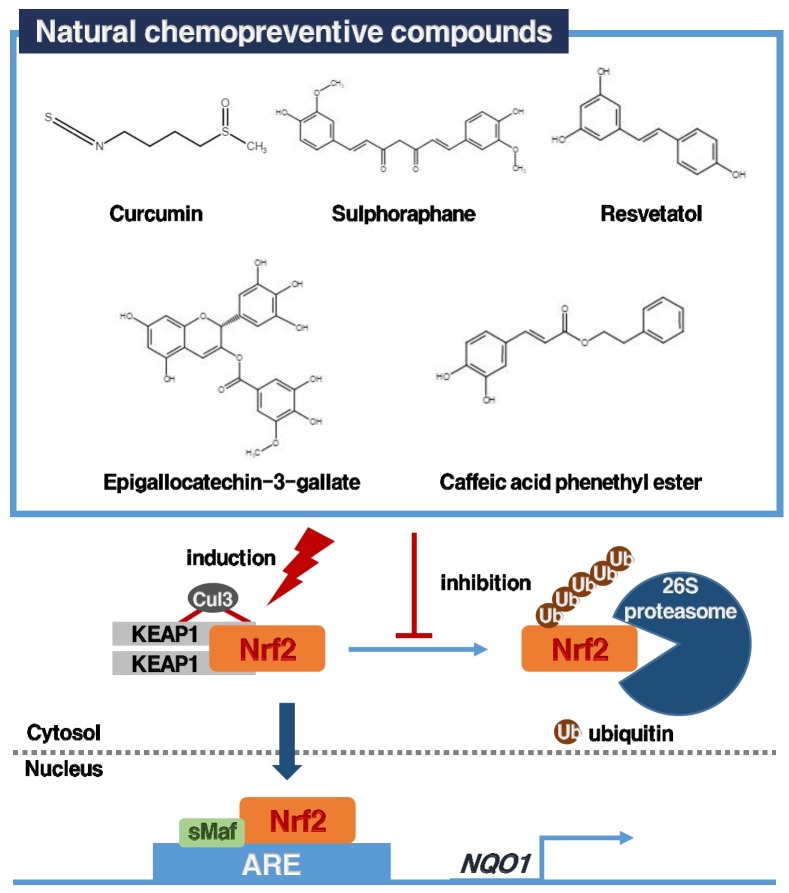
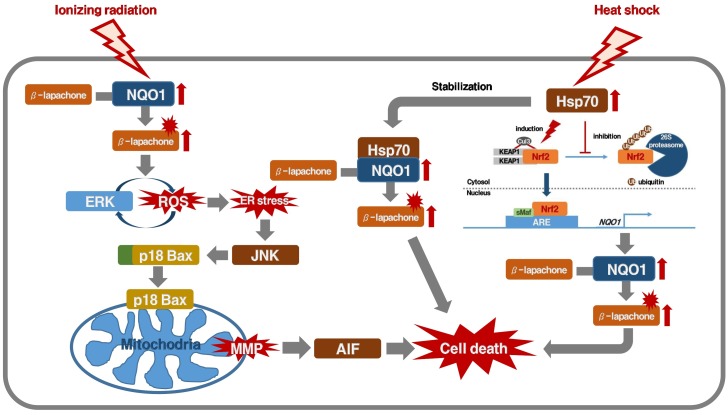
quinone oxidoreductase (NQO1), an obligatory two-electron reductase, is a ubiquitous cytosolic enzyme that catalyzes the reduction of quinone substrates. The NQO1- mediated two-electron reduction of quinones can be either chemoprotection/detoxification or a chemotherapeutic response, depending on the target quinones. When toxic quinones are reduced by NQO1, they are conjugated with glutathione or glucuronic acid and excreted from the cells. Based on this protective effect of NQO1, the use of dietary compounds to induce the expression of NQO1 has emerged as a promising strategy for cancer prevention. On the other hand, NQO1-mediated two-electron reduction converts certain quinone compounds (such as mitomycin C, E09, RH1 and -lapachone) to cytotoxic agents, leading to cell death. It has been known that NQO1 is expressed at high levels in numerous human cancers, including breast, colon, cervix, lung, and pancreas, as compared with normal tissues. This implies that tumors can be preferentially damaged relative to normal tissue by cytotoxic quinone drugs. Importantly, NQO1 has been shown to stabilize many proteins, including p53 and p33ING1b, by inhibiting their proteasomal degradation. This review will summarize the biological roles of NQO1 in cancer, with emphasis on recent findings and the potential of NQO1 as a therapeutic target for the cancer therapy.
Figures
References
-
- Nioi P, Hayes JD. Contribution of NAD(P)H: quinoneoxidoreductase 1 to protection against carcinogenesis, and regulation of its gene by the Nrf2 basic-region leucine zipper and the arylhydrocarbon receptor basic helix-loop-helix transcription factors. Mutat Res. (2004);555:149–171. doi: 10.1016/j.mrfmmm.2004.05.023. - DOI - PubMed
-
- Kaspar JW, Jaiswal AK. Antioxidant-induced phosphorylation of tyrosine 486 leads to rapid nuclear export of Bach 1 that allows Nrf2 to bind to the antitoxidant response element and activated defensive gene expression. J Biol Chem. (2010);285:153–162. doi: 10.1074/jbc.M109.040022. - DOI - PMC - PubMed
-
- Ernster L, Navazio F. Soluble diaphorase in animal tissues. Acta Chem Scand. (1958);12:595–602. doi: 10.3891/acta.chem.scand.12-0595. - DOI
Publication types
MeSH terms
Substances
LinkOut - more resources
Full Text Sources
Other Literature Sources
Research Materials
Miscellaneous
