


On the role of impulsivity and decision-making in suicidal behavior
- PMID: 26425440
- PMCID: PMC4582302
- DOI: 10.5498/wjp.v5.i3.255
On the role of impulsivity and decision-making in suicidal behavior
Abstract
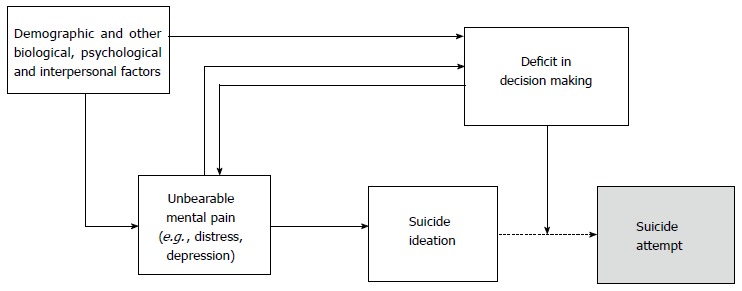
Suicide risk constitutes a complex set of interacting demographic, clinical, psychobiological and environmental variables. Impulsivity is a long-known risk factor for suicide attempts. However, research based on clearer conceptual refinement in this area is imperative. One emerging field of study is that of decision-making. Impulsivity involves a failure of higher-order control, including decision-making. Using standardized operational definitions that take into consideration relevant aspects of impulsivity, including state- and trait-components and a deeper understanding of the process of decision-making in the suicidal mind, we may come a step closer to understanding suicidality and winning the fight in this scourge of human suffering.
Keywords: Decision-making; Impulsivity; Suicidal behavior; Suicide.
Figures
References
-
- Hawton K, van Heeringen K. Suicide. Lancet. 2009;373:1372–1381. - PubMed
-
- Joshi HL, Parkash V, Kumar U. Conceptualizing suicidal behavior. In: Kumar U, editor. Suicidal Behavior Underlying Dynamics. London and New York: Routledge; 2015. pp. 3–23.
-
- Gvion Y, Apter A. Review on suicide behavior. Publ Health Rev. 2012;34:2.
-
- Klonsky ED, May AM. Differentiating suicide attempters from suicide ideators: a critical frontier for suicidology research. Suicide Life Threat Behav. 2014;44:1–5. - PubMed
-
- The Substance Abuse and Mental Health Services Administration, National Survey on Drug Use and Health. [accessed 2008] Available from: http://www.samhsa.gov/
LinkOut - more resources
Full Text Sources
Other Literature Sources
