


Prevalence and Factors Associated with Perceived Stigma among Patients with Epilepsy in Ethiopia
- PMID: 26425541
- PMCID: PMC4575736
- DOI: 10.1155/2015/627345
Prevalence and Factors Associated with Perceived Stigma among Patients with Epilepsy in Ethiopia
Abstract
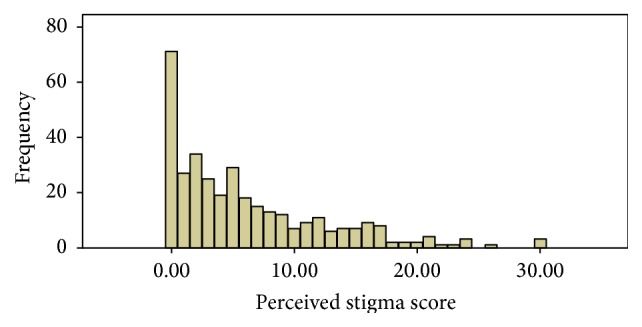
Background. Epilepsy stigma is considered to be one of the most important factors that have a negative influence on people with epilepsy. Among all types of stigma perceived stigma further exerts stress and restricts normal participation in society. Methods. Hospital based cross-sectional study was conducted from May 1, 2013, to May 30, 2013. All patients with epilepsy in Ethiopia were source population. The sample size was determined using single population proportion formula and 347 subjects were selected by using systematic random sampling method. Data was analyzed by using SPSS version 20. Results. A total of 346 participants with mean age of 29.3 ± 8.5 SD participated with a response rate of 99.7%. The prevalence of perceived stigma was 31.2%. Age range between 18 and 24 [AOR = 2.84, 95%CI: 1.02, 7.92], difficulty to attend follow-up because of stigma [AOR = 3.15, 95%CI: 1.19, 8.34], seizure related injury [AOR = 1.88, 95%CI: 1.12, 3.15], and contagion belief [AOR = 1.88, 95%CI: 1.10, 5.08] were significantly associated with perceived stigma. Conclusions. Perceived stigma was found to be a common problem among patients suffering from epilepsy. The results reinforce the need for creating awareness among patients with epilepsy and addressing misconceptions attached to epilepsy.
Figures
References
-
- Kabir M., Iliyasu Z., Abubakar I. S., Kabir Z. S., Farinyaro A. U. Knowledge, attitude and beliefs about epilepsy among adults in a northern Nigerian urban community. Annals of African Medicine. 2005;4(3):107–112.
-
- Sander J. W. The epidemiology of epilepsy revisited. Current Opinion in Neurology. 2003;16(2):165–70. - PubMed
-
- Jacoby A., Baker G. Quality of Life in Epilepsy: Beyond Seizure Counts in Assessment and Treatment. Psychology Press; 2001.
-
- World Health Organization (WHO) Initiative of Support to People with Epilepsy. Geneva, Switzerland: Division of Mental Health; 1990.
LinkOut - more resources
Full Text Sources
Other Literature Sources
