. 2013 Jan 1;1(1):2324709613480346.
doi: 10.1177/2324709613480346. eCollection 2013 Jan-Mar.

Cyclophosphamide-Induced Cardiomyopathy: A Case Report, Review, and Recommendations for Management

Affiliations

Cyclophosphamide-Induced Cardiomyopathy: A Case Report, Review, and Recommendations for Management

Sumandeep Dhesi et al. J Investig Med High Impact Case Rep. .

Abstract

Cyclophosphamide is increasingly used to treat various types of cancers and autoimmune conditions. Higher doses of this drug may produce significant cardiac toxicity, including fatal hemorrhagic myocarditis. In this review, we present a case of cyclophosphamide-induced cardiomyopathy requiring mechanical circulatory support. We also describe the pathophysiology, clinical manifestations, and risk factors for this important clinical entity and propose early detection and management strategies.

Keywords: cardiomyopathy; cardiotoxicity; cyclophosphamide; heart failure; mechanical circulatory support; myocarditis.


Conflict of interest statement

Declaration of Conflicting Interests: The author(s) declared no potential conflicts of interest with respect to the research, authorship, and/or publication of this article.

Figures

Figure 1.
Figure 1.
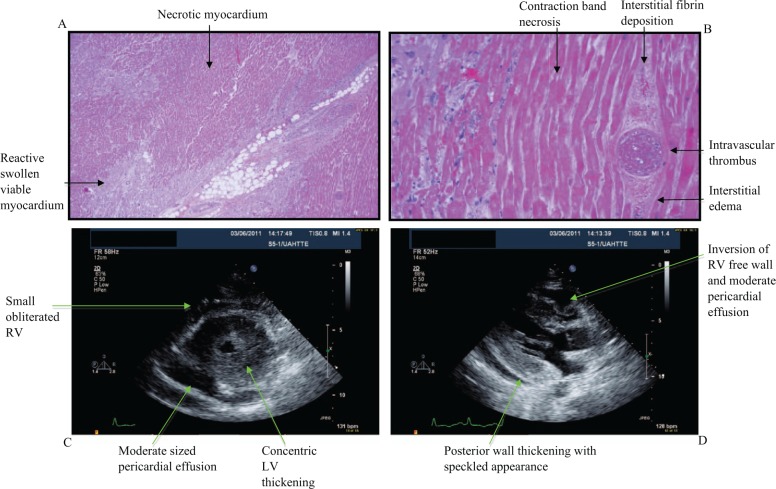
Pathologic and echocardiographic manifestations of cyclophosphamide-induced cardiac toxicity. (A) Hematoxylin and eosin staining of cardiac specimen with areas of necrotic and viable myocardium. (B) Contraction band necrosis, intravascular thrombosis, fibrin deposition, and interstitial edema are seen on high-power field. (C) Basal short axis echocardiographic view showing concentric left ventricular (LV) thickening and a moderate-sized circumferential pericardial effusion. The right ventricle (RV) is small and nearly obliterated. (D) Parasternal long-axis view that shows posterior wall thickening with a speckled appearance. A moderate pericardial effusion is noted with inversion of RV free wall consistent with increased intrapericardial pressures.
Figure 2.
Figure 2.
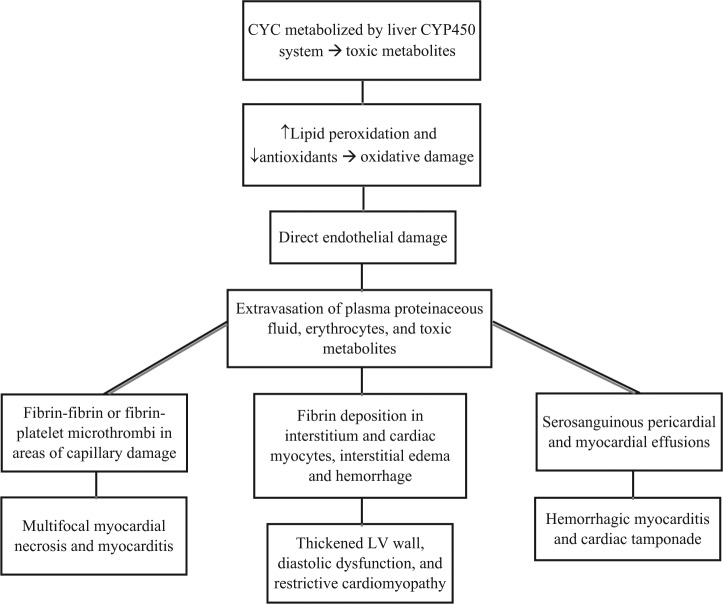
Pathophysiology and clinical manifestations of cyclophosphamide-induced cardiac toxicity. (A) Carboxyphosphamide is an inactive metabolite. (B) Acrolein is associated with hemorrhagic cystitis. (C) Phosphamide mustard is the active cytotoxic metabolite. Abbreviation: LV, left ventricular.
Figure 3.
Figure 3.
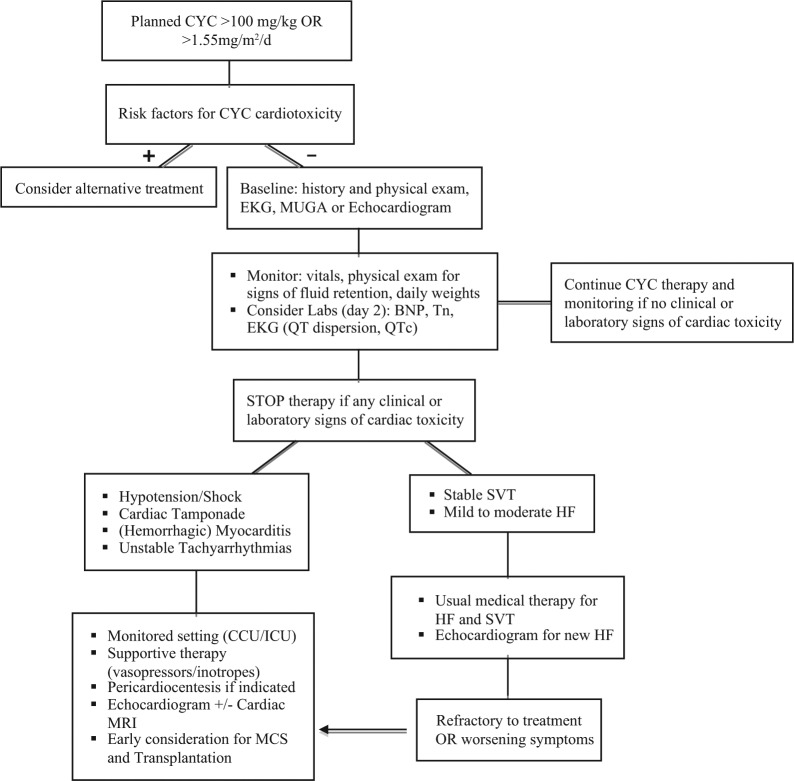
Algorithm for cyclophosphamide initiation and monitoring for cyclophosphamide cardiac toxicity. Abbreviations: CCU, coronary care unit; ICU, intensive care unit; MCS, mechanical circulatory support; MUGA, multigated acquisition scan; SVT, supraventricular tachycardia.

References

    1. Yeh ET, Tong AT, Lenihan DJ, et al. Cardiovascular complications of cancer therapy: diagnosis, pathogenesis, and management. Circulation. 2004;109:3122-3131. - PubMed
    1. Yeh ET, Bickford CL. Cardiovascular complications of cancer therapy: incidence, pathogenesis, diagnosis, and management. J Am Coll Cardiol. 2009;53:2231-2247. - PubMed
    1. Force T, Kolaja KL. Cardiotoxicity of kinase inhibitors: the prediction and translation of preclinical models to clinical outcomes. Nat Rev Drug Discov. 2011;10:111-126. - PubMed
    1. Chen MH, Kerkela R, Force T. Mechanisms of cardiac dysfunction associated with tyrosine kinase inhibitor cancer therapeutics. Circulation. 2008;118:84-95. - PMC - PubMed
    1. Baba J, Watanabe S, Saida Y, et al. Depletion of radio-resistant regulatory T cells enhances antitumor immunity during recovery from lymphopenia. Blood. 2012;120:2417-2427. - PubMed

LinkOut - more resources