


Interplay between the virus and the ubiquitin-proteasome system: molecular mechanism of viral pathogenesis
- PMID: 26426962
- PMCID: PMC7102833
- DOI: 10.1016/j.coviro.2015.09.005
Interplay between the virus and the ubiquitin-proteasome system: molecular mechanism of viral pathogenesis
Abstract
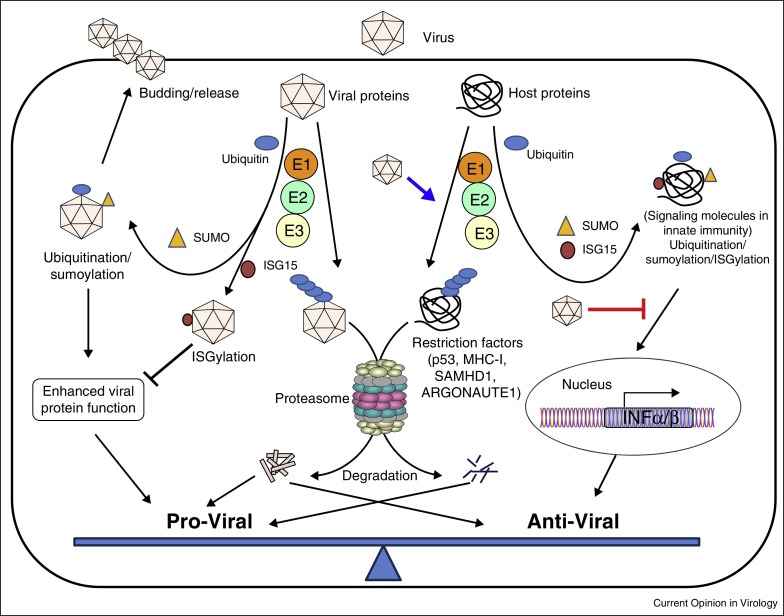
The ubiquitin-proteasome system (UPS) plays a central role in a wide range of fundamental cellular functions by ensuring protein quality control and through maintaining a critical level of important regulatory proteins. Viruses subvert or manipulate this cellular machinery to favor viral propagation and to evade host immune response. The UPS serves as a double-edged sword in viral pathogenesis: on the one hand, the UPS is utilized by many viruses to maintain proper function and level of viral proteins; while on the other hand, the UPS constitutes a host defense mechanism to eliminate viral components. To combat this host anti-viral machinery, viruses have evolved to employ the UPS to degrade or inactivate cellular proteins that limit viral growth. This review will highlight our current knowledge pertaining to the different roles for the UPS in viral pathogenesis.
Copyright © 2015 Elsevier B.V. All rights reserved.
Figures
References
-
- Glickman M.H., Ciechanover A. The ubiquitin–proteasome proteolytic pathway: destruction for the sake of construction. Physiol Rev. 2002;82:373–428. - PubMed
-
- Weissman A.M. Themes and variations on ubiquitylation. Nat Rev Mol Cell Biol. 2001;2:169–178. - PubMed
-
- Johnson E.S. Ubiquitin branches out. Nat Cell Biol. 2002;4:E295–E298. - PubMed
-
- Flotho A., Melchior F. Sumoylation: a regulatory protein modification in health and disease. Annu Rev Biochem. 2013;82:357–385. - PubMed
Publication types
MeSH terms
Substances
Grants and funding
LinkOut - more resources
Full Text Sources
Other Literature Sources
