


A cell-targeted chemotherapeutic nanomedicine strategy for oral squamous cell carcinoma therapy
- PMID: 26427800
- PMCID: PMC4591064
- DOI: 10.1186/s12951-015-0116-2
A cell-targeted chemotherapeutic nanomedicine strategy for oral squamous cell carcinoma therapy
Abstract
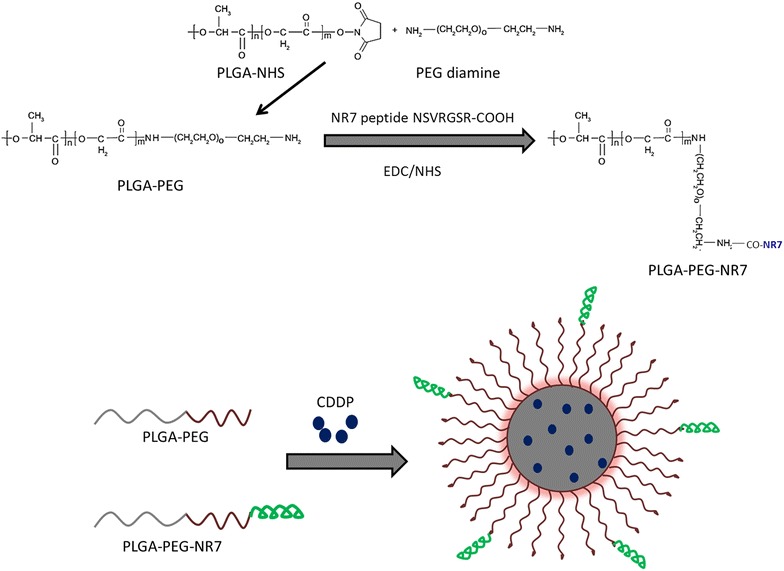
Background: Oral squamous cell carcinoma (OSCC) or cancers of oral cavity is one of the most common cancers worldwide with high rate of mortality and morbidity. At present, chemotherapy is one of the most effective treatments; however it often fails to meet the requirements in the clinical therapy. In the present study, we have successfully formulated ligand-decorated cancer-targeted CDDP-loaded PLGA-PEG/NR7 nanoparticles and demonstrated the feasibility of using NR7 peptide for targeted delivery, rapid intracellular uptake, and enhanced cytotoxic effect in receptor-overexpressed OSCC cancer cells.
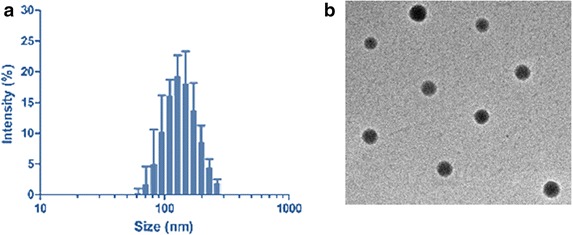
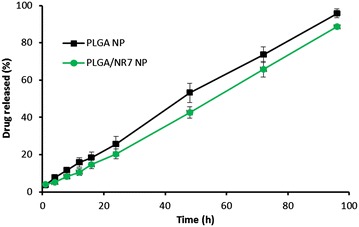
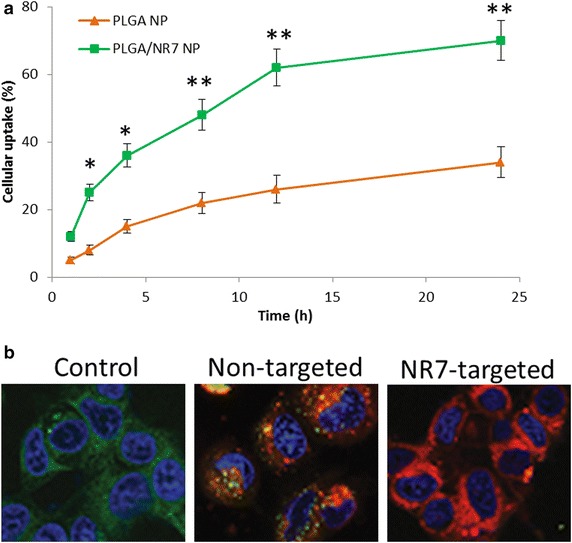
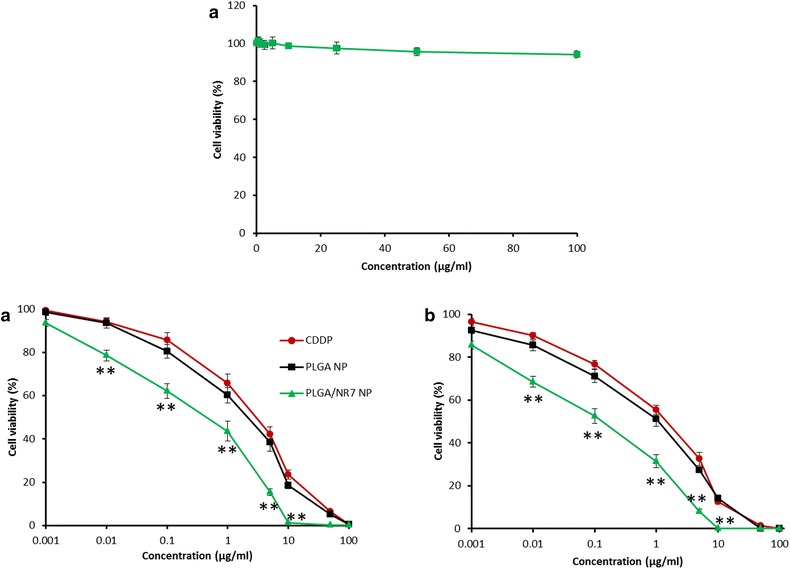
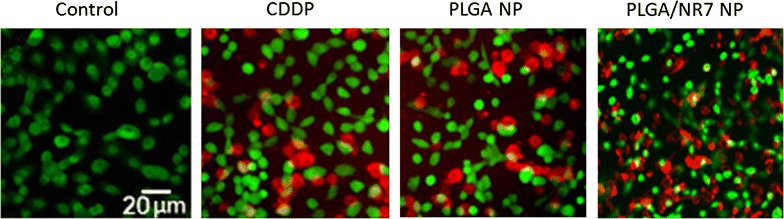
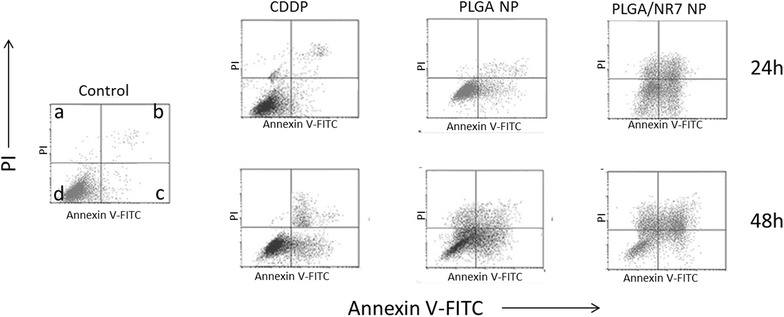
Results: Nanosized particles were formed and sustained release patterns were observed for PLGA/NR7 nanoparticles. Significantly higher cellular uptake was observed in HN6 OSCC cancer cells and superior anticancer effects are observed from the optimized targeted nanoparticles. Furthermore, Live/Dead assay showed a higher extent of red fluorescence was observed for the cells exposed with PLGA/NR7 than compared with non-targeted PLGA NP. The presence of the NR7-targeting moiety on the surface of PLGA carriers could allow the specific receptor-mediated internalization, enhanced cellular uptake, and higher cell killing potency. Especially, PLGA/NR7 NP exhibited a superior apoptosis effect in HN6 cancer cells with around ~45 % (early and late apoptotic stage) and ~59 % after 24 and 48 h incubation, respectively. It is apparent that the actively targeted micelles will deliver more anticancer agent to cancer cell than non-targeted one.
Conclusion: Altogether, our results show the feasibility and promise of a cell-targeted anticancer nanomedicine strategy that can be effective for the treatment of oral squamous cell carcinoma. The present work might be of great importance to the further exploration of the potential application of PLGA/NR7 in the clinically relevant animal models.
Figures
References
-
- Lopes CF, de Angelis BB, Prudente HM, de Souza BV, Cardoso SV, de Azambuja Ribeiro RI. Concomitant consumption of marijuana, alcohol and tobacco in oral squamous cell carcinoma development and progression: recent advances and challenges. Arch Oral Biol. 2012;57:1026–1033. doi: 10.1016/j.archoralbio.2012.05.006. - DOI - PubMed
-
- Kademani D, Bell RB, Brian Oral and maxillofacial surgeons treating oral cancer: a preliminary report from the American Association of Oral and Maxillofacial Surgeons Task Force on Oral Cancer. J Oral Maxillofac Surg. 2008;66(2151):2157. - PubMed
-
- Rosenthal EL, Kulbersh BD, Duncan RD, et al. In vivo detection of head and neck cancer orthotopic xenografts by immunofluorescence. Laryngoscope. 2006;116(1636):1641. - PubMed
Publication types
MeSH terms
Substances
LinkOut - more resources
Full Text Sources
Other Literature Sources
Medical
Miscellaneous
