


Sensitivity, Specificity, and Posttest Probability of Parotid Fine-Needle Aspiration: A Systematic Review and Meta-analysis
- PMID: 26428476
- PMCID: PMC4896151
- DOI: 10.1177/0194599815607841
Sensitivity, Specificity, and Posttest Probability of Parotid Fine-Needle Aspiration: A Systematic Review and Meta-analysis
Abstract
Objectives: (1) To analyze the sensitivity and specificity of fine-needle aspiration (FNA) in distinguishing benign from malignant parotid disease. (2) To determine the anticipated posttest probability of malignancy and probability of nondiagnostic and indeterminate cytology with parotid FNA.
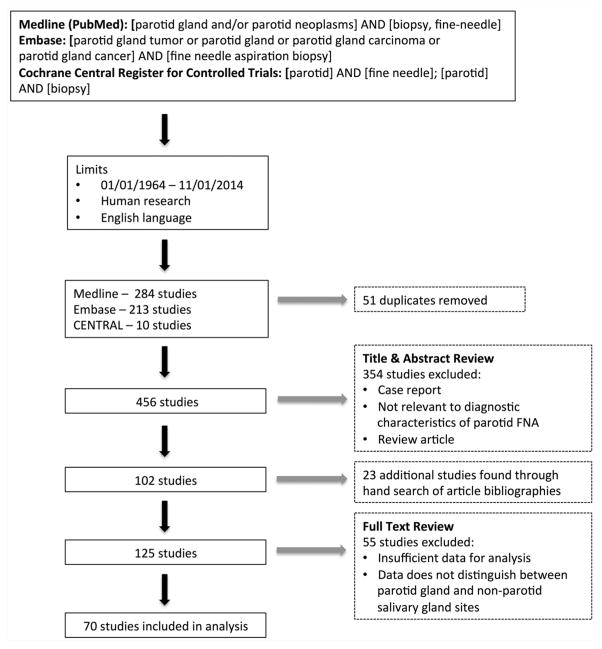
Data sources: Independently corroborated computerized searches of PubMed, Embase, and Cochrane Central Register were performed. These were supplemented with manual searches and input from content experts.
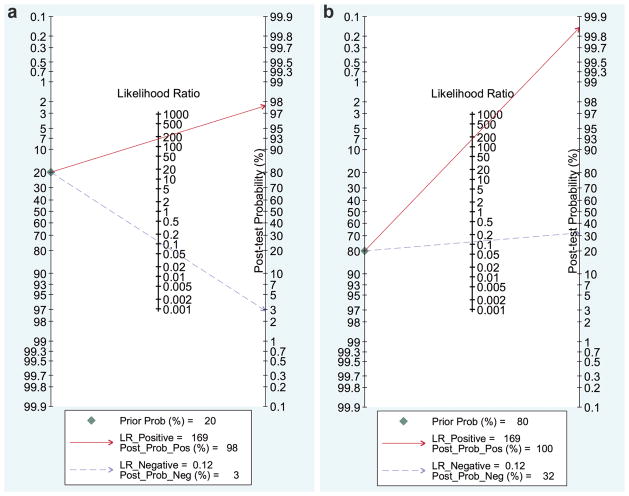
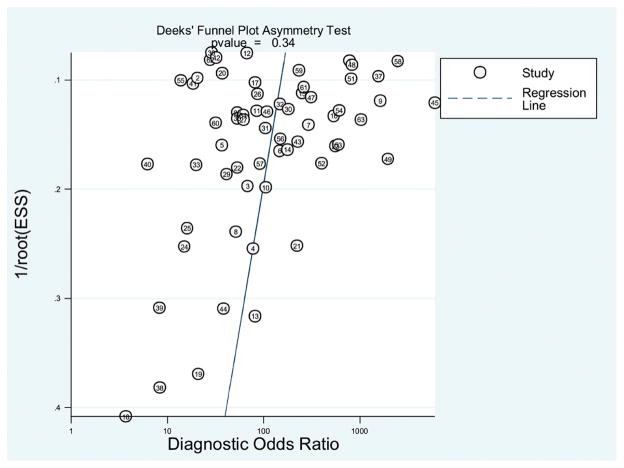
Review methods: Inclusion/exclusion criteria specified diagnosis of parotid mass, intervention with both FNA and surgical excision, and enumeration of both cytologic and surgical histopathologic results. The primary outcomes were sensitivity, specificity, and posttest probability of malignancy. Heterogeneity was evaluated with the I(2) statistic. Meta-analysis was performed via a 2-level mixed logistic regression model. Bayesian nomograms were plotted via pooled likelihood ratios.
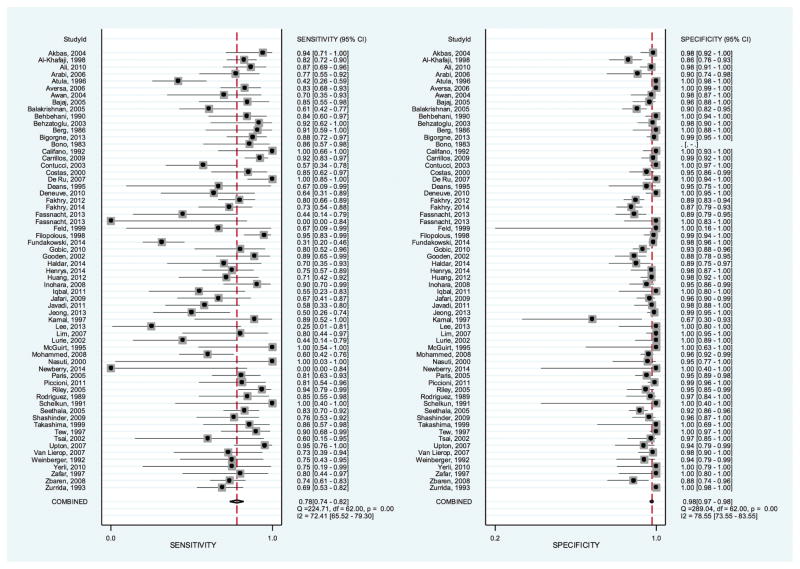
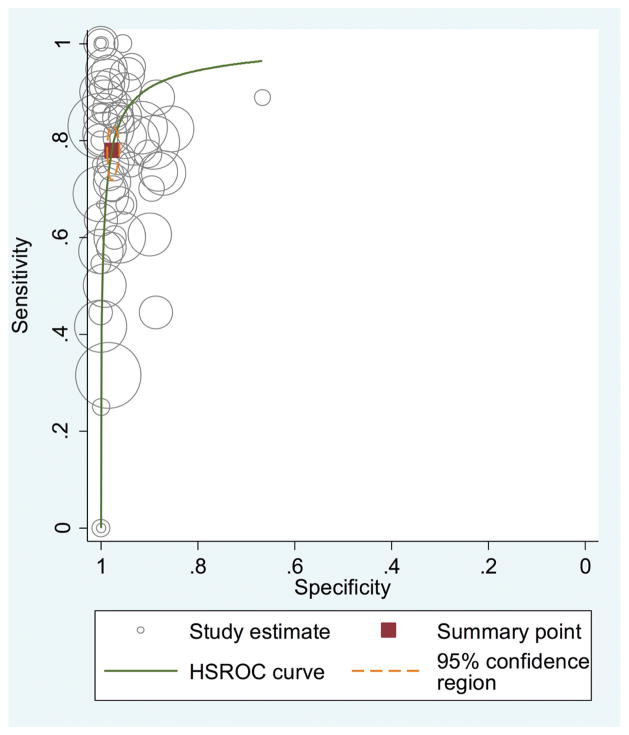
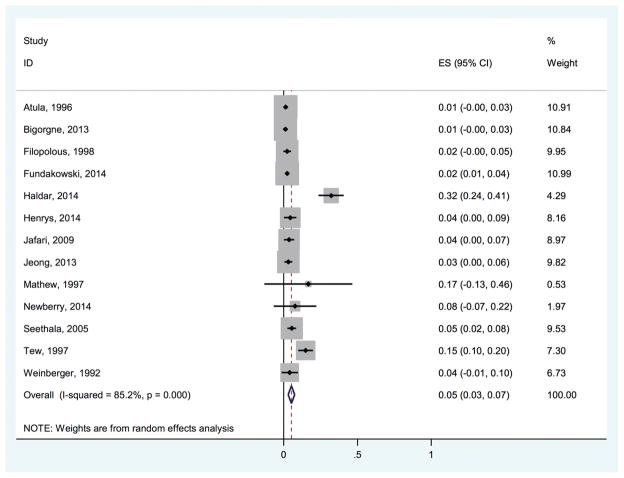
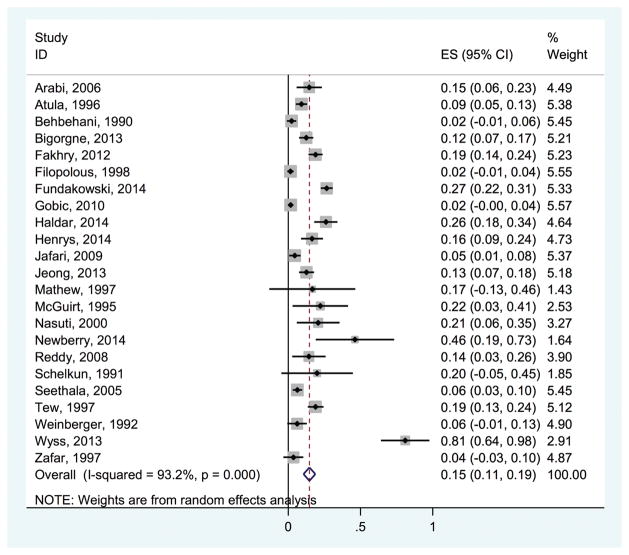
Results: The systematic review yielded 70 criterion-meeting studies, 63 of which contained data that allowed for computation of numerical outcomes (n = 5647 patients; level 2a) and consideration of meta-analysis. Subgroup analyses were performed in studies that were prospective, involved consecutive patients, described the FNA technique utilized, and used ultrasound guidance. The I(2) point estimate was >70% for all analyses, except within prospectively obtained and ultrasound-guided results. Among the prospective subgroup, the pooled analysis demonstrated a sensitivity of 0.882 (95% confidence interval [95% CI], 0.509-0.982) and a specificity of 0.995 (95% CI, 0.960-0.999). The probabilities of nondiagnostic and indeterminate cytology were 0.053 (95% CI, 0.030-0.075) and 0.147 (95% CI, 0.106-0.188), respectively.
Conclusion: FNA has moderate sensitivity and high specificity in differentiating malignant from benign parotid lesions. Considerable heterogeneity is present among studies.
Keywords: fine-needle aspiration; parotid; sensitivity; specificity.
© American Academy of Otolaryngology-Head and Neck Surgery Foundation 2015.
Conflict of interest statement
Figures
References
-
- Day TA, Deveikis J, Gillespie MB, et al. Salivary gland neoplasms. Curr Treat Options Oncol. 2004;5:11–26. - PubMed
-
- Sungur N, Akan IM, Ulusoy MG, Ozdemir R, Kilinc H, Ortak T. Clinicopathological evaluation of parotid gland tumors: a retrospective study. J Craniofac Surg. 2002;13:26–30. - PubMed
-
- Lin CC, Tsai MH, Huang CC, Hua CH, Tseng HC, Huang ST. Parotid tumors: a 10-year experience. Am J Otolaryngol. 2008;29:94–100. - PubMed
-
- Witt RL. The significance of the margin in parotid surgery for pleomorphic adenoma. Laryngoscope. 2002;112:2141–2154. - PubMed
-
- Schmidt RL, Hall BJ, Wilson AR, Layfield LJ. A systematic review and meta-analysis of the diagnostic accuracy of fine-needle aspiration cytology for parotid gland lesions. Am J Clin Pathol. 2011;136:45–59. - PubMed
Publication types
MeSH terms
Grants and funding
LinkOut - more resources
Full Text Sources
Other Literature Sources
Medical
