


Biomarkers and severe asthma: a critical appraisal
- PMID: 26430389
- PMCID: PMC4590266
- DOI: 10.1186/s12948-015-0027-7
Biomarkers and severe asthma: a critical appraisal
Abstract
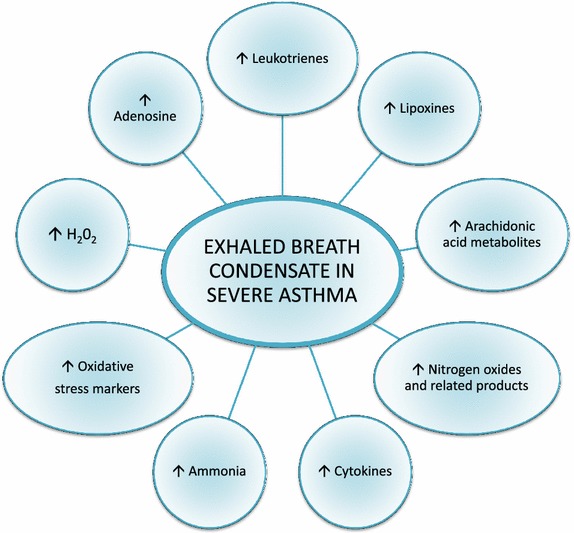
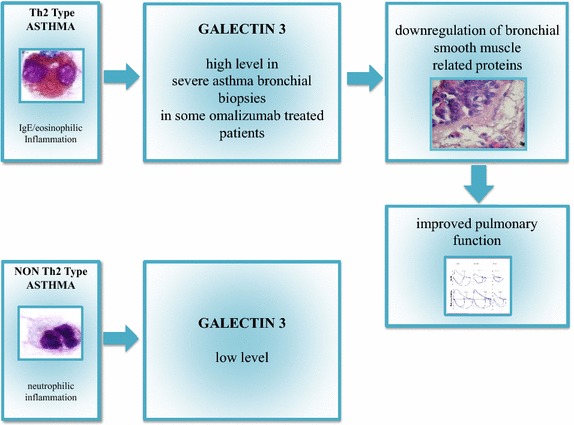
Severe asthma (SA) is a clinically and etiologically heterogeneous respiratory disease which affects among 5-10 % of asthmatic patients. Despite high-dose therapy, a large patients percentage is not fully controlled and has a poor quality of life. In this review, we describe the biomarkers actually known in scientific literature and used in clinical practice for SA assessment and management: neutrophils, eosinophils, periostin, fractional exhaled nitric oxide, exhaled breath condensate and galectins. Moreover, we give an overview on clinical and biological features characterizing severe asthma, paying special attention to the potential use of these ones as reliable markers. We finally underline the need to define different biomarkers panels to select patients affected by severe asthma for specific and personalized therapeutic approach.
Keywords: Allergic inflammation; Biomarkers; Eosinophil; Exhaled nitric oxide; Galectin; Monoclonal antibodies; Neutrophil; Periostin; Severe asthma.
Figures
References
-
- Moore WC, Bleecker ER, Curran-Everett D, Erzurum SC, Ameredes BT, Bacharier L, et al. Characterization of the severe asthma phenotype by the National Heart, Lung, and Blood Institute’s Severe Asthma Research Program. J Allergy Clin Immunol. 2007;119:405–413. doi: 10.1016/j.jaci.2006.11.639. - DOI - PMC - PubMed
Publication types
LinkOut - more resources
Full Text Sources
Other Literature Sources
