


Extensive weight loss reveals distinct gene expression changes in human subcutaneous and visceral adipose tissue
- PMID: 26434764
- PMCID: PMC4593186
- DOI: 10.1038/srep14841
Extensive weight loss reveals distinct gene expression changes in human subcutaneous and visceral adipose tissue
Abstract
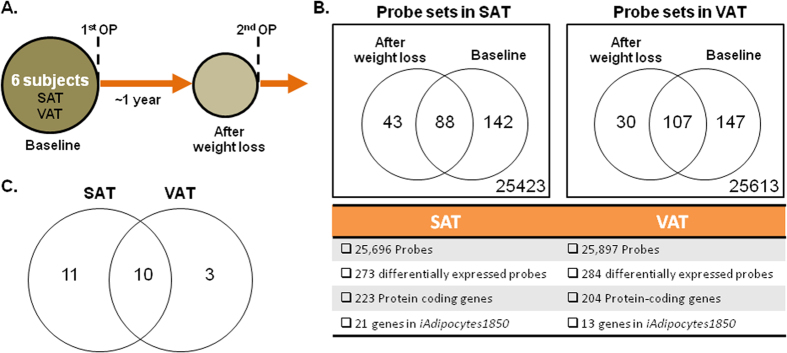
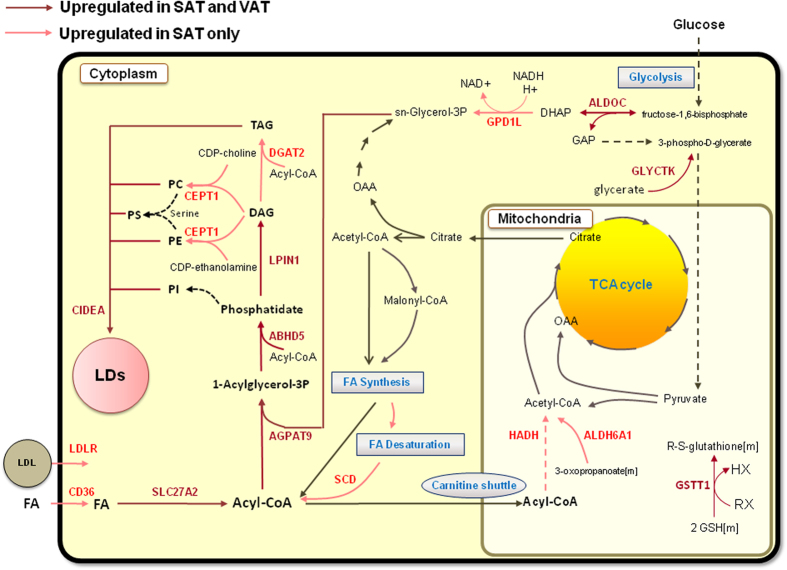
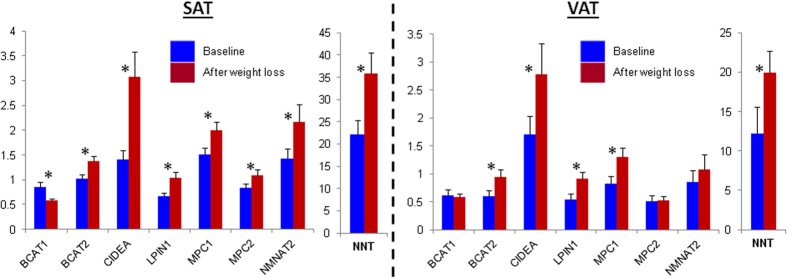
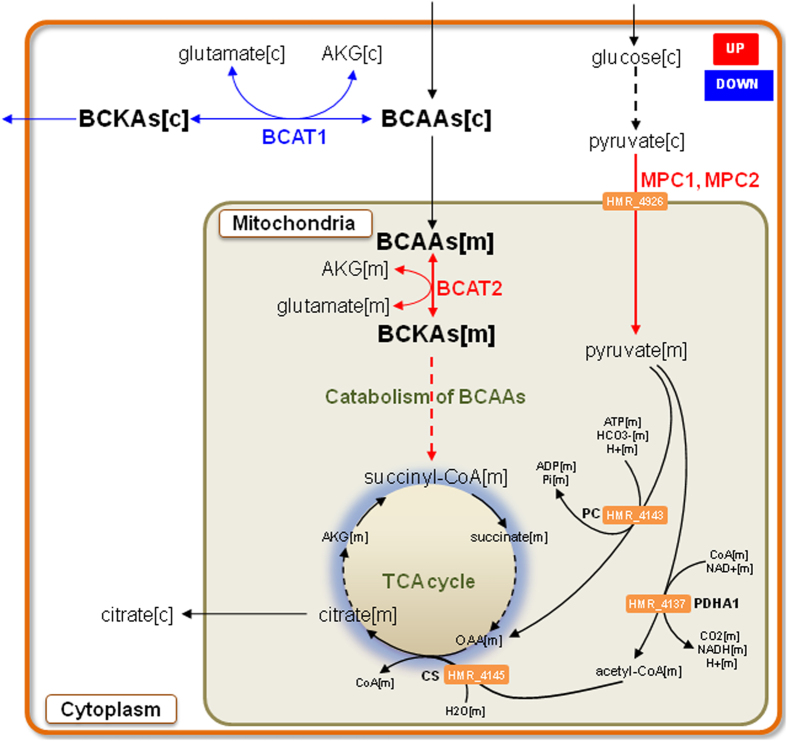
Weight loss has been shown to significantly improve Adipose tissue (AT) function, however changes in AT gene expression profiles particularly in visceral AT (VAT) have not been systematically studied. Here, we tested the hypothesis that extensive weight loss in response to bariatric surgery (BS) causes AT gene expression changes, which may affect energy and lipid metabolism, inflammation and secretory function of AT. We assessed gene expression changes by whole genome expression chips in AT samples obtained from six morbidly obese individuals, who underwent a two step BS strategy with sleeve gastrectomy as initial and a Roux-en-Y gastric bypass as second step surgery after 12 ± 2 months. Global gene expression differences in VAT and subcutaneous (S)AT were analyzed through the use of genome-scale metabolic model (GEM) for adipocytes. Significantly altered gene expressions were PCR-validated in 16 individuals, which also underwent a two-step surgery intervention. We found increased expression of cell death-inducing DFFA-like effector a (CIDEA), involved in formation of lipid droplets in both fat depots in response to significant weight loss. We observed that expression of the genes associated with metabolic reactions involved in NAD+, glutathione and branched chain amino acid metabolism are significantly increased in AT depots after surgery-induced weight loss.
Figures
References
-
- de Onis M., Blossner M. & Borghi E. Global prevalence and trends of overweight and obesity among preschool children. Am J Clin Nutr 92, 1257–1264 (2010). - PubMed
-
- Kimokoti R. W. & Millen B. E. Diet, the Global Obesity Epidemic, and Prevention. J Am Diet Assoc 111, 1137–1140 (2011). - PubMed
-
- Flegal K. M., Graubard B. I., Williamson D. F. & Gail M. H. Cause-specific excess deaths associated with underweight, overweight, and obesity. Jama 298, 2028–2037 (2007). - PubMed
-
- Schleinitz D., Bottcher Y., Bluher M. & Kovacs P. The genetics of fat distribution. Diabetologia 57, 1276–1286 (2014). - PubMed
-
- Lehr S., Hartwig S. & Sell H. Adipokines: a treasure trove for the discovery of biomarkers for metabolic disorders. Proteomics Clin Appl 6, 91–101 (2012). - PubMed
Publication types
MeSH terms
LinkOut - more resources
Full Text Sources
Other Literature Sources
Medical
Research Materials
