. 2015 Oct 5;10(10):e0139504.
doi: 10.1371/journal.pone.0139504. eCollection 2015.

Antisense Oligonucleotide-Mediated Transcript Knockdown in Zebrafish

Affiliations

Antisense Oligonucleotide-Mediated Transcript Knockdown in Zebrafish

Andrea Pauli et al. PLoS One. .

Abstract

Antisense oligonucleotides (ASOs) are synthetic, single-strand RNA-DNA hybrids that induce catalytic degradation of complementary cellular RNAs via RNase H. ASOs are widely used as gene knockdown reagents in tissue culture and in Xenopus and mouse model systems. To test their effectiveness in zebrafish, we targeted 20 developmental genes and compared the morphological changes with mutant and morpholino (MO)-induced phenotypes. ASO-mediated transcript knockdown reproduced the published loss-of-function phenotypes for oep, chordin, dnd, ctnnb2, bmp7a, alk8, smad2 and smad5 in a dosage-sensitive manner. ASOs knocked down both maternal and zygotic transcripts, as well as the long noncoding RNA (lncRNA) MALAT1. ASOs were only effective within a narrow concentration range and were toxic at higher concentrations. Despite this drawback, quantitation of knockdown efficiency and the ability to degrade lncRNAs make ASOs a useful knockdown reagent in zebrafish.


Conflict of interest statement

Competing Interests: MAB and KAL are employed by Integrated DNA Technologies, Inc. (IDT), which offers oligonucleotides for sale similar to some of the compounds described in the manuscript. IDT is however not a publicly traded company and the authors personally do not own any shares or equity in IDT. There are no patents or new products in development relating to products described in the present work. This does not alter the authors' adherence to all the PLOS ONE policies on sharing data and materials.

Figures

Fig 1
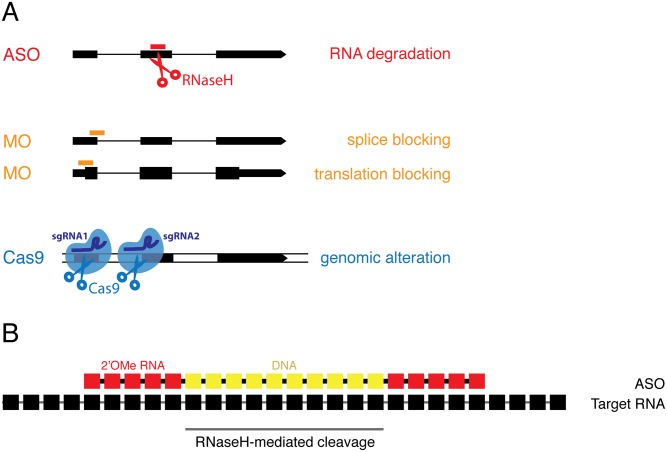
Fig 1. Overview of knockdown and loss-of-function technologies in zebrafish.
A) Antisense oligos (ASOs, red) degrade target RNA, morpholinos (MOs, orange) either block splicing or inhibit translation, and Cas9-sgRNA complexes (blue) create double-strand breaks in DNA leading to genomic alterations. B) ASOs are RNA-DNA hybrid oligonucleotides containing 10 central DNA nucleotides flanked by 5 2’O-Methyl (2’OMe) modified RNA nucleotides on either side (5-10-5 arrangement). Individual nucleotides in the ASO are linked by phosphorothioate bonds to increase stability.
Fig 2
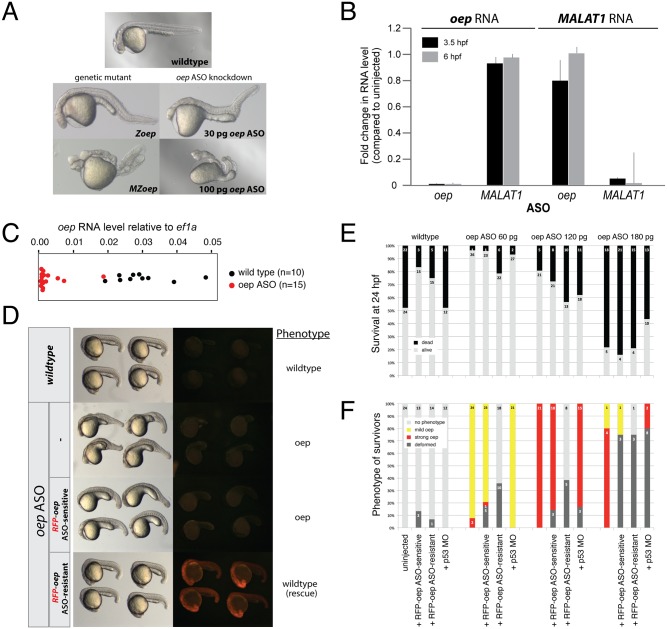
Fig 2. Efficiency and specificity of oep ASO-induced oep (one-eyed-pinhead) mutant phenotypes.
A) Injection of oep ASO induces dosage-dependent oep phenotypes that resemble zygotic (Zoep) and maternal-zygotic (MZoep) oep genetic mutants. B) oep ASO and MALAT1 ASO knockdowns are specific. The RNA levels of oep and MALAT1 were measured by qPCR in oep ASO (100 pg) and MALAT1 ASO (80 pg)-injected embryos. Shown is the fold change in RNA level compared to WT (wildtype), normalized to ef1a (error bars: standard deviation of the mean of 3 independent experiments). C) qPCR-based measurement of oep RNA levels in individual oep ASO (100 pg)-injected (red) or uninjected (black) embryos at shield stage (6 hpf). D) Rescue of oep ASO-induced oep phenotypes by coinjection of an oep ASO-resistant RFP-oep fusion mRNA. Note that the oep ASO-sensitive RFP-oep fusion mRNA is efficiently knocked down (no red fluorescence) and does not rescue. E) Quantitation of survival at 24 hpf and F) quantitation of phenotypic strength in survivors at 24 hpf in the presence versus absence of p53 (p53 MO-injected embryos) or RFP-oep fusion mRNA rescue construct. The number of embryos in each category is indicated.
Fig 3
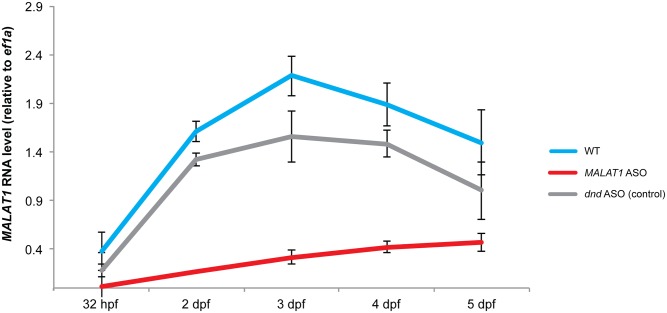
Fig 3. ASO-mediated RNA knockdown persists for several days.
MALAT1 and ef1a RNA levels were measured for 5 days post injection by qPCR in uninjected (= wildtype), MALAT1 ASO (100 pg) and dnd ASO (25 pg)-injected embryos. Shown are MALAT1 RNA levels normalized to ef1a. Error bars show standard deviation of the mean of 2 independent experiments (10 embryos each).
Fig 4
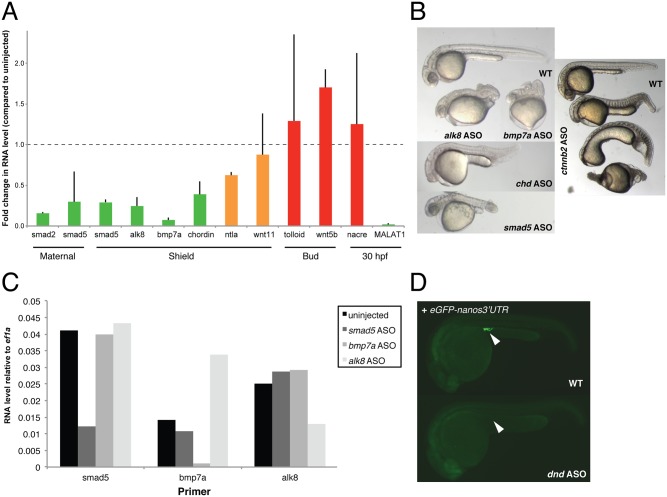
Fig 4. ASO-mediated RNA knockdown correlates with phenotype.
A) The RNA level of the gene corresponding to each ASO was measured (compared to WT, normalized to ef1a) and correlated to the presence of a phenotype: green = reproduced published phenotype (in case of MALAT1: no mutant phenotype), orange = reproduced published phenotype in a smaller percentage of embryos, red = did not produce a phenotype. Injected amount of ASO per embryo: 50 pg smad2 ASO, 50 pg smad5 ASO, 50 pg alk8 ASO, 50 pg bmp7a ASO, 150 pg chordin ASO, 100 pg ntla ASO, 50 pg wnt11 ASO, 150 pg tolloid ASO, 100 pg wnt5b ASO, 100 pg nacre ASO, 150 pg MALAT1 ASO. Error bars show standard deviation of the mean of 2 independent experiments (10 embryos each). B) ASO-generated phenotypes for alk8, bmp7a, chordin, smad5 and ctnnb2 (shown are 3 embryos representative of the different severities of ctnnb2 ASO-induced phenotypes). C) ASOs only target the cognate RNA, and not unrelated RNAs. qPCR-based assessment of ASO specificity to their cognate target genes (10 embryos each). D) dnd ASOs block germ cell formation. Germ cells were labeled by injection of 80 pg eGFP-nanos3’UTR mRNA. Coinjection of 25 pg dnd ASO caused complete loss of green germ cells (white arrow).

References

    1. Cong L, Ran FA, Cox D, Lin S, Barretto R, Habib N, et al. Multiplex genome engineering using CRISPR/Cas systems. Science. 2013;339: 819–823. 10.1126/science.1231143 - DOI - PMC - PubMed
    1. Mali P, Yang L, Esvelt KM, Aach J, Guell M, DiCarlo JE, et al. RNA-guided human genome engineering via Cas9. Science. 2013;339: 823–826. 10.1126/science.1232033 - DOI - PMC - PubMed
    1. Prakash TP. An overview of sugar-modified oligonucleotides for antisense therapeutics. Chem Biodivers. 2011;8: 1616–1641. 10.1002/cbdv.201100081 - DOI - PubMed
    1. Kurreck J. Antisense technologies. Improvement through novel chemical modifications. Eur J Biochem. 2003;270: 1628–1644. 10.1046/j.1432-1033.2003.03555.x - DOI - PubMed
    1. Kelly A, Hurlstone AF. The use of RNAi technologies for gene knockdown in zebrafish. Brief Funct Genomics. 2011;10: 189–196. 10.1093/bfgp/elr014 - DOI - PubMed

Publication types

LinkOut - more resources