


Comparison of methods to detect the in vitro activity of silver nanoparticles (AgNP) against multidrug resistant bacteria
- PMID: 26438142
- PMCID: PMC4593215
- DOI: 10.1186/s12951-015-0120-6
Comparison of methods to detect the in vitro activity of silver nanoparticles (AgNP) against multidrug resistant bacteria
Abstract
Background: Multidrug resistant microorganisms are a growing challenge and new substances that can be useful to treat infections due to these microorganisms are needed. Silver nanoparticle may be a future option for treatment of these infections, however, the methods described in vitro to evaluate the inhibitory effect are controversial.
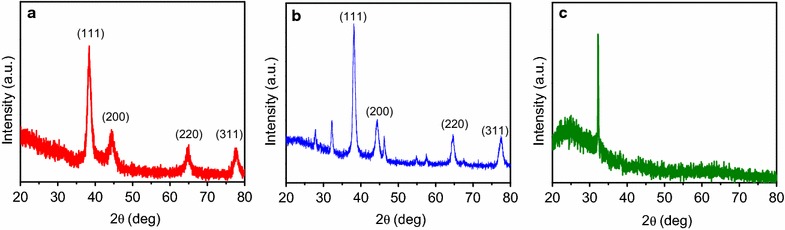
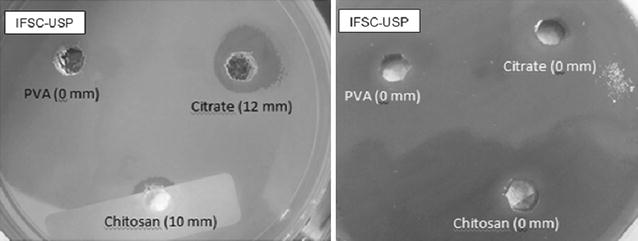
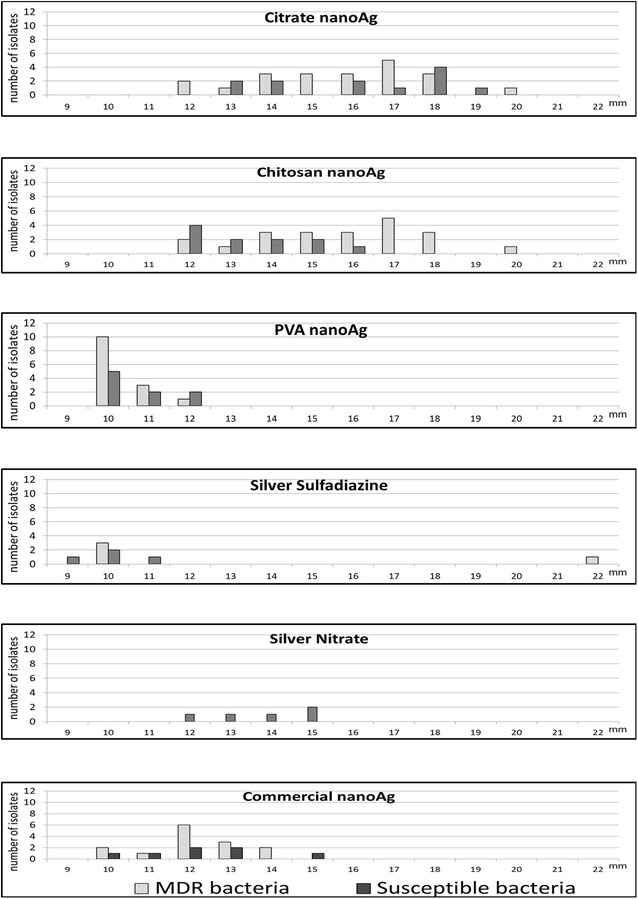
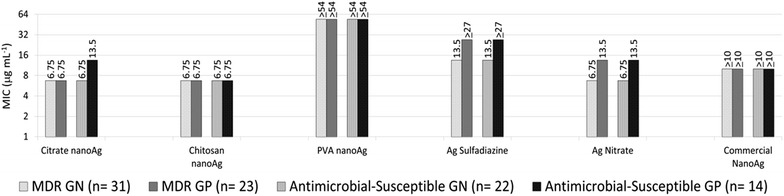
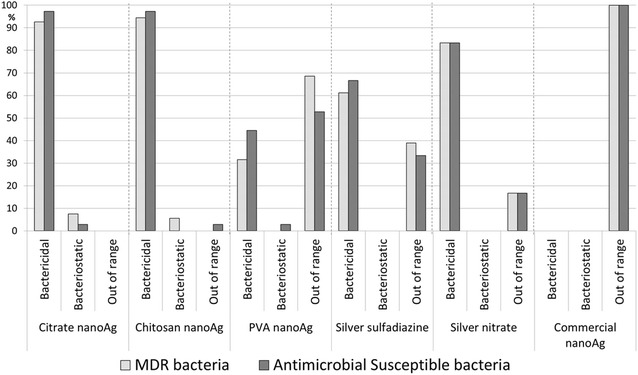
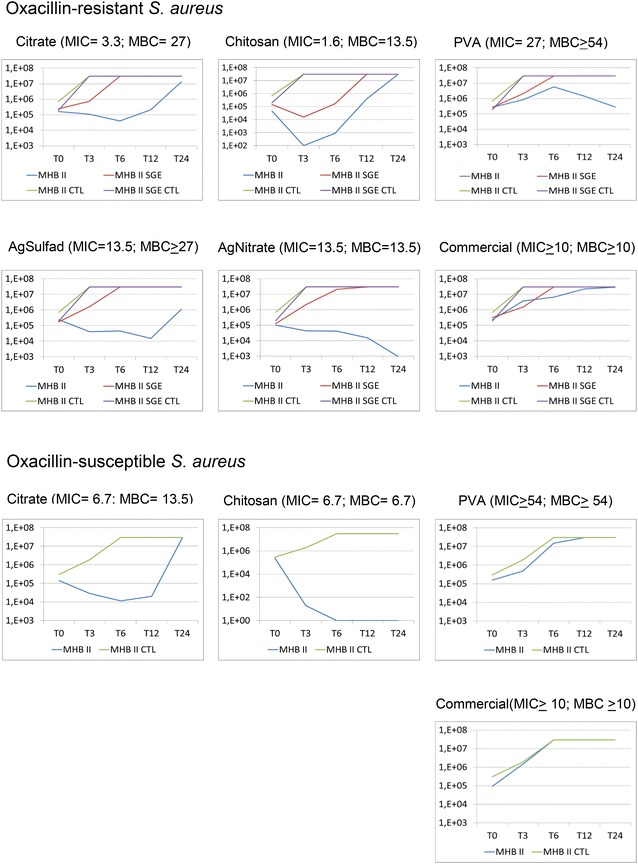
Results: This study evaluated the in vitro activity of silver nanoparticles against 36 susceptible and 54 multidrug resistant Gram-positive and Gram-negative bacteria from clinical sources. The multidrug resistant bacteria were oxacilin-resistant Staphylococcus aureus, vancomycin-resistant Enterococcus spp., carbapenem- and polymyxin B-resistant A. baumannii, carbapenem-resistant P. aeruginosa and carbapenem-resistant Enterobacteriaceae. We analyzed silver nanoparticles stabilized with citrate, chitosan and polyvinyl alcohol and commercial silver nanoparticle. Silver sulfadiazine and silver nitrate were used as control. Different methods were used: agar diffusion, minimum inhibitory concentration, minimum bactericidal concentration and time-kill. The activity of AgNPs using diffusion in solid media and the MIC methods showed similar effect against MDR and antimicrobial-susceptible isolates, with a higher effect against Gram-negative isolates. The better results were achieved with citrate and chitosan silver nanoparticle, both with MIC90 of 6.75 μg mL(-1), which can be due the lower stability of these particles and, consequently, release of Ag(+) ions as revealed by X-ray diffraction (XRD). The bactericidal effect was higher against antimicrobial-susceptible bacteria.
Conclusion: It seems that agar diffusion method can be used as screening test, minimum inhibitory concentration/minimum bactericidal concentration and time kill showed to be useful methods. The activity of commercial silver nanoparticle and silver controls did not exceed the activity of the citrate and chitosan silver nanoparticles. The in vitro inhibitory effect was stronger against Gram-negative than Gram-positive, and similar against multidrug resistant and susceptible bacteria, with best result achieved using citrate and chitosan silver nanoparticles. The bactericidal effect of silver nanoparticle may, in the future, be translated into important therapeutic and clinical options, especially considering the shortage of new antimicrobials against the emerging antimicrobial resistant microorganisms, in particular against Gram-negative bacteria.
Figures
References
-
- Planquette B, Timsit JF, Misset BY, Schwebel C, Azoulay E, Adrie C, Vesin A, Jamali S, Zahar JR, Allaouchiche B, et al. Pseudomonas aeruginosa ventilator-associated pneumonia predictive factors of treatment failure. Am J Respir Crit Care Med. 2013;188:69–76. doi: 10.1164/rccm.201210-1897OC. - DOI - PubMed
-
- Lara HH, Ayala-Nunez NV, Turrent LDI, Padilla CR. Bactericidal effect of silver nanoparticles against multidrug-resistant bacteria. World J Microbiol Biotechnol. 2010;26:615–621. doi: 10.1007/s11274-009-0211-3. - DOI
-
- Ansari MA, Khan HM, Khan AA, Malik A, Sultan A, Shahid M, Shujatullah F, Azam A. Evaluation of antibacterial activity of silver nanoparticles against MSSA and MRSA on isolates from skin infections. Biol Med. 2011;3:141–146.
Publication types
MeSH terms
Substances
LinkOut - more resources
Full Text Sources
Other Literature Sources
Medical
Miscellaneous
