


Comparative analysis of mediastinal fat-associated lymphoid cluster development and lung cellular infiltration in murine autoimmune disease models and the corresponding normal control strains
- PMID: 26439309
- PMCID: PMC4693879
- DOI: 10.1111/imm.12539
Comparative analysis of mediastinal fat-associated lymphoid cluster development and lung cellular infiltration in murine autoimmune disease models and the corresponding normal control strains
Abstract
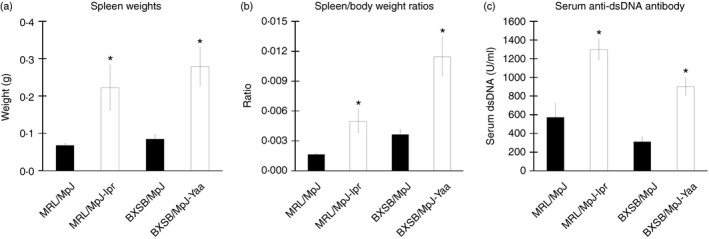
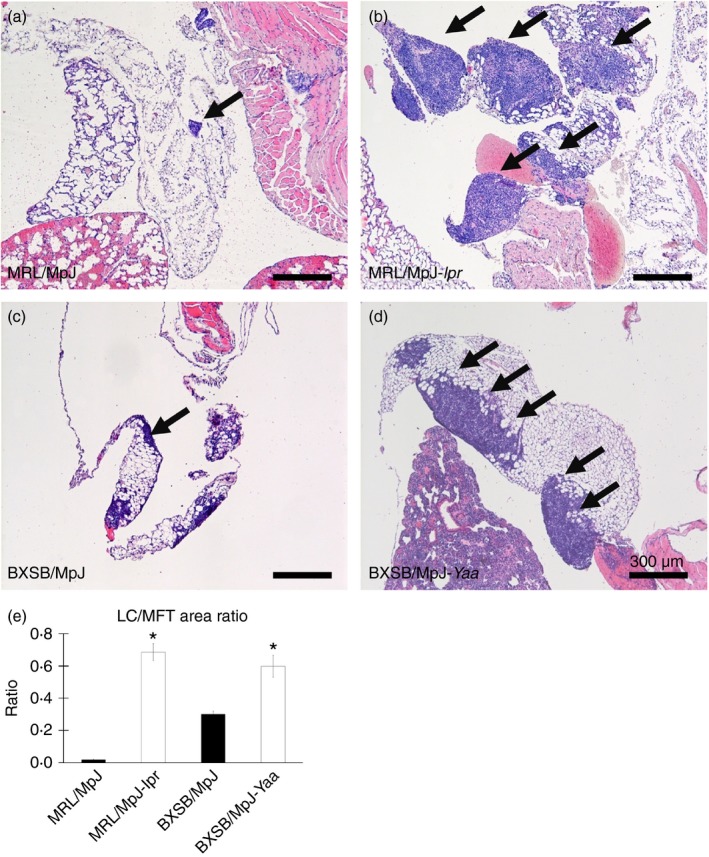
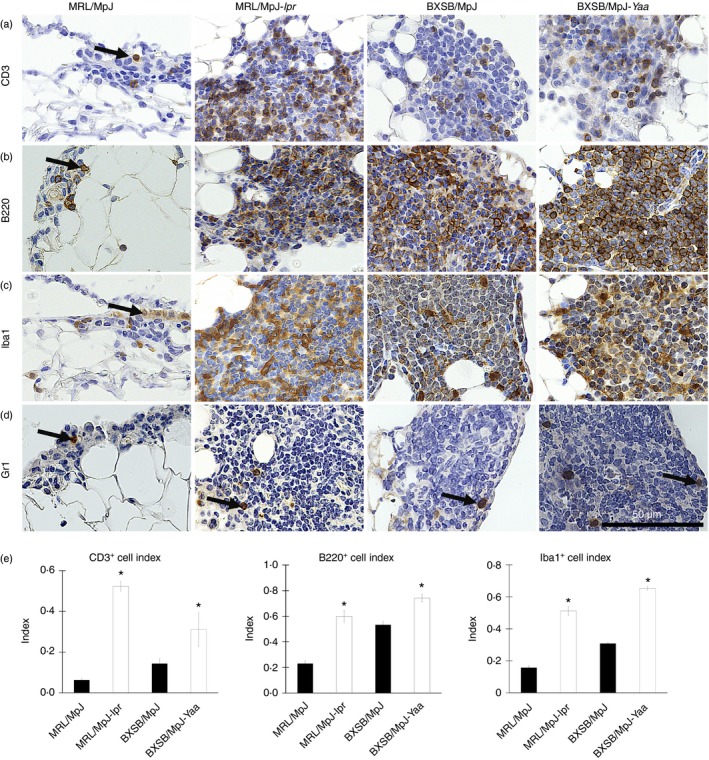
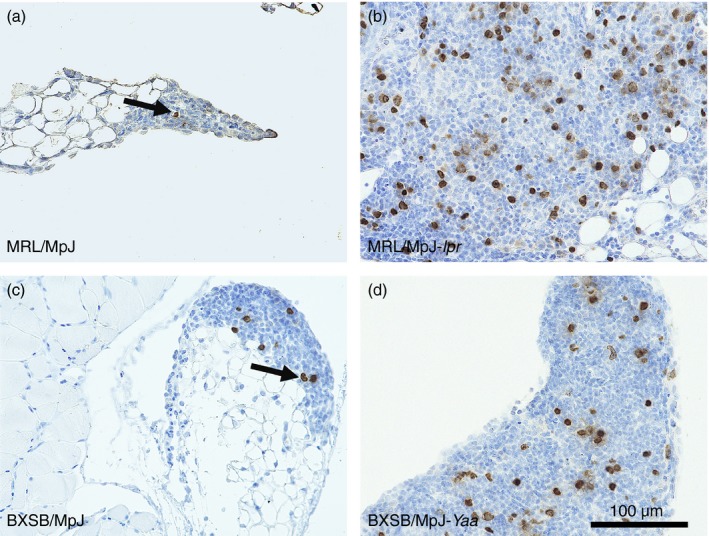
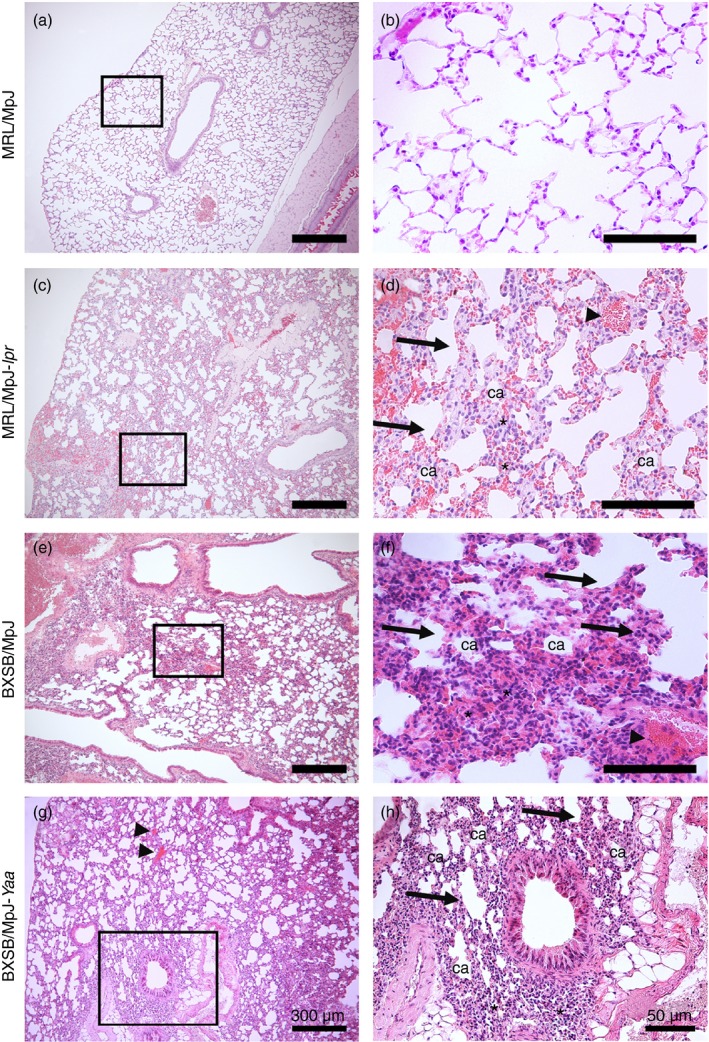
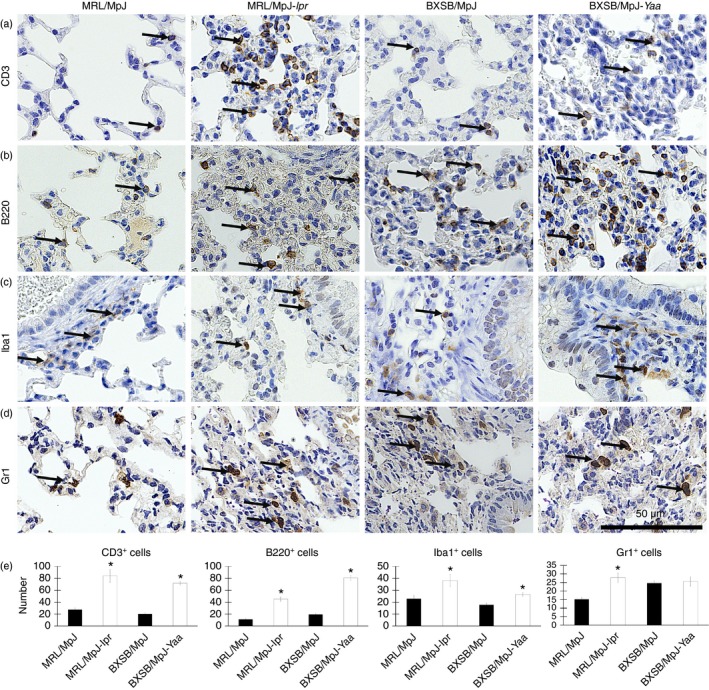
We previously discovered mediastinal fat-associated lymphoid clusters (MFALCs) as novel lymphoid clusters associated with mediastinal fat tissue in healthy mice. However, no data about their morphology in immune-associated disease conditions, and their relationship with lung infiltration, is available to date. In the present study, we compared the morphological features of MFALCs in 4-month-old male murine autoimmune disease models (MRL/MpJ-lpr mice and BXSB/MpJ-Yaa mice) with those of the corresponding control strains (MRL/MpJ and BXSB/MpJ, respectively). In addition, we analysed their correlation with lung infiltration. Furthermore, immunohistochemistry for CD3, B220, Iba1, Gr1 and BrdU was performed to detect T cells and B cells, macrophages, granulocytes and proliferating cells, respectively. The spleen weight to body weight ratios and anti-double-stranded DNA autoantibody titres were found to be significantly higher in the autoimmune models than in the control strains. Furthermore, the autoimmune model presented prominent MFALCs, with a significantly greater ratio of lymphoid cluster area to total mediastinal fat tissue area, and more apparent diffused cellular infiltration into the lung lobes than the other studied strains. Higher numbers of T and B cells, macrophages and proliferating cells, but fewer granulocytes, were observed in the autoimmune models than in the control strains. Interestingly, a significant positive Pearson's correlation between the size of the MFALCs and the density of CD3-, B220- and Iba1-positive cells in the lung was observed. Therefore, our data suggest a potentially important role for MFALCs in the progression of lung disease. However, further investigation is required to clarify the pathological role of MFALCs in lung disease, especially in inflammatory disorders.
Keywords: autoimmune disease model; lymphoid cluster; mediastinal adipose tissue.
© 2015 John Wiley & Sons Ltd.
Figures
References
-
- Zygmunt B, Veldhoen M. T helper cell differentiation more than just cytokines. Adv Immunol 2011; 109:159–96. - PubMed
-
- Rasmussen SB, Reinert LS, Paludan SR. Innate recognition of intracellular pathogens: detection and activation of the first line of defense. APMIS 2009; 117:323–37. - PubMed
-
- Andoniou CE, Andrews DM, Degli‐Esposti MA. Natural killer cells in viral infection: more than just killers. Immunol Rev 2006; 214:239–50. - PubMed
-
- Moro K, Yamada T, Tanabe M, Takeuchi T, Ikawa T, Kawamoto H et al Innate production of TH2 cytokines by adipose tissue‐associated c‐Kit+ Sca‐1+ lymphoid cells. Nature 2010; 463:540–4. - PubMed
Publication types
MeSH terms
Substances
LinkOut - more resources
Full Text Sources
Other Literature Sources
Medical
Molecular Biology Databases
Research Materials
