


H2S: A Novel Gasotransmitter that Signals by Sulfhydration
- PMID: 26439534
- PMCID: PMC4630104
- DOI: 10.1016/j.tibs.2015.08.007
H2S: A Novel Gasotransmitter that Signals by Sulfhydration
Abstract
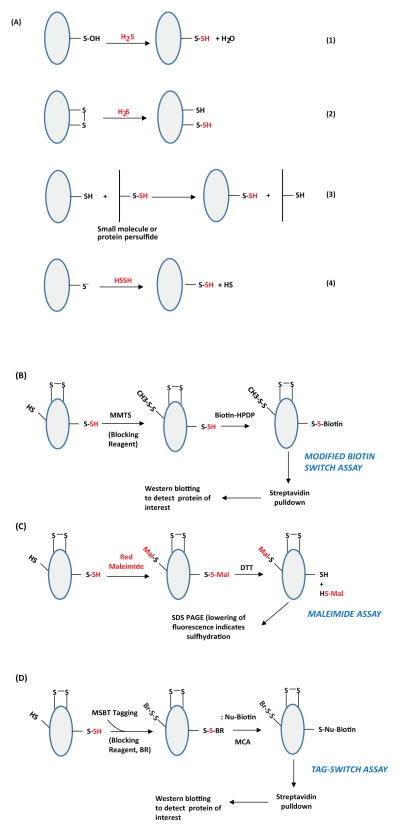
Hydrogen sulfide (H2S) is a member of the growing family of gasotransmitters. Once regarded as a noxious molecule predominantly present in the atmosphere, H2S is now known to be synthesized endogenously in mammals. H2S participates in a myriad of physiological processes ranging from regulation of blood pressure to neuroprotection. Its chemical nature precludes H2S from being stored in vesicles and acting on receptor proteins in the fashion of other chemical messengers. Thus, novel cellular mechanisms have evolved to mediate its effects. This review focuses on sulfhydration (or persulfidation), which appears to be the principal post-translational modification elicited by H2S.
Keywords: cysteine; gasotransmitter; hydrogen sulfide; sulfhydration.
Copyright © 2015 Elsevier Ltd. All rights reserved.
Figures
References
-
- Paul BD, Snyder SH. H2S signalling through protein sulfhydration and beyond. Nature reviews. Mol Cell Biol. 2012;13:499–507. - PubMed
-
- Shibuya N, et al. A novel pathway for the production of hydrogen sulfide from D-cysteine in mammalian cells. Nat Commun. 2013;4:1366. - PubMed
-
- Wang R. Physiological implications of hydrogen sulfide: a whiff exploration that blossomed. Physiol Rev. 2012;92:791–896. - PubMed
Publication types
MeSH terms
Substances
Grants and funding
LinkOut - more resources
Full Text Sources
Other Literature Sources
