


Use of the second-generation antipsychotic, risperidone, and secondary weight gain are associated with an altered gut microbiota in children
- PMID: 26440540
- PMCID: PMC4930121
- DOI: 10.1038/tp.2015.135
Use of the second-generation antipsychotic, risperidone, and secondary weight gain are associated with an altered gut microbiota in children
Abstract
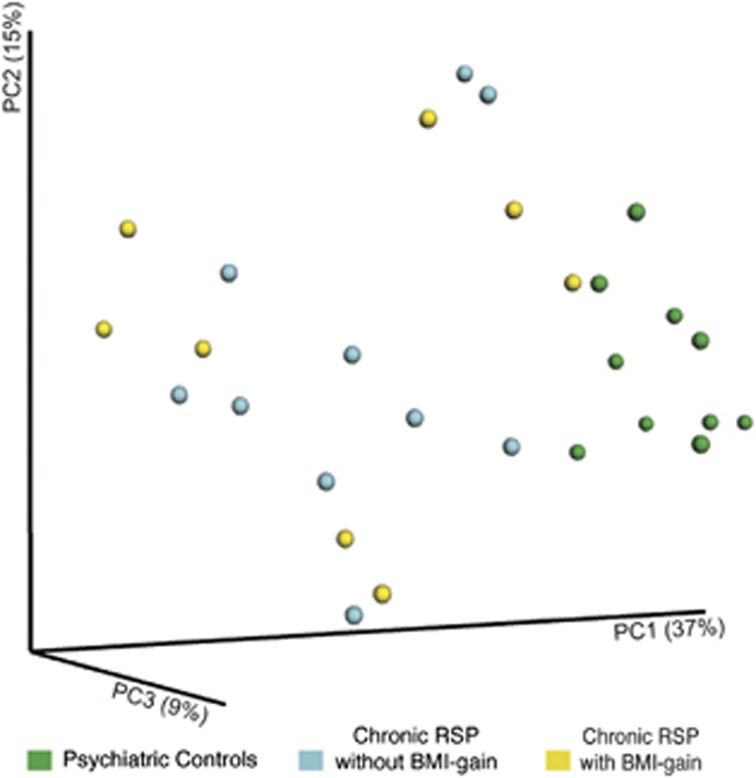
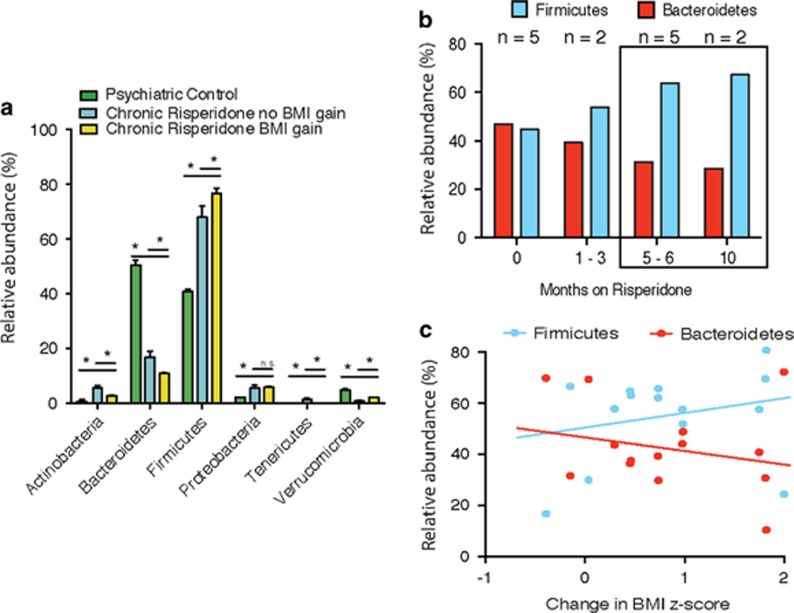
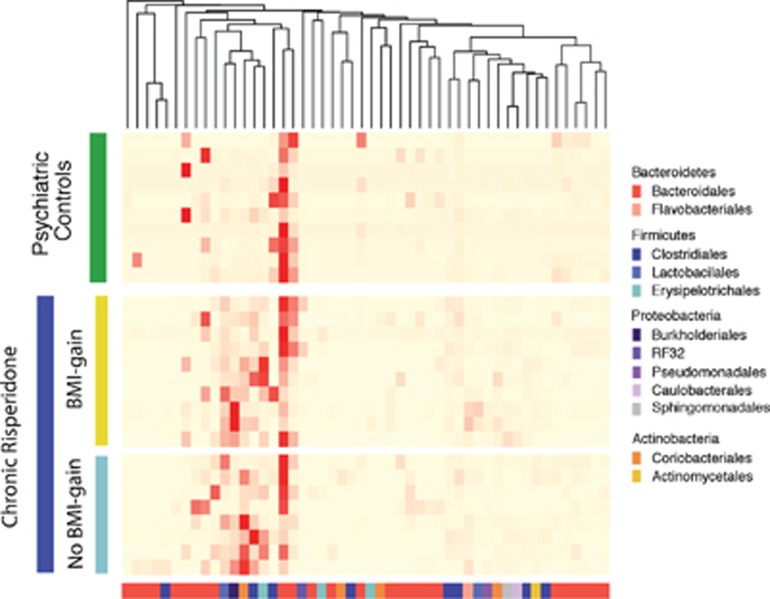
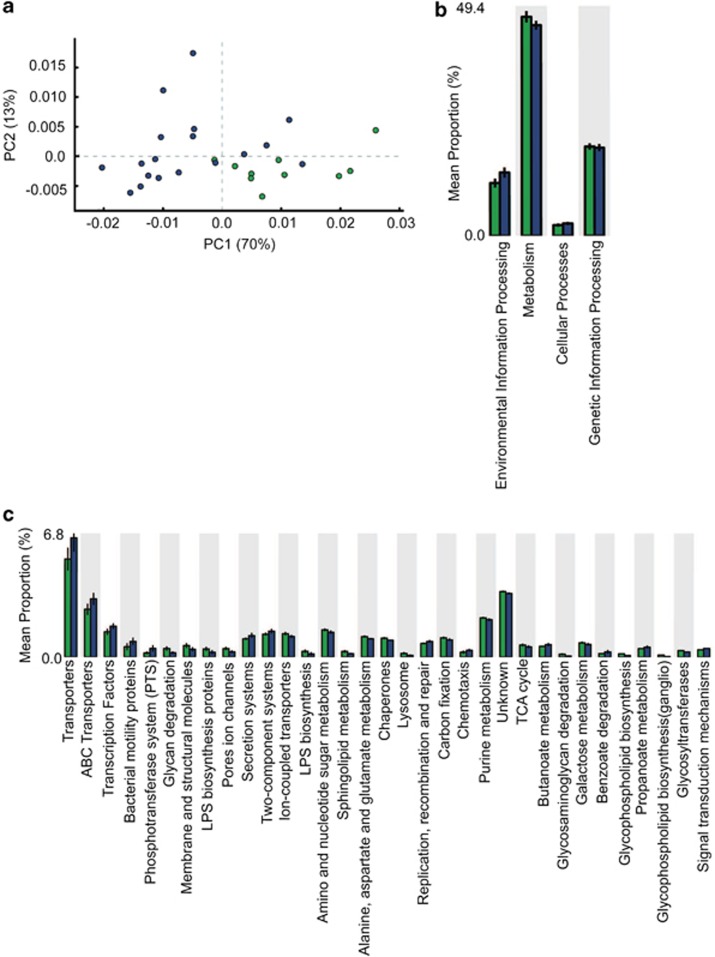
The atypical antipsychotic risperidone (RSP) is often associated with weight gain and cardiometabolic side effects. The mechanisms for these adverse events are poorly understood and, undoubtedly, multifactorial in etiology. In light of growing evidence implicating the gut microbiome in the host's energy regulation and in xenobiotic metabolism, we hypothesized that RSP treatment would be associated with changes in the gut microbiome in children and adolescents. Thus, the impact of chronic (>12 months) and short-term use of RSP on the gut microbiome of pediatric psychiatrically ill male participants was examined in a cross-sectional and prospective (up to 10 months) design, respectively. Chronic treatment with RSP was associated with an increase in body mass index (BMI) and a significantly lower ratio of Bacteroidetes:Firmicutes as compared with antipsychotic-naïve psychiatric controls (ratio=0.15 vs 1.24, respectively; P<0.05). Furthermore, a longitudinal observation, beginning shortly after onset of RSP treatment, revealed a gradual decrease in the Bacteroidetes:Firmicutes ratio over the ensuing months of treatment, in association with BMI gain. Lastly, metagenomic analyses were performed based on extrapolation from 16S ribosomal RNA data using the software package, Phylogenetic Investigation of Communities by Reconstruction of Unobserved States (PICRUSt). Those data indicate that gut microbiota dominating the RSP-treated participants are enriched for pathways that have been implicated in weight gain, such as short-chain fatty acid production.
Figures
References
-
- Olfson M, Blanco C, Liu S-M, Wang S, Correll CU. National trends in the office-based treatment of children, adolescents, and adults with antipsychotics. Arch Gen Psychiatry 2012; 69: 1247. - PubMed
-
- Findling RL, Steiner H, Weller EB. Use of antipsychotics in children and adolescents. J Clin Psychiatry 2005; 66(Suppl 7): 29–40. - PubMed
-
- De Hert M, Dobbelaere M, Sheridan EM, Cohen D, Correll CU. Metabolic and endocrine adverse effects of second-generation antipsychotics in children and adolescents: a systematic review of randomized, placebo controlled trials and guidelines for clinical practice. Eur Psychiatry 2011; 26: 144–158. - PubMed
Publication types
MeSH terms
Substances
Grants and funding
LinkOut - more resources
Full Text Sources
Other Literature Sources
Medical
Molecular Biology Databases
