Permethrin-Treated Clothing as Protection against the Dengue Vector, Aedes aegypti: Extent and Duration of Protection
- PMID: 26440967
- PMCID: PMC4595206
- DOI: 10.1371/journal.pntd.0004109
Permethrin-Treated Clothing as Protection against the Dengue Vector, Aedes aegypti: Extent and Duration of Protection
Abstract
Introduction: Dengue transmission by the mosquito vector, Aedes aegypti, occurs indoors and outdoors during the day. Personal protection of individuals, particularly when outside, is challenging. Here we assess the efficacy and durability of different types of insecticide-treated clothing on laboratory-reared Ae. aegypti.
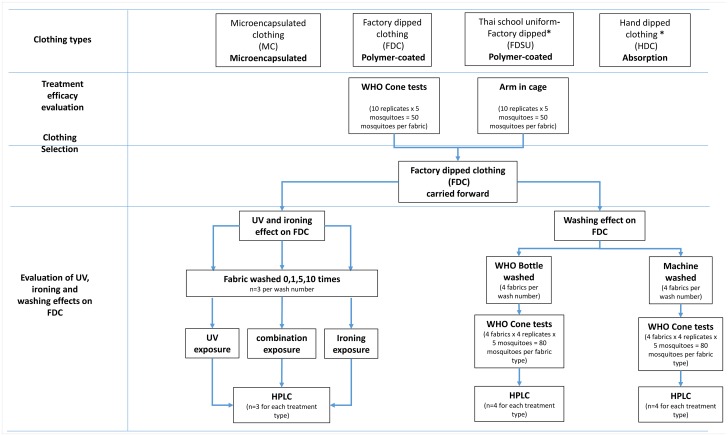
Methods: Standardised World Health Organisation Pesticide Evaluation Scheme (WHOPES) cone tests and arm-in-cage assays were used to assess knockdown (KD) and mortality of Ae. aegypti tested against factory-treated fabric, home-dipped fabric and microencapsulated fabric. Based on the testing of these three different treatment types, the most protective was selected for further analysis using arm-in cage assays with the effect of washing, ultra-violet light, and ironing investigated using high pressure liquid chromatography.
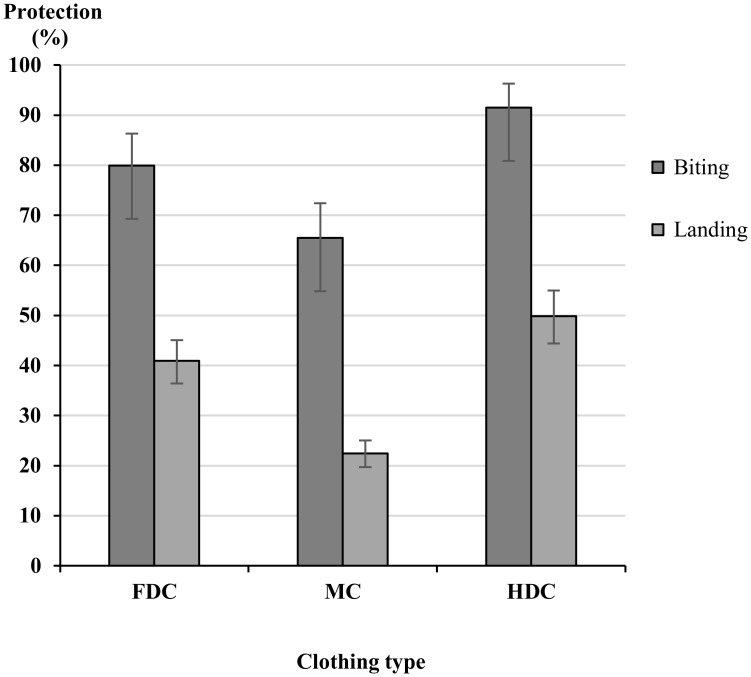
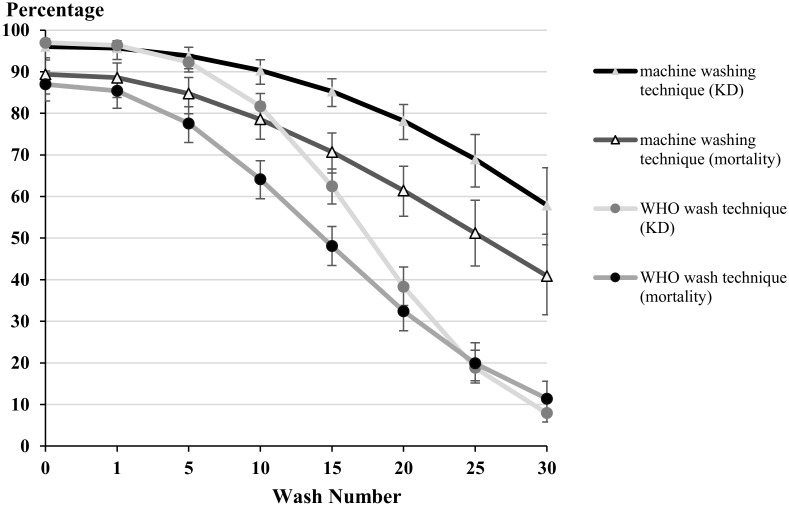
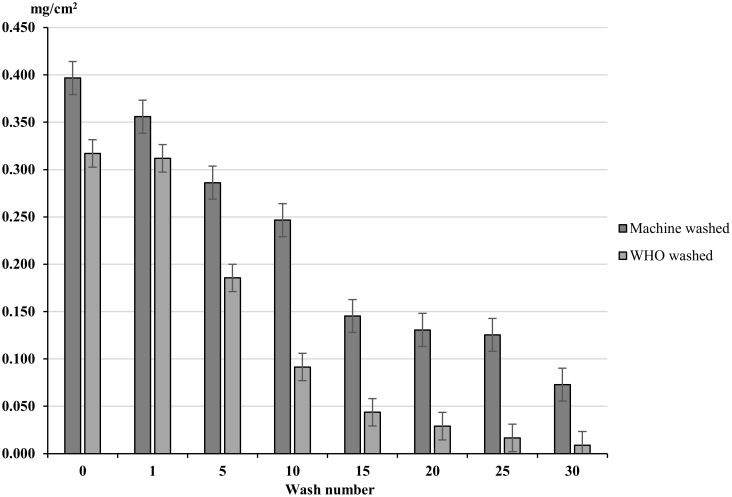
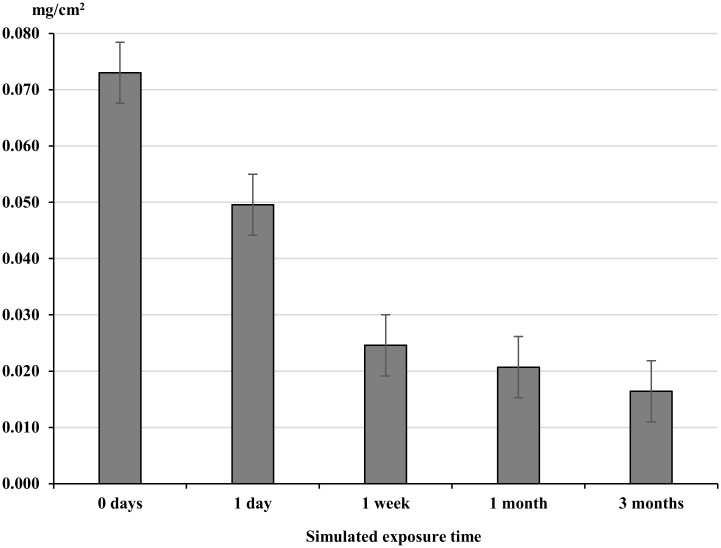
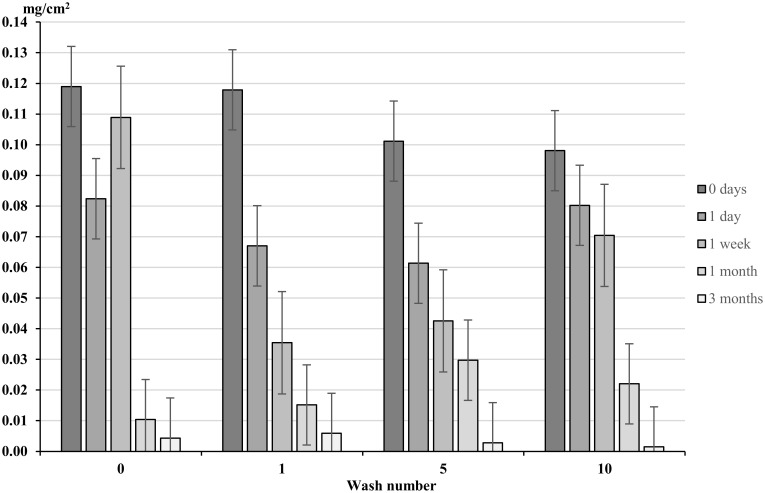
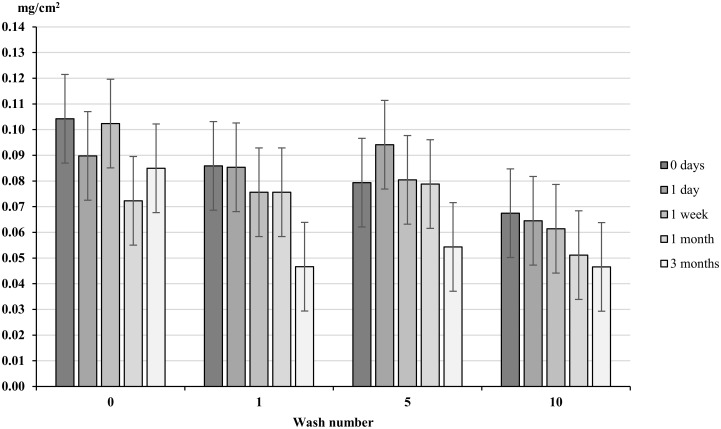
Results: Efficacy varied between the microencapsulated and factory dipped fabrics in cone testing. Factory-dipped clothing showed the greatest effect on KD (3 min 38.1%; 1 hour 96.5%) and mortality (97.1%) with no significant difference between this and the factory dipped school uniforms. Factory-dipped clothing was therefore selected for further testing. Factory dipped clothing provided 59% (95% CI = 49.2%- 66.9%) reduction in landing and a 100% reduction in biting in arm-in-cage tests. Washing duration and technique had a significant effect, with insecticidal longevity shown to be greater with machine washing (LW50 = 33.4) compared to simulated hand washing (LW50 = 17.6). Ironing significantly reduced permethrin content after 1 week of simulated use, with a 96.7% decrease after 3 months although UV exposure did not reduce permethrin content within clothing significantly after 3 months simulated use.
Conclusion: Permethrin-treated clothing may be a promising intervention in reducing dengue transmission. However, our findings also suggest that clothing may provide only short-term protection due to the effect of washing and ironing, highlighting the need for improved fabric treatment techniques.
Conflict of interest statement
The authors have declared that no competing interests exist.
Figures
References
-
- W.H.O. (2012) Global strategy for dengue prevention and control 2012–2020: World Health Organization.
-
- Newton EA, Reiter P (1992) A model of the transmission of dengue fever with an evaluation of the impact of ultra-low volume (ULV) insecticide applications on dengue epidemics. Am J Trop Med Hyg 47: 709–720. - PubMed
Publication types
MeSH terms
Substances
LinkOut - more resources
Full Text Sources
Other Literature Sources
Medical