


Therapeutic antibodies: their mechanisms of action and the pathological findings they induce in toxicity studies
- PMID: 26441475
- PMCID: PMC4588207
- DOI: 10.1293/tox.2015-0031
Therapeutic antibodies: their mechanisms of action and the pathological findings they induce in toxicity studies
Erratum in
-
Errata (Printer's correction).J Toxicol Pathol. 2016 Jan;29(1):74. Epub 2016 Feb 17. J Toxicol Pathol. 2016. PMID: 26989306 Free PMC article.
Abstract
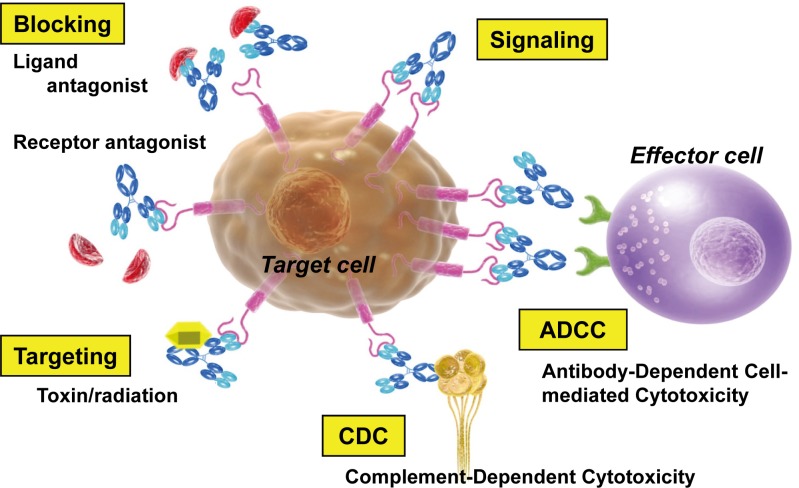
Antibodies can swiftly provide therapeutics to target disease-related molecules discovered in genomic research. Antibody engineering techniques have been actively developed and these technological innovations have intensified the development of therapeutic antibodies. From the mid-1990's, a series of therapeutic antibodies were launched that are now being used in clinic. The disease areas that therapeutic antibodies can target have subsequently expanded, and antibodies are currently utilized as pharmaceuticals for cancer, inflammatory disease, organ transplantation, cardiovascular disease, infection, respiratory disease, ophthalmologic disease, and so on. This paper briefly describes the modes of action of therapeutic antibodies. Several non-clinical study results of the pathological changes induced by therapeutic antibodies are also presented to aid the future assessment of the toxic potential of an antibody developed as a therapeutic.
Keywords: mode of action; pathological findings; therapeutic antibody; toxicity study.
Figures
References
-
- Buss NA, Henderson SJ, McFarlane M, Shenton JM, and de Haan L. Monoclonal antibody therapeutics: history and future. Curr Opin Pharmacol. 12: 615–622. 2012. - PubMed
-
- Emmons C, and Hunsicker LG. Muromonab-CD3 (Orthoclone OKT3): the first monoclonal antibody approved for therapeutic use. Iowa Med. 77: 78–82. 1987. - PubMed
-
- Goldstein G. Overview of the development of Orthoclone OKT3: monoclonal antibody for therapeutic use in transplantation. Transplant Proc. 19(Suppl 1): 1–6. 1987. - PubMed
-
- Presta LG. Engineering of therapeutic antibodies to minimize immunogenicity and optimize function. Adv Drug Deliv Rev. 58: 640–656. 2006. - PubMed
Publication types
LinkOut - more resources
Full Text Sources
Other Literature Sources