


Rapamycin Increases Mortality in db/db Mice, a Mouse Model of Type 2 Diabetes
- PMID: 26442901
- PMCID: PMC4906320
- DOI: 10.1093/gerona/glv170
Rapamycin Increases Mortality in db/db Mice, a Mouse Model of Type 2 Diabetes
Abstract
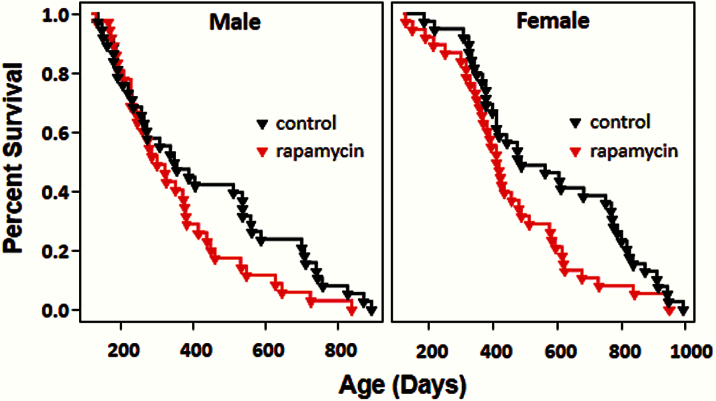
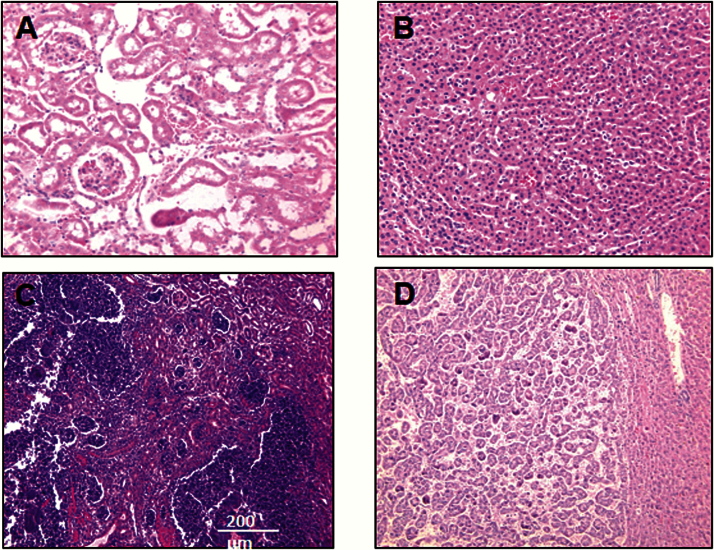
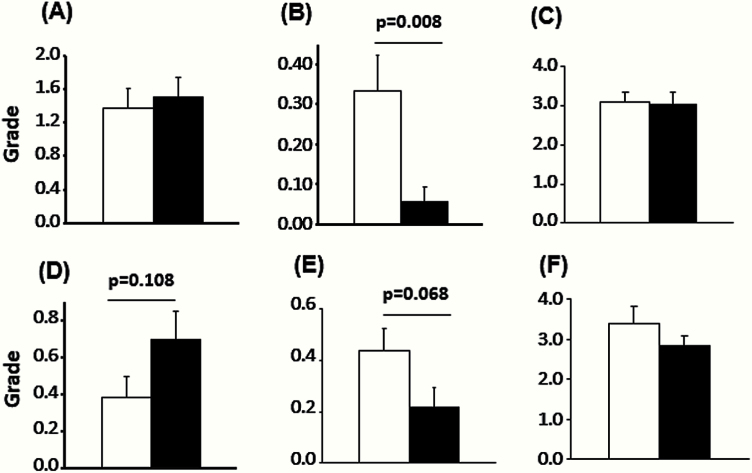
We examined the effect of rapamycin on the life span of a mouse model of type 2 diabetes, db/db mice. At 4 months of age, male and female C57BLKSJ-lepr (db/db) mice (db/db) were placed on either a control diet, lacking rapamycin or a diet containing rapamycin and maintained on these diets over their life span. Rapamycin was found to reduce the life span of the db/db mice. The median survival of male db/db mice fed the control and rapamycin diets was 349 and 302 days, respectively, and the median survival of female db/db mice fed the control and rapamycin diets was 487 and 411 days, respectively. Adjusting for gender differences, rapamycin increased the mortality risk 1.7-fold in both male and female db/db mice. End-of-life pathological data showed that suppurative inflammation was the main cause of death in the db/db mice, which is enhanced slightly by rapamycin treatment.
Keywords: Life span; Obesity; Toxicity; mTOR Inhibition.
© The Author 2015. Published by Oxford University Press on behalf of The Gerontological Society of America. All rights reserved. For permissions, please e-mail: journals.permissions@oup.com.
Figures
References
-
- Cafferkey R, McLaughlin MM, Young PR, Johnson RK, Livi GP. Yeast TOR (DRR) proteins: amino-acid sequence alignment and identification of structural motifs. Gene. 1994;141:133–136. - PubMed
-
- Brown EJ, Albers MW, Shin TB, et al. A mammalian protein targeted by G1-arresting rapamycin-receptor complex. Nature. 1994;369:756–758. - PubMed
-
- Sabatini DM, Erdjument-Bromage H, Lui M, Tempst P, Snyder SH. RAFT1: a mammalian protein that binds to FKBP12 in a rapamycin-dependent fashion and is homologous to yeast TORs. Cell. 1994;78:35–43. - PubMed
-
- Sarbassov DD, Ali SM, Sengupta S, et al. Prolonged rapamycin treatment inhibits mTORC2 assembly and Akt/PKB. Mol Cell. 2006;22:159–168. - PubMed
Publication types
MeSH terms
Substances
Grants and funding
LinkOut - more resources
Full Text Sources
Other Literature Sources
Medical
Miscellaneous
