


Effect of Antiepileptic Drugs for Acute and Chronic Seizures in Children with Encephalitis
- PMID: 26444013
- PMCID: PMC4596539
- DOI: 10.1371/journal.pone.0139974
Effect of Antiepileptic Drugs for Acute and Chronic Seizures in Children with Encephalitis
Abstract
Background: Encephalitis presents with seizures in the acute phase and increases the risk of late unprovoked seizures and epilepsy. This study aimed to evaluate the effect of antiepileptic drugs in pediatric patients with acute seizures due to encephalitis and epilepsy.
Patients and methods: Cases of acute pediatric encephalitis between January 2000 and December 2010 were reviewed. Clinical data, including onset at age, seizure type, seizure frequency, effects of antiepileptic drugs, and prognosis were analyzed.
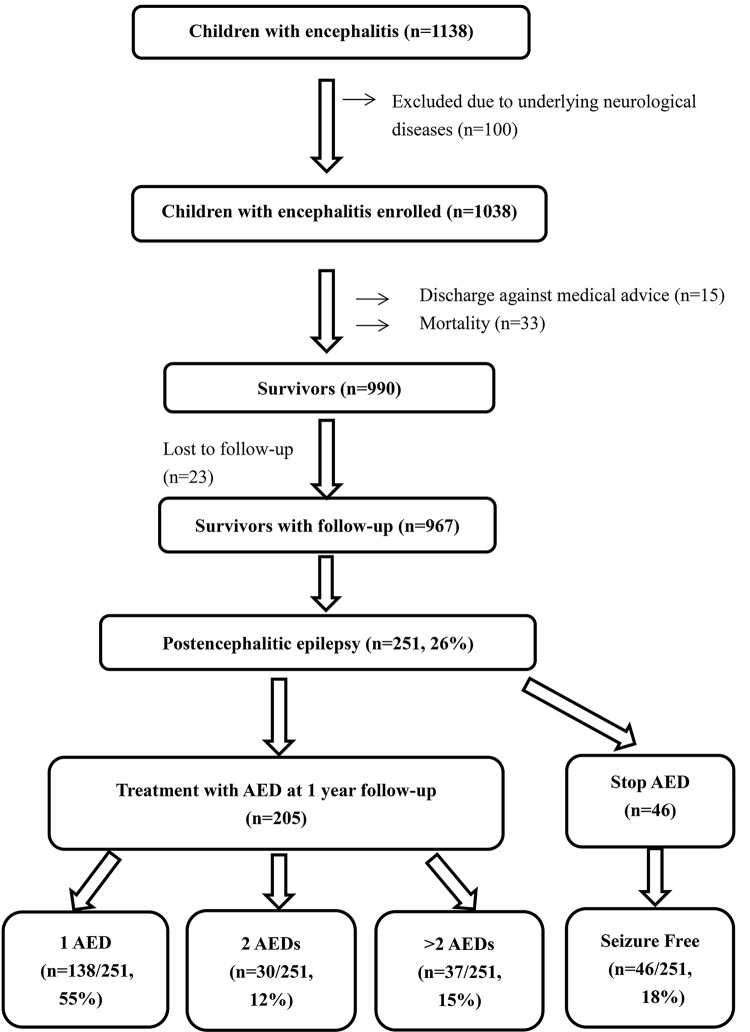
Results: During the study period, 1038 patients (450 girls, 588 boys) were enrolled. Among them, 44.6% (463) had seizures in the acute phase, 33% had status epilepticus, and 26% (251) developed postencephalitic epilepsy. At one year of follow-up, 205 of the 251 patients with postencephalitic epilepsy were receiving antiepileptic drugs while 18% were seizure free even after discontinuing the antiepileptic drugs. Among those with postencephalitic epilepsy, 67% had favorable outcomes and were using <2 anti-epileptic drugs while 15% had intractable seizures and were using ≥ 2 antiepileptic drugs. After benzodiazepines, intravenous phenobarbital was preferred over phenytoin as treatment of postencephalitic seizures in the acute phase. For refractory status epilepticus, high-dose topiramate combined with intravenous high-dose phenobarbital or high-dose lidocaine had less side effects.
Conclusions: Children with encephalitis have a high rate of postencephalitic epilepsy. Phenobarbital and clonazepam are the most common drugs used, alone or in combination, for postencephalitic epilepsy.
Conflict of interest statement
Figures
References
-
- Lin JJ, Lin KL, Hsia SH, Wang HS, Chou IJ, Lin YT, et al. Anti-glutamic acid decarboxylase antibodies in children with encephalitis and status epilepticus. Pediatr Neurol 2012;47:252–258. - PubMed
-
- Awaya Y, Kanematsu S, Fukuyama Y. A follow-up study of children with acute encephalitis or encephalopathy (II): from the viewpoint of epileptogenesis. Folia Psychiat Neurol Jap 1982;36:338–339.
-
- Rosman NP, Peterson DG, Kaye EM, Colton T. Seizures in bacterial meningitis: prevalence, patterns, pathogenesis and prognosis. Pediatr Neurol 1985;1:278–285. - PubMed
Publication types
MeSH terms
Substances
LinkOut - more resources
Full Text Sources
Other Literature Sources
Medical
