


Substance P and Chronic Pain in Patients with Chronic Inflammation of Connective Tissue
- PMID: 26444559
- PMCID: PMC4622041
- DOI: 10.1371/journal.pone.0139206
Substance P and Chronic Pain in Patients with Chronic Inflammation of Connective Tissue
Abstract
Objective: Evidence suggests that substance P (SP) is involved in chronic joint inflammation, such as the pathogenesis of rheumatoid arthritis and osteoarthritis. The goal of the research was to evaluate the correlation between chronic pain and changes in the SP level in patients with chronic inflammation of the connective tissue.
Methods: Patients with osteoarthritis and rheumatoid arthritis were enrolled in this study. The relationship between chronic pain intensity and the serum SP concentration was evaluated in these groups of patients with osteoarthritis and rheumatoid arthritis.
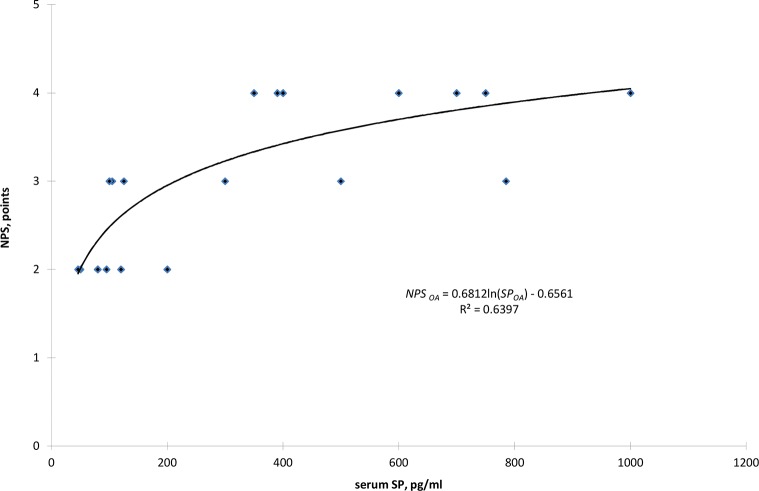
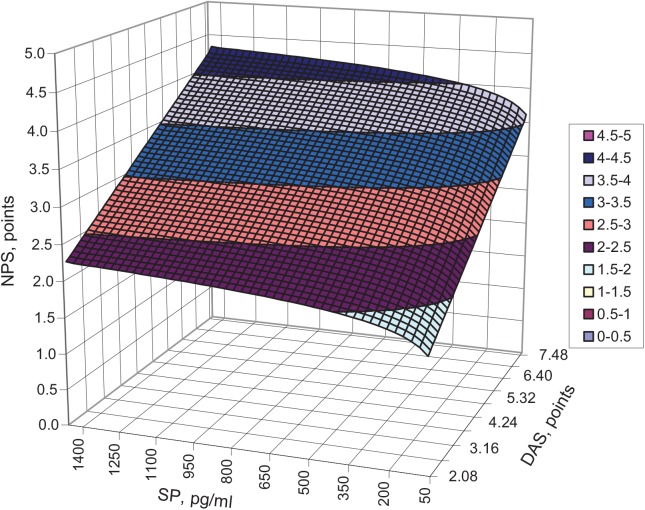
Results: The results showed a positive correlation between the serum SP concentrations and chronic pain intensity.
Conclusions: 1. The SP serum concentration was significantly different between the groups of patients with OA and RA. 2. There was a positive correlation between the serum SP concentration and chronic pain intensity in OA and RA patients.
Conflict of interest statement
Figures
References
-
- O'Connor TM, O'Connell J, O'Brien DI, Goode T, Bredin CP, Shanahan F. The role of substance P in inflammatory disease. J Cell Physiol 2004; 201: 167–180. - PubMed
-
- Pezet S, Malcangio M, McMahon SB. BDNF: a neuromodulator in nociceptive pathways? Brain Res Brain Res Rev 2002; 40: 240–249. - PubMed
-
- Zhang Y, Berger A, Milne CD, Paige CJ. Tachykinins in the immune system. Curr Drug Targets 2006; 7: 1011–1020. - PubMed
-
- Lisowska B. Role and significance of substance P. Geriatria Polska 2007; 3: 63–67.
-
- Goto T, Tanaka T. Tachykinins and tachykinin receptors in bone. Microsc Res Tech 2002; 58: 91–97. - PubMed
MeSH terms
Substances
LinkOut - more resources
Full Text Sources
Other Literature Sources
Medical
