


Ethnic differences in the association between depression and chronic pain: cross sectional results from UK Biobank
- PMID: 26445480
- PMCID: PMC4596418
- DOI: 10.1186/s12875-015-0343-5
Ethnic differences in the association between depression and chronic pain: cross sectional results from UK Biobank
Abstract
Background: Comorbid chronic pain and depression is a challenging dyad of conditions to manage in primary care and reporting has shown to vary by ethnic group. Whether the relationship between depression and chronic pain varies by ethnicity is unclear. This study aims to explore chronic pain and depression reporting across ethnic groups and examine whether this association differs, independently of potential confounding factors.
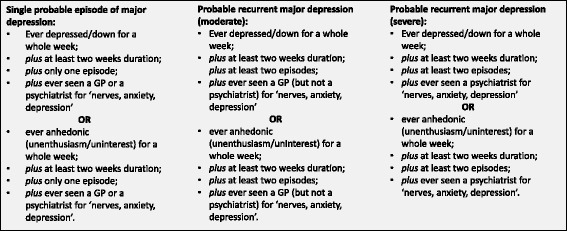
Methods: Cross-sectional study of UK Biobank participants with complete data on chronic pain and probable lifetime history of depression, who reported their ethnic group as White, Asian/Asian British or Black/Black British. Chronic pain classification: present if participants had ≥ 1 site of body pain (up to seven sites or "pain all over the body" could be selected) that lasted ≥ 3 months; extent of chronic pain categories: 0, 1, 2-3, 4-7 sites or pain all over the body. Probable depression classification: an algorithm of low mood, anhedonia and help-seeking behaviour. Relationship between depression and presence/extent of chronic pain assessed using logistic/multinomial regression models (odds ratio (OR); relative risk ratio (RRR), 95 % confidence intervals), adjusted for sociodemographic, lifestyle, and morbidity factors; and a final adjustment for current depressive symptoms.
Results: The number of participants eligible for inclusion was 144,139: 35,703 (94 %) White, 4539 (3 %) Asian, and 3897 (3 %) Black. Chronic pain was less (40.5 %, 45.8 %, 45.0 %, respectively) and depression more (22.1 %, 12.9 %, 13.8 %, respectively) commonly reported in White participants than Asian and Black participants. Statistically significant associations between depression and presence/extent of chronic pain persisted following adjustment for potential confounding variables; this relationship was strongest for Black participants (presence of chronic pain: OR 1.86 (1.52, 2.27); RRR 1 site 1.49 (1.16, 1.91), 2-3 sites 1.98 (1.53, 2.56), 4-7 sites 3.23 (2.09, 4.99), pain all over the body 3.31 (2.05, 5.33). When current depressive symptoms were considered these relationships were attenuated.
Conclusions: Chronic pain and depression reporting varies across ethnic groups. Differences in health seeking behaviour between ethnic groups may impact on the results reported. Clinicians, particularly in primary care, need to be aware of the cultural barriers within certain ethic groups to expressing concern over mood and to consider their approach accordingly.
Figures
References
Publication types
MeSH terms
Grants and funding
LinkOut - more resources
Full Text Sources
Other Literature Sources
Medical
