


Use of emergency care services by immigrants—a survey of walk-in patients who attended the Oslo Accident and Emergency Outpatient Clinic
- PMID: 26446671
- PMCID: PMC4596368
- DOI: 10.1186/s12873-015-0055-0
Use of emergency care services by immigrants—a survey of walk-in patients who attended the Oslo Accident and Emergency Outpatient Clinic
Abstract
Background: The Oslo Accident and Emergency Outpatient Clinic (OAEOC) experienced a 5-6% annual increase in patient visits between 2005 and 2011, which was significantly higher than the 2-3% annual increase among registered Oslo residents. This study explored immigrant walk-in patients' use of both the general emergency and trauma clinics of the OAEOC and their concomitant use of regular general practitioners (RGPs) in Oslo.
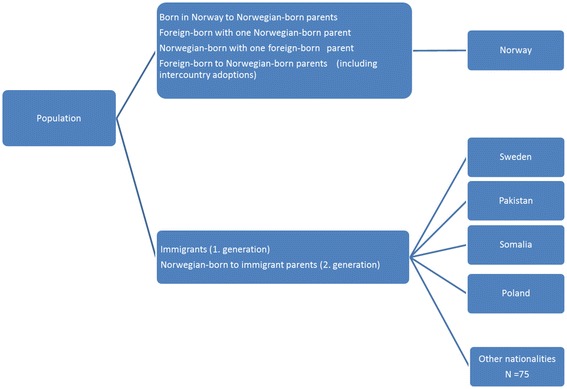
Methods: A cross-sectional survey of walk-in patients attending the OAEOC during 2 weeks in September 2009. We analysed demographic data, patients' self-reported affiliation with the RGP scheme, self-reported number of OAEOC and RGP consultations during the preceding 12 months. The first approach used Poisson regression models to study visit frequency. The second approach compared the proportions of first- and second-generation immigrants and those from the four most frequently represented countries (Sweden, Pakistan, Somalia and Poland) among the patient population, with their respective proportions within the general Oslo population.
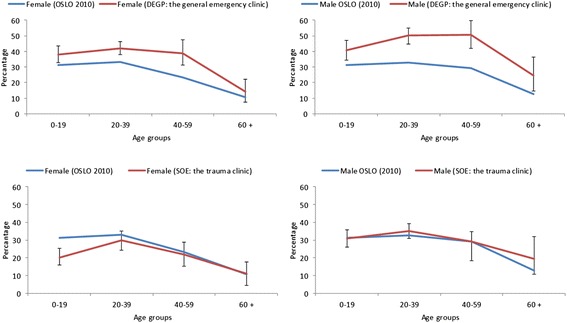
Results: The analysis included 3864 patients: 1821 attended the Department of Emergency General Practice ("general emergency clinic"); 2043 attended the Section for Orthopaedic Emergency ("trauma clinic"). Both first- and second-generation immigrants reported a significantly higher OAEOC visit frequency compared with Norwegians. Norwegians, representing 73% of the city population accounted for 65% of OAEOC visits. In contrast, first- and second-generation immigrants made up 27% of the city population but accounted for 35% of OAEOC visits. This proportional increase in use was primarily observed in the general emergency clinic (42% of visits). Their proportional use of the trauma clinic (29%) was similar to their proportion in the city. Among first-generation immigrants only 71% were affiliated with the RGP system, in contrast to 96% of Norwegians. Similar finding were obtained when immigrants were grouped by nationality. Compared to Norwegians, immigrants from Sweden, Pakistan and Somalia reported using the OAEOC significantly more often. Immigrants from Sweden, Poland and Somalia were over-represented at both clinics. The least frequent RGP affiliation was among immigrants from Sweden (32%) and Poland (65%).
Conclusions: In Norway, immigrant subgroups use emergency health care services in different ways. Understanding these patterns of health-seeking behaviour may be important when designing emergency health services.
Figures
References
-
- Statistikkbanken [Statistics Norway. StatBank Norway]. 2014. https://www.ssb.no/statistikkbanken/. Accessed 10 November 2014.
Publication types
MeSH terms
LinkOut - more resources
Full Text Sources
Other Literature Sources
Medical
