Review
. 2016 Mar-Apr;5(2):233-67.
doi: 10.1002/wdev.214. Epub 2015 Oct 8.

Genome engineering: Drosophila melanogaster and beyond

Affiliations
Review

Genome engineering: Drosophila melanogaster and beyond

Koen J T Venken et al. Wiley Interdiscip Rev Dev Biol. 2016 Mar-Apr.

Abstract

A central challenge in investigating biological phenomena is the development of techniques to modify genomic DNA with nucleotide precision that can be transmitted through the germ line. Recent years have brought a boon in these technologies, now collectively known as genome engineering. Defined genomic manipulations at the nucleotide level enable a variety of reverse engineering paradigms, providing new opportunities to interrogate diverse biological functions. These genetic modifications include controlled removal, insertion, and substitution of genetic fragments, both small and large. Small fragments up to a few kilobases (e.g., single nucleotide mutations, small deletions, or gene tagging at single or multiple gene loci) to large fragments up to megabase resolution can be manipulated at single loci to create deletions, duplications, inversions, or translocations of substantial sections of whole chromosome arms. A specialized substitution of chromosomal portions that presumably are functionally orthologous between different organisms through syntenic replacement, can provide proof of evolutionary conservation between regulatory sequences. Large transgenes containing endogenous or synthetic DNA can be integrated at defined genomic locations, permitting an alternative proof of evolutionary conservation, and sophisticated transgenes can be used to interrogate biological phenomena. Precision engineering can additionally be used to manipulate the genomes of organelles (e.g., mitochondria). Novel genome engineering paradigms are often accelerated in existing, easily genetically tractable model organisms, primarily because these paradigms can be integrated in a rigorous, existing technology foundation. The Drosophila melanogaster fly model is ideal for these types of studies. Due to its small genome size, having just four chromosomes, the vast amount of cutting-edge genetic technologies, and its short life-cycle and inexpensive maintenance requirements, the fly is exceptionally amenable to complex genetic analysis using advanced genome engineering. Thus, highly sophisticated methods developed in the fly model can be used in nearly any sequenced organism. Here, we summarize different ways to perform precise inheritable genome engineering using integrases, recombinases, and DNA nucleases in the D. melanogaster. For further resources related to this article, please visit the WIREs website.


Figures

Figure 1
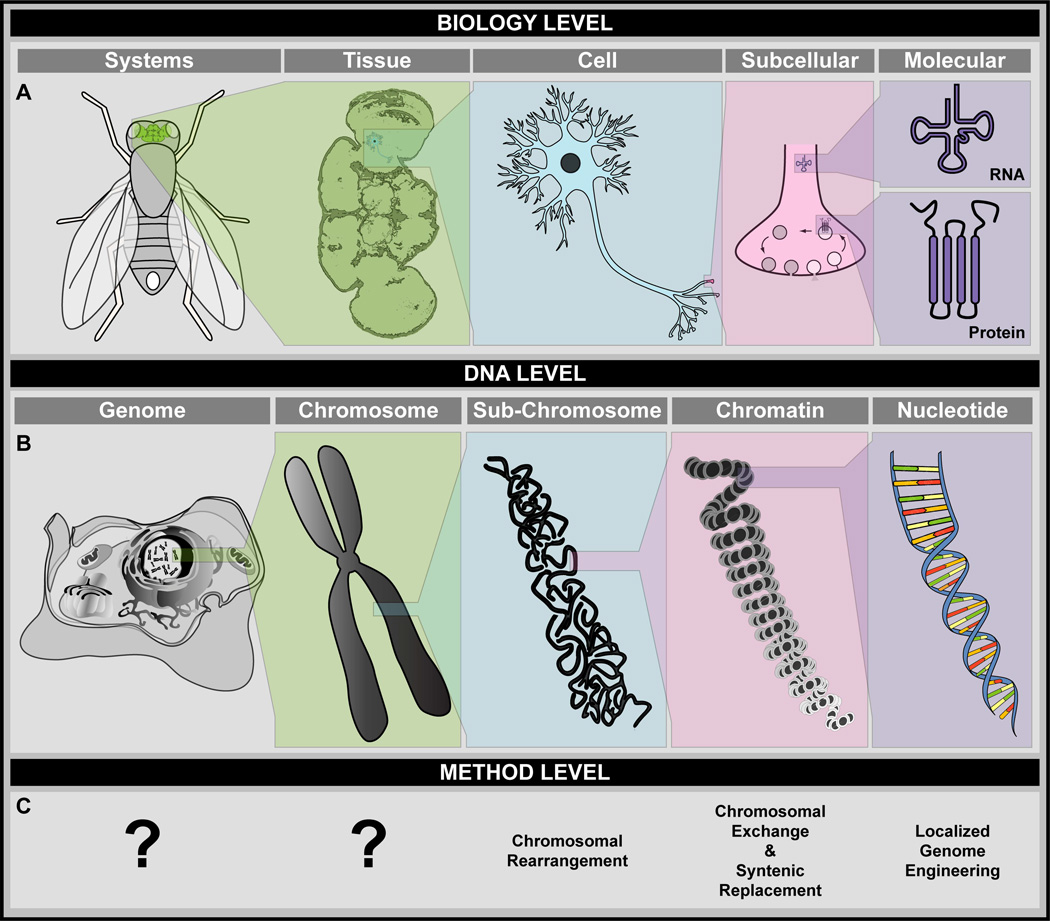
Figure 1. Overview of Phenotype Analysis and Genome Engineering at Different Levels in Animal Model Systems
A. The biology level. Mutant phenotypes and DNA modifications can be analyzed at systems-, tissue-, cell-, subcellular-, and molecular levels. B. The DNA level. DNA modifications can be performed at genome-, chromosome-, subchromosome-, chromatin-, or nucleotide-levels. C. Methods to perform genome engineering at the different DNA levels. Currently, engineering technologies to manipulate genomes or chromosomes in toto are unavailable for Drosophila melanogaster or any other multicellular eukaryotic organism. On the other hand, numerous methods are available to precisely engineer chromosomal sections, gene environments, and gene properties. Note: Drawings for panel B were acquired by modifying free vector templates available from www.vector.me.
Figure 2
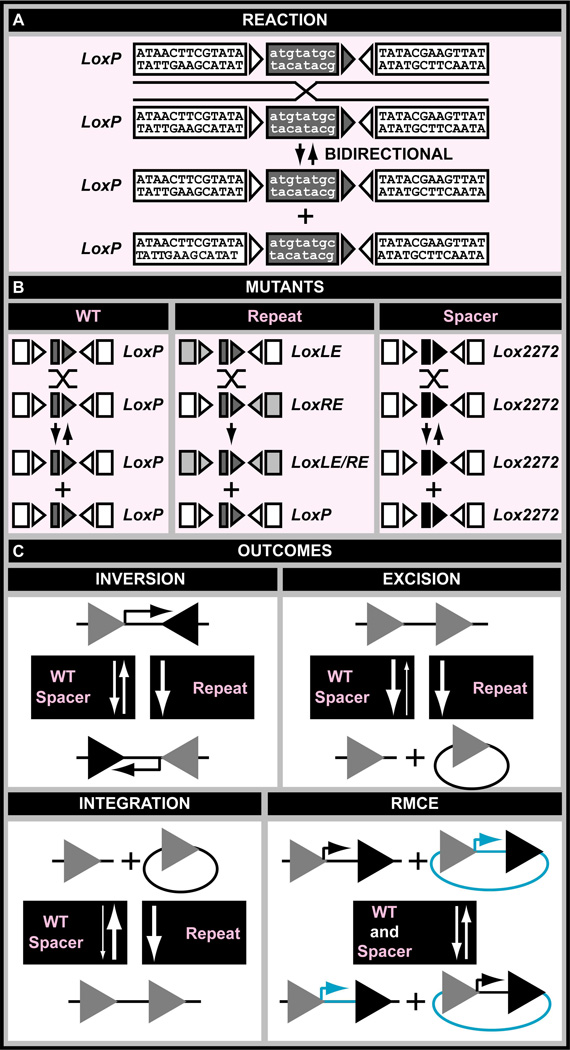
Figure 2. Recombinases
A. Molecular reaction performed by the Cre recombinase. B. Comparison of mutant and wild type recombination recognition sites. Inverted repeat mutant- and spacer mutant recombination recognition sites are indicated. C. Outcomes of recombination reactions using wild type-, inverted repeat mutant-, and spacer mutant recombination sites. Recombination reactions can result in inversion, excision, integration, or recombinase-mediated cassette exchange (RMCE) events. Reaction directionality, i.e., uni- or bidirectional, using different recombination site classes is indicated.
Figure 3
Figure 3. Integrases
A. Molecular reaction performed by the ΦC31 integrase. B. Comparison of mutant and wild type integration recognition sites. Inverted repeat mutant- and spacer mutant integration recognition sites are indicated. C. Outcomes of integration reactions using wild type- and spacer mutant integration sites. Integration reactions can result in inversion, excision, integration, or integrase-mediated cassette exchange (IMCE) events. Reaction directionality, i.e., unidirectional, using different integration site classes is indicated.
Figure 4
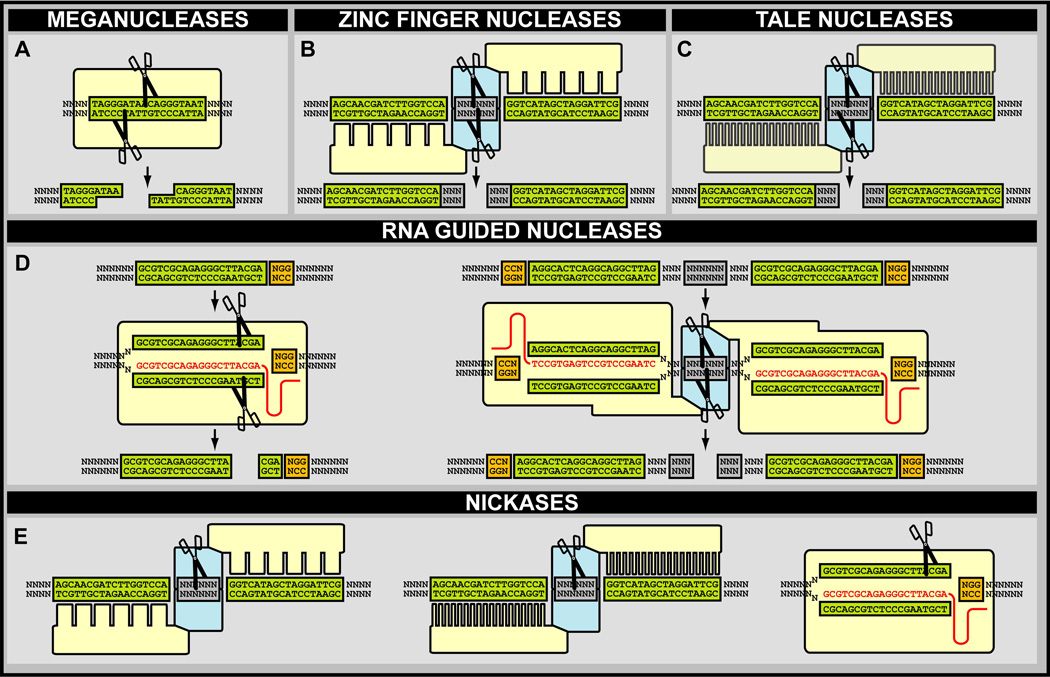
Figure 4. DNA Nucleases
A. The I-SceI meganuclease and recognition of its DNA target site. B. Zinc finger nucleases and DNA recognition through an array of stitched zinc fingers that each recognizes a unique DNA triplet. C. Transcription activator-like effector (TALE) nucleases and DNA recognition through an array of stitched TALE repeats that each recognize a unique single DNA base pair. D. RNA-guided nucleases and DNA recognition through base pairing of an RNA guide and its DNA target site. E. Nickases based on zinc finger binding domains (Left), TALE binding domains (Middle), and RNA guided nucleases (Right).
Figure 5
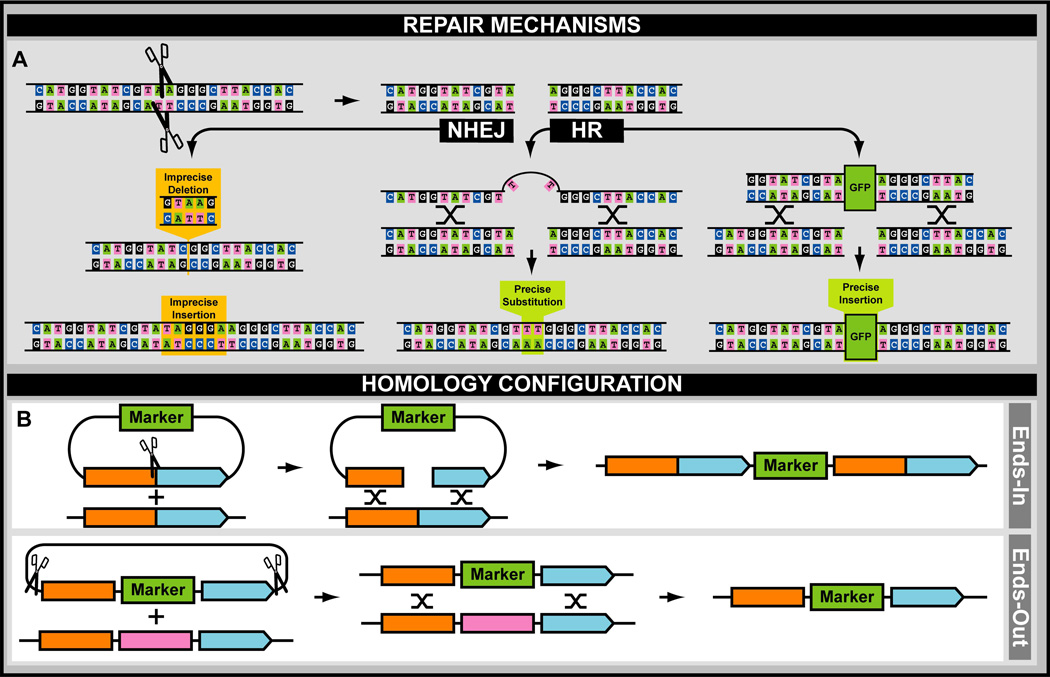
Figure 5. Repair Mechanisms and Homology Configuration
A. DNA repair mechanisms after a double stranded cut. Non-homologous end joining (Left), and homologous recombination using an oligonucleotide (Middle) or double stranded DNA fragment (Right) are indicated. B. Homology configuration of a double stranded DNA template during homologous recombination. Ends-in (i.e., insertional) and ends-out (i.e., replacement) gene targeting are illustrated.
Figure 6
Figure 6. Experimental Genome Engineering
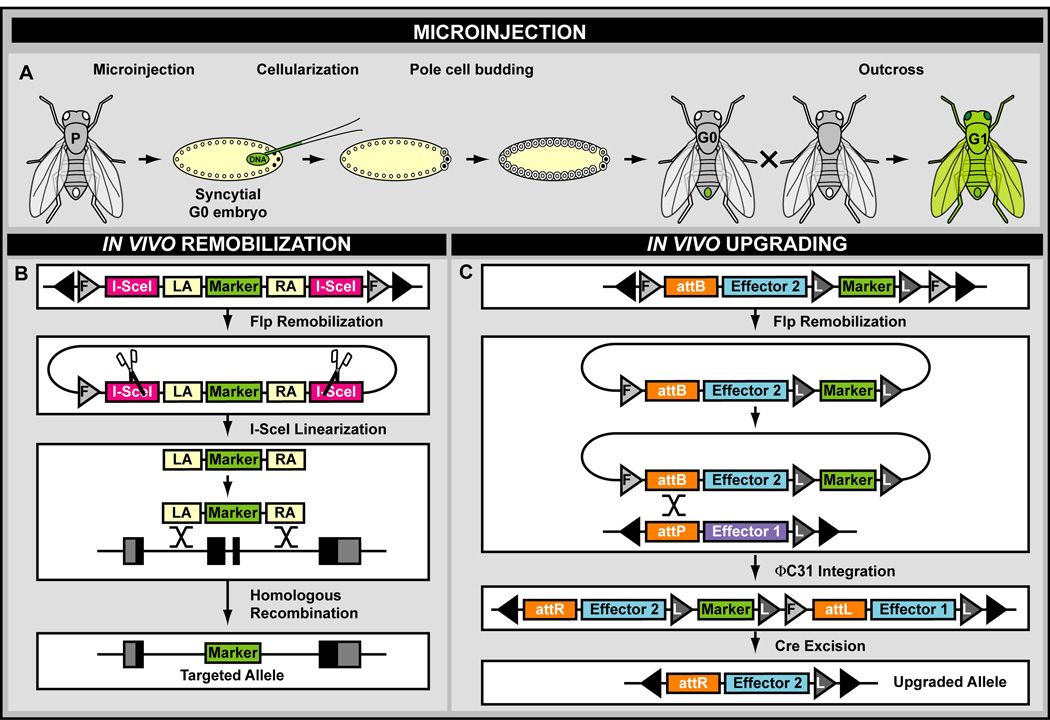
A. Syncytial microinjection performed during early embryonic stages in the fly D. melanogaster. B. In vivo remobilization during a classical gene targeting experiment in the fly D. melanogaster. F, FRT site; LA, left homology arm; RA, right homology arm. C. In vivo upgrading of transposon insertion sites using the InSITE system in the fly D. melanogaster. L, LoxP site.
Figure 7
Figure 7. Examples of Localized Genome Engineering
Different alleles, their constitution and applications are indicated and compared to a WT “control” allele.
Figure 8
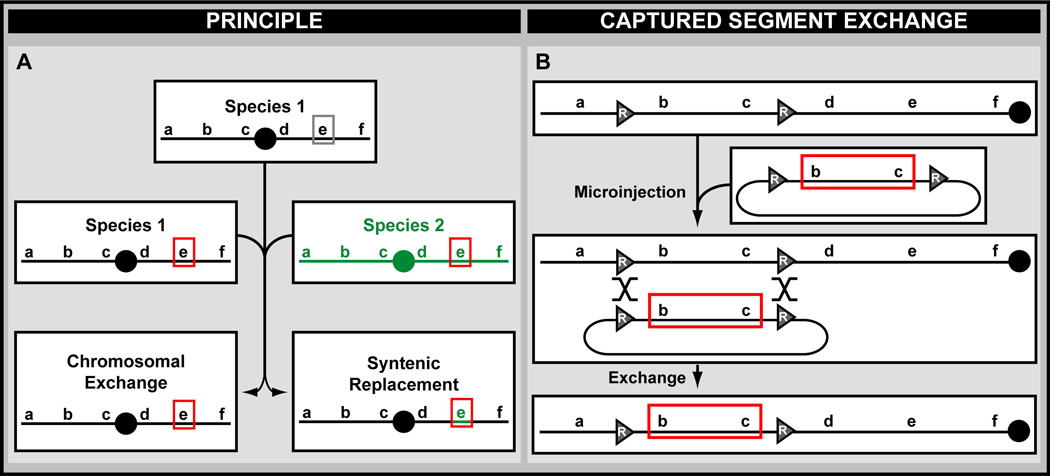
Figure 8. Chromosomal Exchange and Syntenic Replacement
A. The principle of chromosomal exchange and syntenic replacement. B. Use of captured segment exchange to replace a chromosomal region in the fly D. melanogaster. R, recombinase recognition site.
Figure 9
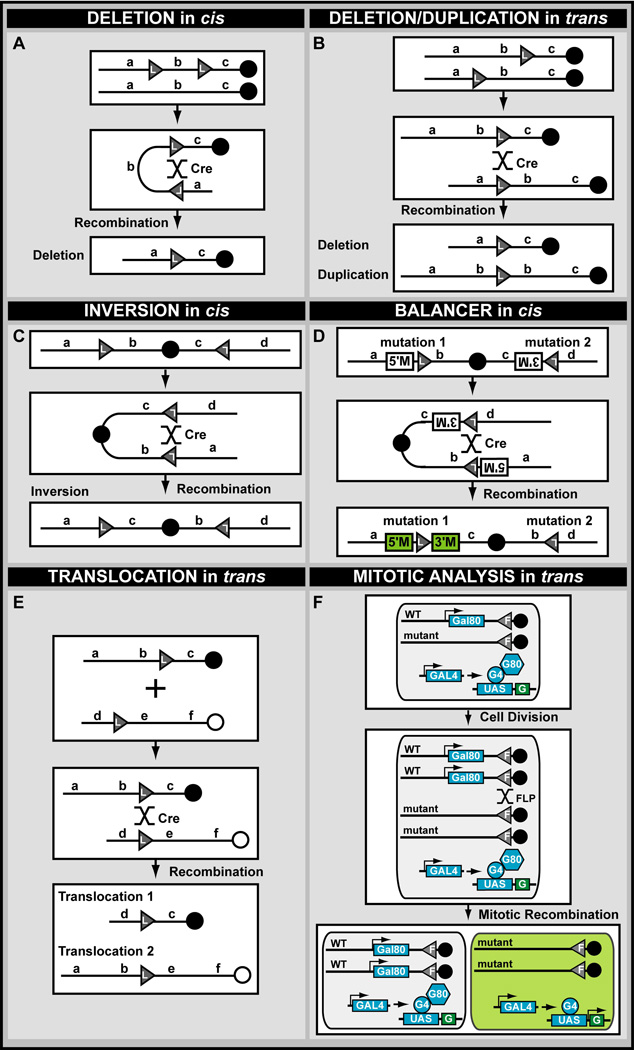
Figure 9. Chromosomal Rearrangements
A. Generation of a deletion using recombination sites located in cis. B. Generation of a reciprocal deletion and duplication using recombination sites located in trans. C. Generation of an inversion using recombination sites located in cis. Such inversions can be similarly generated using shared homology instead. D. Generation of an engineered balancer chromosome using recombination sites located in cis. Reconstitution of 5’- and 3’-parts of a marker results in visualization of the inversion event. E. Generation of a translocation between two non-homologous chromosomes using recombination sites located in trans. Such translocation can be similarly generated using shared homology instead. F. Generation of a translocation between two homologous chromosomes using recombination sites located in trans during mitotic recombination. This experimental paradigm can be further developed to include strategies for clonal marking, i.e., here the Mosaic Analysis with a Repressible Cell Marker (MARCM) is illustrated (Lee and Luo, 1999).
Figure 10
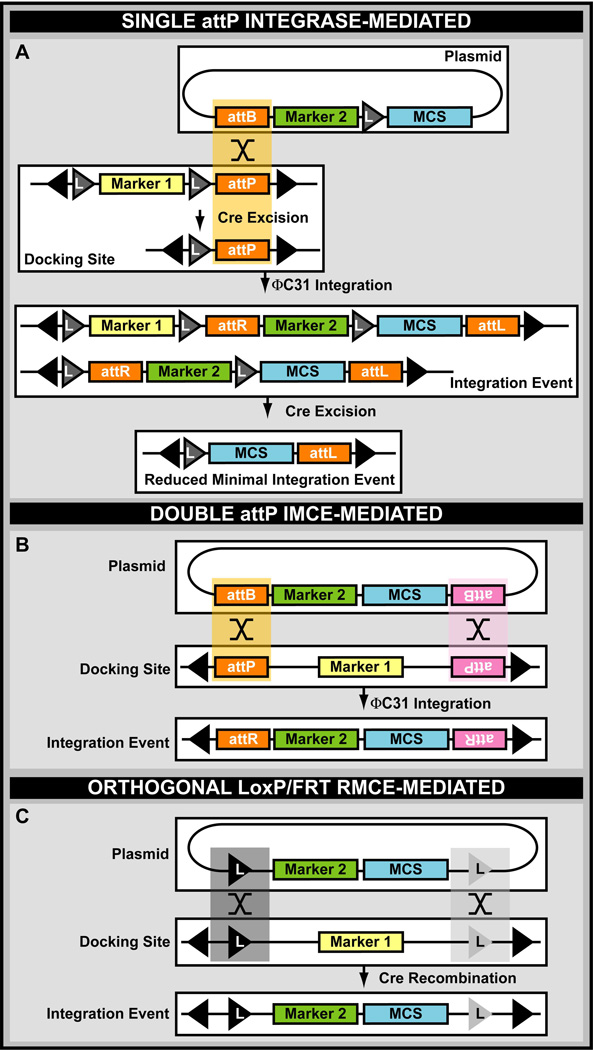
Figure 10. Site-Specific Transgenesis
A. Site-specific integration using the ΦC31 integrase and a single set of attachment sites. MCS, multiple cloning site. B. Site-specific integration using the ΦC31 integrase and a double set of attachment sites resulting in integrase-mediated cassette exchange (IMCE). Integration can occur bidirectionally (i.e., in both orientations). C. Bidirectional recombinase-mediated cassette exchange (RMCE) using orthogonal LoxP or FRT sites.
Figure 11
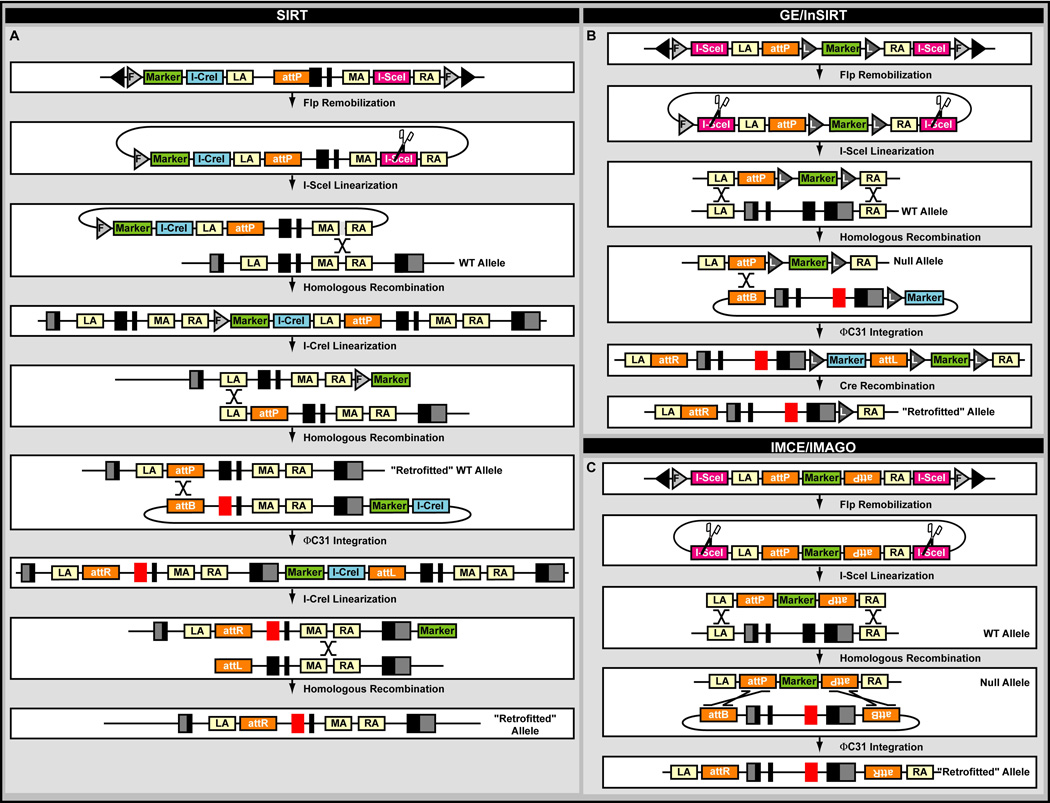
Figure 11. Combination Engineering
A. Site-specific Integrase-mediated Repeated Targeting (SIRT) in the fly D. melanogaster. MA, middle homology arm. B. Genomic engineering (GE)/In situ integration for repeated targeting (InSIRT) in D. melanogaster. C. Integrase-mediated cassette exchange (IMCE)/Integrase-mediated approach for gene knockout (IMAGO) used in D. melanogaster.

References

    1. Esvelt KM, Wang HH. Genome-scale engineering for systems and synthetic biology. Mol Syst Biol. 2013;9(1744-4292 (Electronic)):641. - PMC - PubMed
    1. Karas BJ, Suzuki Y, Weyman PD. Strategies for cloning and manipulating natural and synthetic chromosomes. Chromosome Res. 2015;23(1573-6849 (Electronic)):57–68. - PubMed
    1. Gibson DG, Benders GA, Andrews-Pfannkoch C, et al. Complete chemical synthesis, assembly, and cloning of a Mycoplasma genitalium genome. Science. 2008;319(5867):1215–1220. - PubMed
    1. Annaluru N, Muller H, Mitchell LA, et al. Total synthesis of a functional designer eukaryotic chromosome. Science. 2014;344(1095-9203 (Electronic)):55–58. - PMC - PubMed
    1. Dymond JS, Richardson SM, Coombes CE, et al. Synthetic chromosome arms function in yeast and generate phenotypic diversity by design. Nature. 2011;477(7365):471–476. - PMC - PubMed

Publication types

LinkOut - more resources