


Parental Concerns Influencing Decisions to Seek Medical Care for a Child's Short Stature
- PMID: 26448482
- PMCID: PMC5576168
- DOI: 10.1159/000440804
Parental Concerns Influencing Decisions to Seek Medical Care for a Child's Short Stature
Abstract
Aims: To examine parental concerns about child growth and factors that drive parents' decisions whether to intervene medically with their child's height.
Methods: Parents of 9- to 14-year-old pediatric primary care patients of various heights, oversampled for those with short stature, participated in exploratory focus groups and nominal group technique sessions. Growth concerns expressed by the groups were incorporated into a survey, completed by 1,820 parents, and rated for their degree of impact on medical decision-making. Ordinal logistic regression modeled concern scores against parent traits. Explanatory focus groups clarified the survey results.
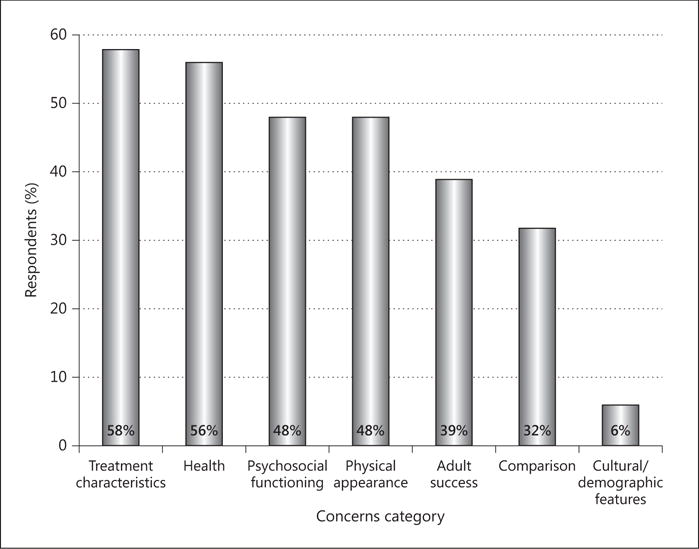
Results: Research team consensus and factor analysis organized the 22 distinct concerns expressed by the parent groups into 7 categories. Categories rated as having the greatest influence on parental decision-making involved: treatment efficacy and side effects, child health and psychosocial function. Level of concern was highly associated with parental education and parenting style.
Conclusion: Psychosocial issues are influential, but parental decision-making is most impacted by concerns about treatment and child health. By discussing the real risks and benefits of hormone treatment and addressing parents' perceptions of what is needed for physical and psychosocial health, clinicians can be highly effective educators to assure that treatment is used only as medically indicated.
© 2015 S. Karger AG, Basel.
Figures
References
-
- Oostdijk W, Grote FK, de Muinck Keizer-Schrama SM, Wit JM. Diagnostic approach in children with short stature. Horm Res. 2009;72:206–217. - PubMed
Publication types
MeSH terms
Grants and funding
LinkOut - more resources
Full Text Sources
Other Literature Sources
Medical
