


Salmonella Bacteremia Among Children in Central and Northwest Nigeria, 2008-2015
- PMID: 26449948
- PMCID: PMC4596937
- DOI: 10.1093/cid/civ745
Salmonella Bacteremia Among Children in Central and Northwest Nigeria, 2008-2015
Abstract
Background: Etiologic agents of childhood bacteremia remain poorly defined in Nigeria. The absence of such data promotes indiscriminate use of antibiotics and delays implementation of appropriate preventive strategies.
Methods: We established diagnostic laboratories for bacteremia surveillance at regional sites in central and northwest Nigeria. Acutely ill children aged <5 years with clinically suspected bacteremia were evaluated at rural and urban clinical facilities in the Federal Capital Territory, central region and in Kano, northwest Nigeria. Blood was cultured using the automated Bactec incubator system.
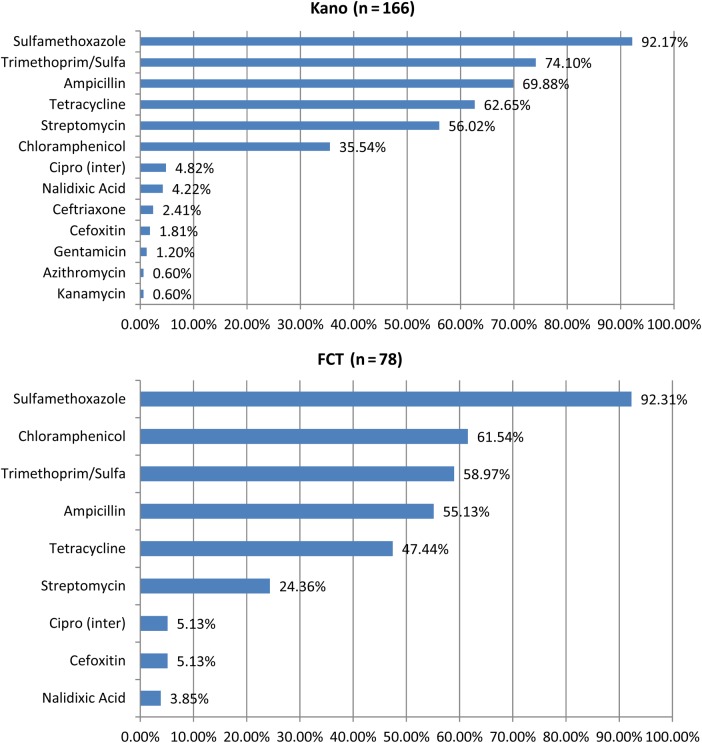
Results: Between September 2008 and April 2015, we screened 10,133 children. Clinically significant bacteremia was detected in 609 of 4051 (15%) in the northwest and 457 of 6082 (7.5%) in the central region. Across both regions, Salmonella species account for 24%-59.8% of bacteremias and are the commonest cause of childhood bacteremia, with a predominance of Salmonella enterica serovar Typhi. The prevalence of resistance to ampicillin, chloramphenicol, and cotrimoxazole was 38.11%, with regional differences in susceptibility to different antibiotics but high prevalence of resistance to readily available oral antibiotics.
Conclusions: Salmonella Typhi is the leading cause of childhood bacteremia in central Nigeria. Expanded surveillance is planned to define the dynamics of transmission. The high prevalence of multidrug-resistant strains calls for improvement in environmental sanitation in the long term and vaccination in the short term.
Keywords: Nigeria; Salmonellae; antibiotic resistance; bacteremia; children.
© The Author 2015. Published by Oxford University Press on behalf of the Infectious Diseases Society of America. All rights reserved. For Permissions, please e-mail: journals.permissions@oup.com.
Figures
References
-
- Enwere G, Biney E, Cheung YB et al. Epidemiologic and clinical characteristics of community-acquired invasive bacterial infections in children aged 2–59 months in The Gambia. Pediatr Infect Dis J 2006; 25:700–5. - PubMed
-
- Berkley JA, Lowe BS, Mwangi I et al. Bacteremia among children admitted to a rural hospital in Kenya. N Engl J Med 2005; 352:39–47. - PubMed
-
- Arulogun OS, Adeniyi JD, Asa S, Adegbenro CA. Why actions for early treatment of febrile illnesses in children are delayed by caregivers. Int Q Community Health Educ 2011–2012; 32:219–31. - PubMed
Publication types
MeSH terms
Substances
Grants and funding
LinkOut - more resources
Full Text Sources
Other Literature Sources
Medical
Miscellaneous
