


Xenon for the prevention of postoperative delirium in cardiac surgery: study protocol for a randomized controlled clinical trial
- PMID: 26452540
- PMCID: PMC4600284
- DOI: 10.1186/s13063-015-0987-4
Xenon for the prevention of postoperative delirium in cardiac surgery: study protocol for a randomized controlled clinical trial
Abstract
Background: Postoperative delirium (POD) is a manifestation of acute postoperative brain dysfunction that is frequently observed after cardiac surgery. POD is associated with short-term complications such as an increase in mortality, morbidity, costs and length of stay, but can also have long-term sequelae, including persistent cognitive deficits, loss of independence, and increased mortality for up to 2 years. The noble gas xenon has been demonstrated in various models of neuronal injury to exhibit remarkable neuroprotective properties. We therefore hypothesize that xenon anesthesia reduces the incidence of POD in elderly patients undergoing cardiac surgery with the use of cardiopulmonary bypass.
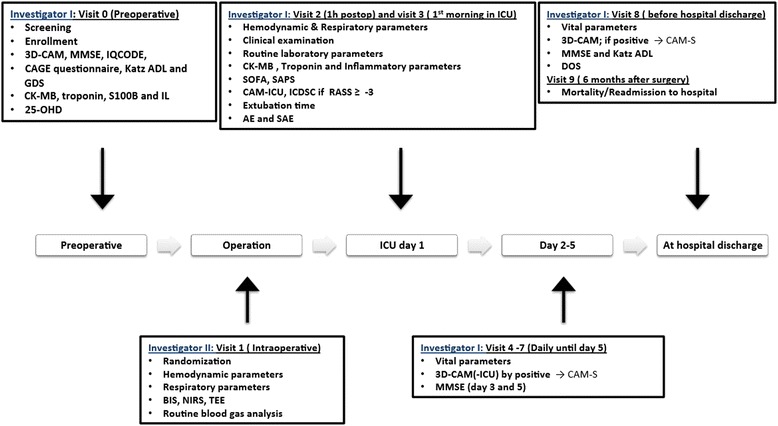
Methods/design: One hundred and ninety patients, older than 65 years, and scheduled for elective cardiac surgery, will be enrolled in this prospective, randomized, controlled trial. Patients will be randomized to receive general anesthesia with either xenon or sevoflurane. Primary outcome parameter will be the incidence of POD in the first 5 postoperative days. The occurrence of POD will be assessed by trained research personnel, blinded to study group, with the validated 3-minute Diagnostic Confusion Assessment Method (3D-CAM) (on the intensive care unit in its version specifically adapted for the ICU), in addition to chart review and the results of delirium screening tools that will be performed by the bedside nurses). Secondary outcome parameters include duration and severity of POD, and postoperative cognitive function as assessed with the Mini-Mental State Examination.
Discussion: Older patients undergoing cardiac surgery are at particular risk to develop POD. Xenon provides remarkable hemodynamic stability and has been suggested in preclinical studies to exhibit neuroprotective properties. The present trial will assess whether the promising profile of xenon can be translated into a better outcome in the geriatric population.
Trial registration: EudraCT Identifier: 2014-005370-11 (13 May 2015).
Figures
References
Publication types
MeSH terms
Substances
Associated data
LinkOut - more resources
Full Text Sources
Other Literature Sources
Medical
