


Socio-demographic inequalities across a range of health status indicators and health behaviours among pregnant women in prenatal primary care: a cross-sectional study
- PMID: 26463046
- PMCID: PMC4604767
- DOI: 10.1186/s12884-015-0676-z
Socio-demographic inequalities across a range of health status indicators and health behaviours among pregnant women in prenatal primary care: a cross-sectional study
Abstract
Background: Suboptimal maternal health conditions (such as obesity, underweight, depression and stress) and health behaviours (such as smoking, alcohol consumption and unhealthy nutrition) during pregnancy have been associated with negative pregnancy outcomes. Our first aim was to give an overview of the self-reported health status and health behaviours of pregnant women under midwife-led primary care in the Netherlands. Our second aim was to identify potential differences in these health status indicators and behaviours according to educational level (as a proxy for socio-economic status) and ethnicity (as a proxy for immigration status).
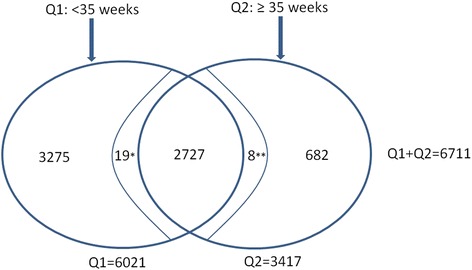
Methods: Our cross-sectional study (data obtained from the DELIVER multicentre prospective cohort study conducted from September 2009 to March 2011) was based on questionnaires about maternal health and prenatal care, which were completed by 6711 pregnant women. The relationships of education and ethnicity with 13 health status indicators and 10 health behaviours during pregnancy were examined using multilevel multiple logistic regression analyses, adjusted for age, parity, number of weeks pregnant and either education or ethnicity.
Results: Lower educated women were especially more likely to smoke (Odds Ratio (OR) 11.3; 95% confidence interval (CI) 7.6- 16.8); have passive smoking exposure (OR 6.9; 95% CI 4.4-11.0); have low health control beliefs (OR 10.4; 95% CI 8.5-12.8); not attend antenatal classes (OR 4.5; 95% CI 3.5-5.8) and not take folic acid supplementation (OR 3.4; 95% CI 2.7-4.4). They were also somewhat more likely to skip breakfast daily, be obese, underweight and depressed or anxious. Non-western women were especially more likely not to take folic acid supplementation (OR 4.5; 95% CI 3.5-5.7); have low health control beliefs (OR 4.1; 95% CI 3.1-5.2) and not to attend antenatal classes (OR 3.3; 95% CI 2.0-5.4). They were also somewhat more likely to have nausea, back pains and passive smoking exposure.
Conclusions: Substantial socio-demographic inequalities persist with respect to many health-related issues in medically low risk pregnancies in the Netherlands. Improved strategies are needed to address the specific needs of socio-demographic groups at higher risk and the structures underlying social inequalities in pregnant women.
Figures
References
-
- de Graaf JP, Ravelli AC, Wildschut HI, Denktas S, Voorham AJ, Bonsel GJ, Steegers EA. Perinatal outcomes in the four largest cities and in deprived neighbourhoods in The Netherlands. Ned Tijdschr Geneeskd. 2008;152(50):2734–2740. - PubMed
Publication types
MeSH terms
LinkOut - more resources
Full Text Sources
Other Literature Sources
Medical
