


Assessment of patient safety culture in primary care setting, Al-Mukala, Yemen
- PMID: 26463229
- PMCID: PMC4604039
- DOI: 10.1186/s12875-015-0355-1
Assessment of patient safety culture in primary care setting, Al-Mukala, Yemen
Abstract
Background: Patient safety culture in primary care is the first step to achieve high quality health care. This study aims to provide a baseline assessment of patient safety culture in primary care settings in Al-Mukala, Yemen as a first published study from a least developed country.
Methods: A survey was conducted in primary healthcare centres and units in Al-Mukala District, Yemen. A comprehensive sample from the available 16 centres was included. An Arabic version of the Medical Office Survey on Patient Safety Culture was distributed to all health workers (110). Participants were physicians, nurses and administrative staff.
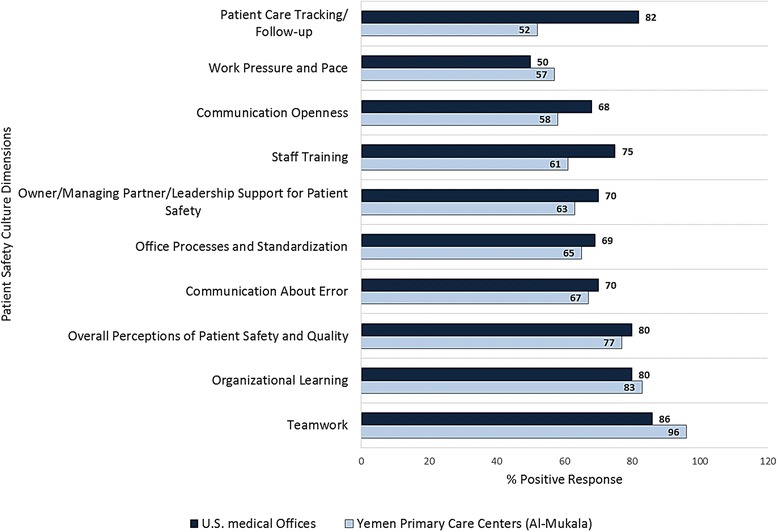
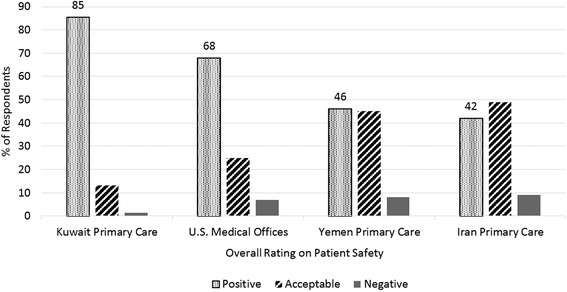
Results: The response rate from the participating centres was 71 %. (N = 78). The percent positive responses of the items is equal to the percentage of participants who answered positively. Composite scores were calculated by averaging the percent positive response on the items within a dimension. Positive safety culture was defined as 60 % or more positive responses on items or dimensions. Patient safety culture was perceived to be generally positive with the exception of the dimensions of 'Communication openness', 'Work pressure and pace' and 'Patient care tracking/follow-up', as the percent positive response of these dimensions were 58, 57, and 52 % respectively. Overall, positive rating on quality and patient safety were low (49 and 46 % respectively).
Conclusions: Although patient safety culture in Al-Mukala primary care setting is generally positive, patient safety and quality rating were fairly low. Implementation of a safety and quality management system in Al-Mukala primary care setting are paramount. Further research is needed to confirm the applicability of the Medical Office Survey on Patient Safety Culture (MOSPSC) for Al-Mukala primary care.
Figures
References
-
- Hindle D, Braithwaite J, Iedema R. Patient safety research: a review of the technical literature. Australia: Centre for Clinical Governance Research, University of New South Wale; 2005.
-
- Medical Protection Society. How to create a culture of safety. Sessional GP. 2012, 4(2):12-13. http://www.medicalprotection.org/docs/default-source/pdfs/uk-sessional-g...
-
- World Health Organization . Patient safety in developing and transitional countries: new insights from Africa and the Eastern Mediterranean. Geneva: World Health Organization; 2011.
MeSH terms
LinkOut - more resources
Full Text Sources
Other Literature Sources
Medical
