


Stimulation of Toll-Like Receptors profoundly influences the titer of polyreactive antibodies in the circulation
- PMID: 26463758
- PMCID: PMC4604466
- DOI: 10.1038/srep15066
Stimulation of Toll-Like Receptors profoundly influences the titer of polyreactive antibodies in the circulation
Abstract
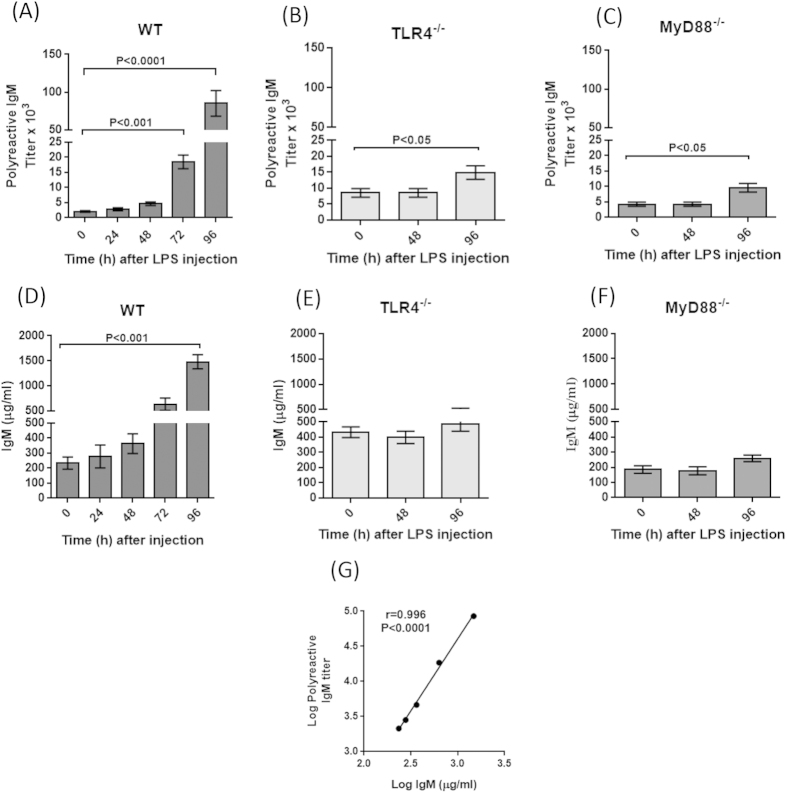
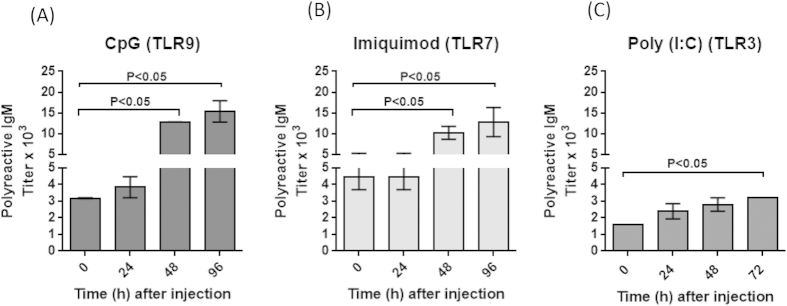
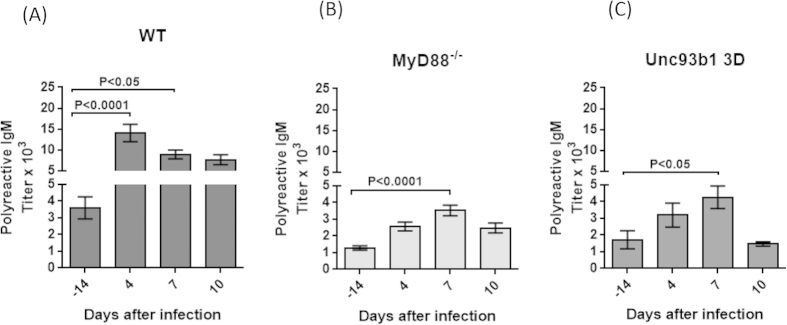
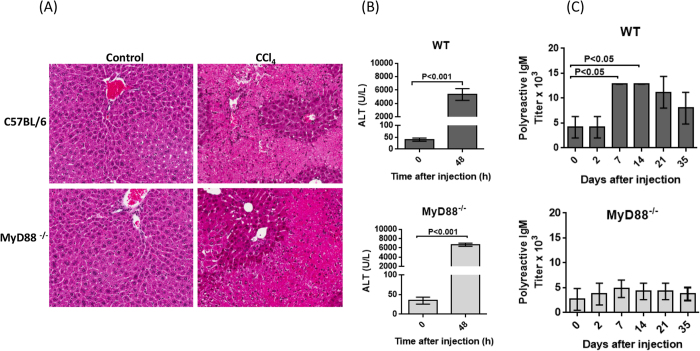
Polyreactive antibodies are a major component of the natural antibody repertoire and bind to a variety of structurally unrelated molecules. These antibodies are thought to provide a first line of defense against bacterial infections and play a major role in the clearance of apoptotic cells. What triggers the secretion of these antibodies has remained an enigma. Using a surrogate assay for measuring polyreactive antibodies, we found that about 50% of serum IgM is polyreactive and that stimulation of TLR4(+/+), but not TLR4(-/-), mice resulted in a 40 fold increase in polyreactive antibodies. Stimulation of TLRs 3, 7, 9 also increased the secretion of polyreactive antibodies. Infection with a virus or tissue damage induced by a toxin similarly led to an increase in polyreactive antibodies in MyD88(+/+), but not MyD88(-/-) mice. We conclude that stimulation of TLRs is a key link in the mechanism of polyreactive antibody secretion into the circulation.
Figures
References
-
- Notkins A. L. Polyreactivity of antibody molecules. Trends Immunol 25, 174–179 (2004). - PubMed
-
- Haspel M. V. et al. Multiple organ-reactive monoclonal autoantibodies. Nature 304, 73–76 (1983). - PubMed
-
- Dighiero G. et al. Murine hybridomas secreting natural monoclonal antibodies reacting with self antigens. J Immunol 131, 2267–2272 (1983). - PubMed
-
- Gordon J. & Carther H. S. The Bactericidal power of normal serum. J Pathol Bacteriol 35, 549–555 (1932).
Publication types
MeSH terms
Substances
Grants and funding
LinkOut - more resources
Full Text Sources
Other Literature Sources
Medical
Miscellaneous
