


Modulation by aspirin and naproxen of nucleotide alterations and tumors in the lung of mice exposed to environmental cigarette smoke since birth
- PMID: 26464196
- PMCID: PMC4675832
- DOI: 10.1093/carcin/bgv149
Modulation by aspirin and naproxen of nucleotide alterations and tumors in the lung of mice exposed to environmental cigarette smoke since birth
Abstract
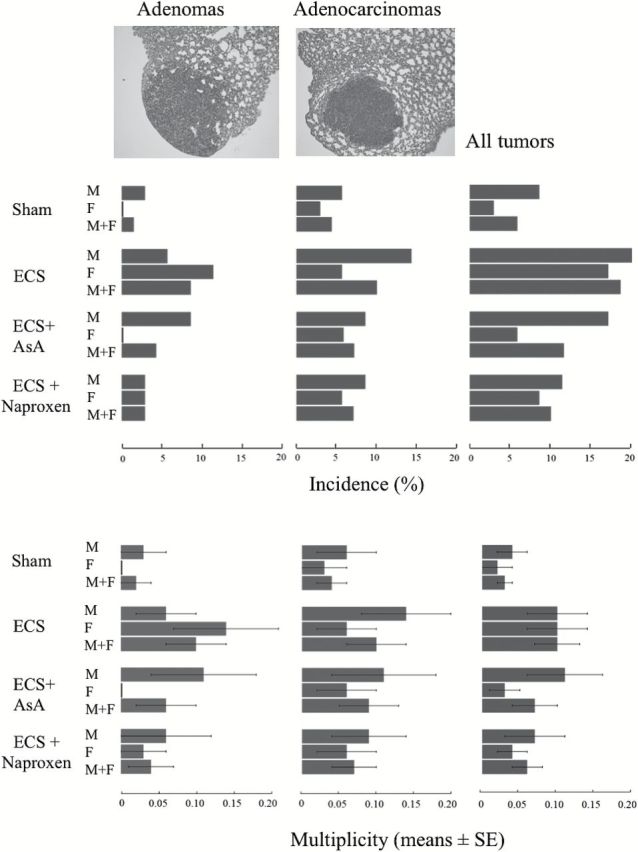
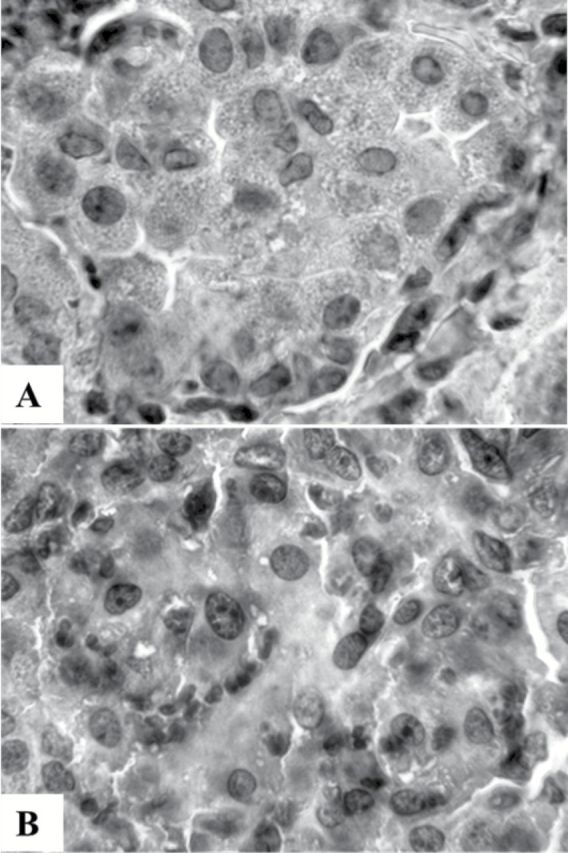
Chemoprevention provides an important strategy for cancer control in passive smokers. Due to the crucial role played by smoke-related chronic inflammation in lung carcinogenesis, of special interest are extensively used pharmacological agents, such as nonsteroidal anti-inflammatory drugs (NSAIDs). We evaluated the ability of aspirin and naproxen, inhibitors of both cyclooxygenase-1 and cyclooxygenase -2, to modulate environmental cigarette smoke (ECS)-induced lung carcinogenesis in A/J mice of both genders. Based on a subchronic toxicity study in 180 postweaning mice, we used 1600 mg/kg diet aspirin and 320 mg/kg diet naproxen. In the tumor chemoprevention study, using 320 mice, exposure to ECS started soon after birth and administration of NSAIDs started after weaning. At 10 weeks of life, the NSAIDs did not affect the presence of occult blood in feces. As assessed in a subset of 40 mice, bulky DNA adducts and 8-hydroxy-2'-deoxyguanosine levels were considerably increased in ECS-exposed mice and, irrespective of gender, both NSAIDs remarkably inhibited these nucleotide alterations. After exposure for 4 months followed by 5 months in filtered air, ECS induced a significant increase in the yield of surface lung tumors, the 43.7% of which were adenomas and the 56.3% were adenocarcinomas. Oct-4 (octamer-binding transcription factor 4), a marker of cell stemness, was detected in some adenocarcinoma cells. The NAIDs attenuated the yield of lung tumors, but prevention of ECS-induced lung adenomas was statistically significant only in female mice treated with aspirin, which supports a role for estrogens in ECS-related lung carcinogenesis and highlights the antiestrogenic properties of NSAIDs.
© The Author 2015. Published by Oxford University Press. All rights reserved. For Permissions, please email: journals.permissions@oup.com.
Figures
References
-
- De Flora S., et al. (2014) Rationale and approaches to the prevention of smoking-related diseases: overview of recent studies on chemoprevention of smoking-induced tumors in rodent models. J. Environ. Sci. Health. C Environ. Carcinog. Ecotoxicol. Rev., 32, 105–120. - PubMed
-
- California Environmental Protection Agency, 2005. Proposed Identification of Environmental Tobacco Smoke as a Toxic Air contaminant, State of California. www.arb.ca.gov/regact/ets2006/app3partb.pdf.
Publication types
MeSH terms
Substances
LinkOut - more resources
Full Text Sources
Other Literature Sources
Medical
Molecular Biology Databases
Research Materials
