


Incidence and Time to Return to Training for Stress Fractures during Military Basic Training
- PMID: 26464890
- PMCID: PMC4590895
- DOI: 10.1155/2014/282980
Incidence and Time to Return to Training for Stress Fractures during Military Basic Training
Abstract
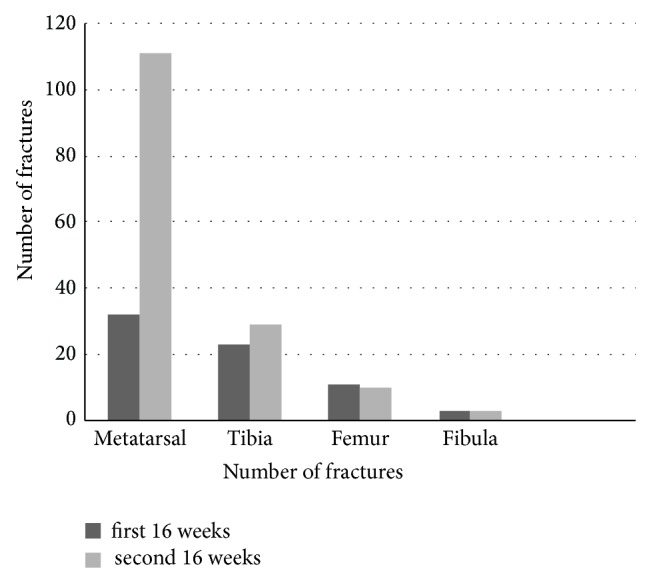
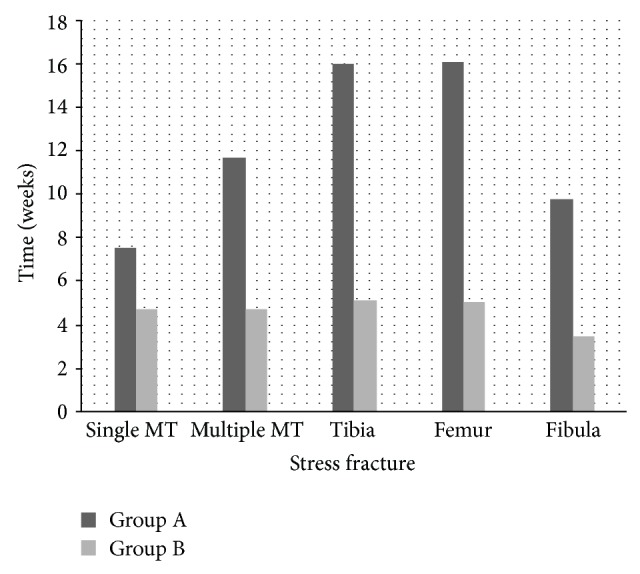
Currently, little is known about the length of time required to rehabilitate patients from stress fractures and their return to preinjury level of physical activity. Previous studies have looked at the return to sport in athletes, in a general population, where rehabilitation is not as controlled as within a captive military population. In this study, a longitudinal prospective epidemiological database was assessed to determine the incidence of stress fractures and the time taken to rehabilitate recruits to preinjury stage of training. Findings demonstrated a background prevalence of 5% stress fractures in Royal Marine training; femoral and tibial stress fractures take 21.1 weeks to return to training with metatarsal stress fractures being the most common injury taking 12.2 weeks. Rehabilitation from stress fractures accounts for 814 weeks of recruit rehabilitation time per annum. Stress fracture incidence is still common in military training; despite this stress fracture recovery times remain constant and represent a significant interruption in training. It takes on average 5 weeks after exercise specific training has restarted to reenter training at a preinjury level, regardless of which bone has a stress fracture. Further research into their prevention, treatment, and rehabilitation is required to help reduce these burdens.
Figures
References
-
- Thomas R., Wood A. M., Watson J., Arthur C. H., Nicol A. M. Delay in diagnosis of neck of femur stress fracture in a female military recruit. Journal of the Royal Naval Medical Service. 2012;98(2):3–5. - PubMed
-
- Protzman R. R., Griffis C. G. Stress fractures in men and women undergoing military training. The Journal of Bone and Joint Surgery. 1977;59(6):p. 825. - PubMed
-
- Bennell K. L., Malcolm S. A., Thomas S. A., et al. Risk factors for stress fractures in track and field athletes: a twelve- month prospective study. The American Journal of Sports Medicine. 1996;24(6):810–818. - PubMed
-
- Tornetta P I. I. I., Einhorn T. A., Schepsis A. A., Busconi B. D. Sports Medicine. Philadelphia, Pa, USA: Lippincott Williams and Wilkins; 2006. (Orthopaedic Surgery Essentials).
LinkOut - more resources
Full Text Sources
Other Literature Sources
Medical
