


Prevalence of Calodium hepaticum and Cysticercus fasciolaris in Urban Rats and Their Histopathological Reaction in the Livers
- PMID: 26464920
- PMCID: PMC4590885
- DOI: 10.1155/2014/172829
Prevalence of Calodium hepaticum and Cysticercus fasciolaris in Urban Rats and Their Histopathological Reaction in the Livers
Abstract
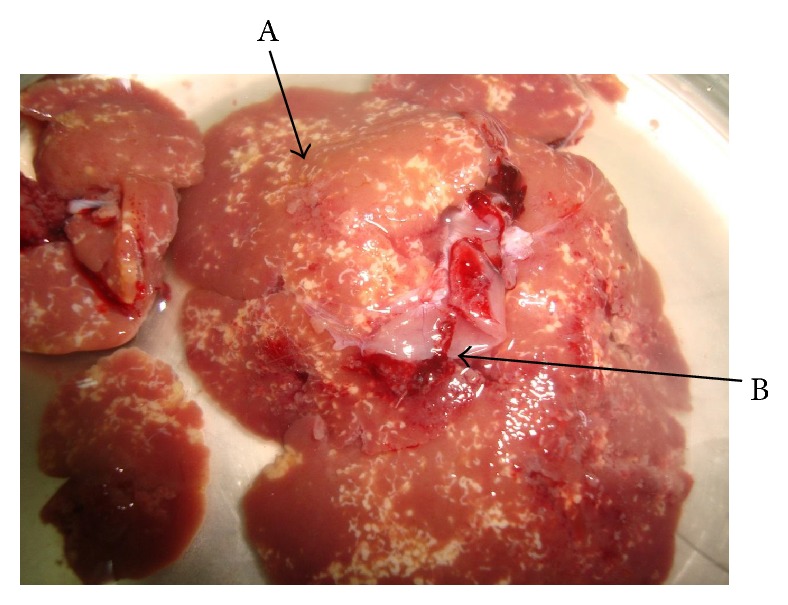
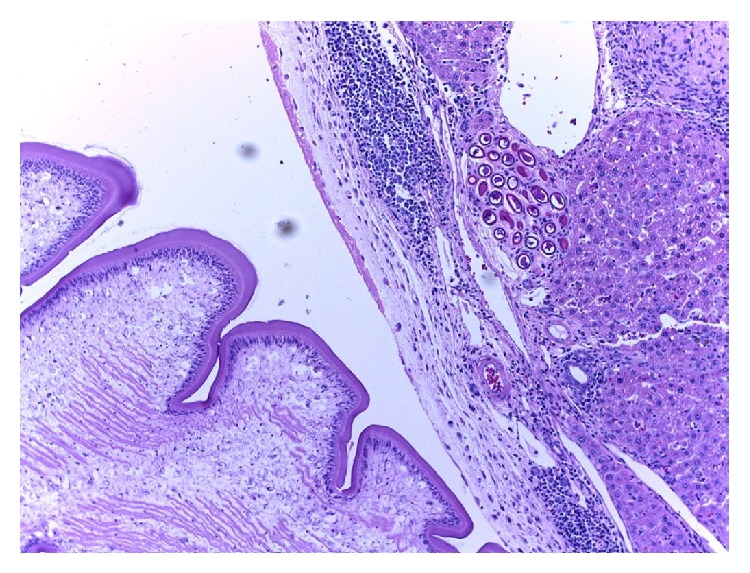
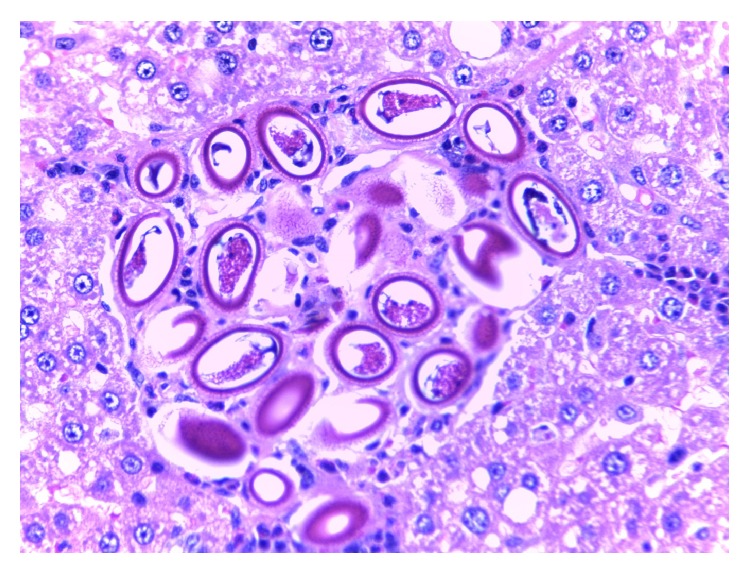
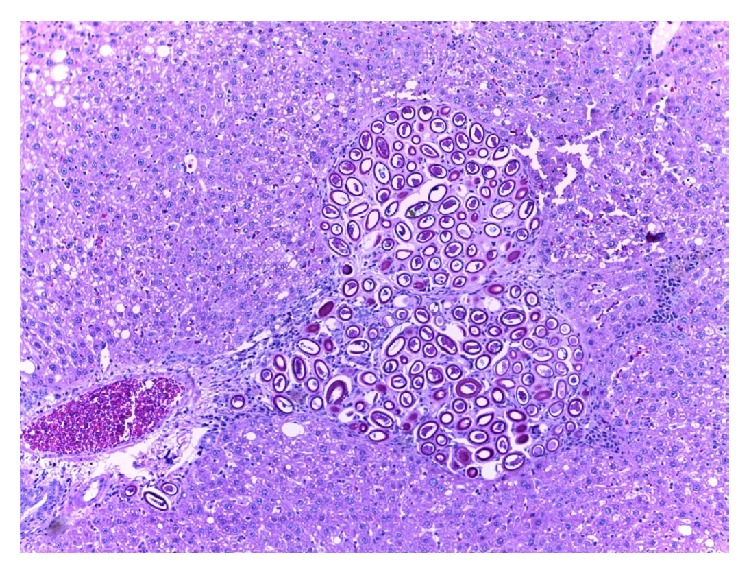
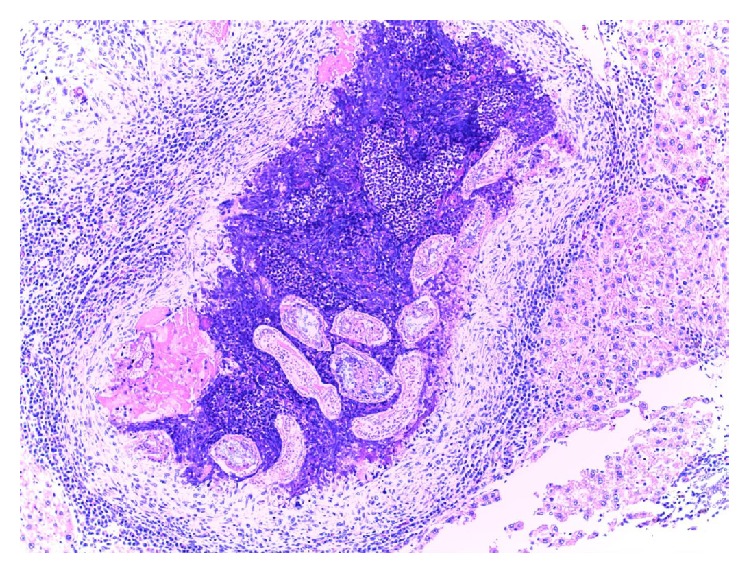
Humans can get infected with several zoonotic diseases from being in close contact with rats. This study was aimed at determining the prevalence and histopathological changes caused by Calodium hepaticum and Cysticercus fasciolaris in infected livers of wild caught urban rats. Of the 98 urban rats (Rattus rattus diardii and Rattus norvegicus) autopsied, 64.3% were infected; 44.9% were infected with Caladium hepatica, 39.3% were infected with Cysticercus fasciolaris, and 20.4% were infected with both parasites. High infection rates suggest that urban rats are common reservoir for both parasites, which are potentially a threat to man. Calodium hepaticum infections were identified by the presence of ova or adults in the liver parenchyma. They appear as yellowish white nodules, measuring 1-7 mm in diameter or in streaks scattered widely over the serosal surface of the liver. Cysticercus fasciolaris infections are recognized morphologically by their shape (round or oval) and are creamy white in colour. Histological studies of Calodium hepaticum showed areas of granulomatous lesions with necrotic areas around the dead ova and adults. In almost all cases, the rats appeared robust, looked healthy, and showed no visible signs of hepatic failure despite the fact that more than 64.0% of their livers were infected by either one or both parasites.
Figures
References
-
- Spratt D. M., singleton G. R. Studies on the life-cycle, infectivity and clinical effects of Capillaria hepatica (Bancroft) (Nematoda) in mice (Mus musculus) Australian Journal of Zoology. 1986;34(5):663–675. doi: 10.1071/ZO9860663. - DOI
LinkOut - more resources
Full Text Sources
Other Literature Sources
