Large-Scale Phenotype-Based Antiepileptic Drug Screening in a Zebrafish Model of Dravet Syndrome
- PMID: 26465006
- PMCID: PMC4596025
- DOI: 10.1523/ENEURO.0068-15.2015
Large-Scale Phenotype-Based Antiepileptic Drug Screening in a Zebrafish Model of Dravet Syndrome
Abstract
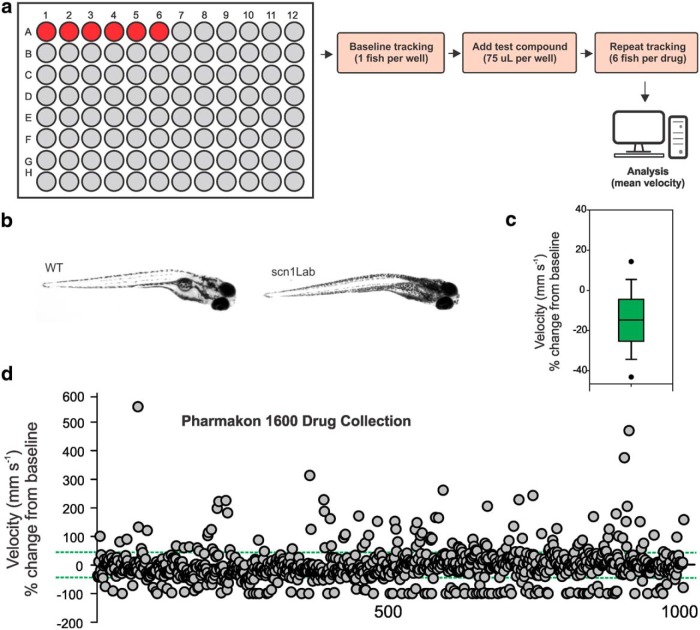
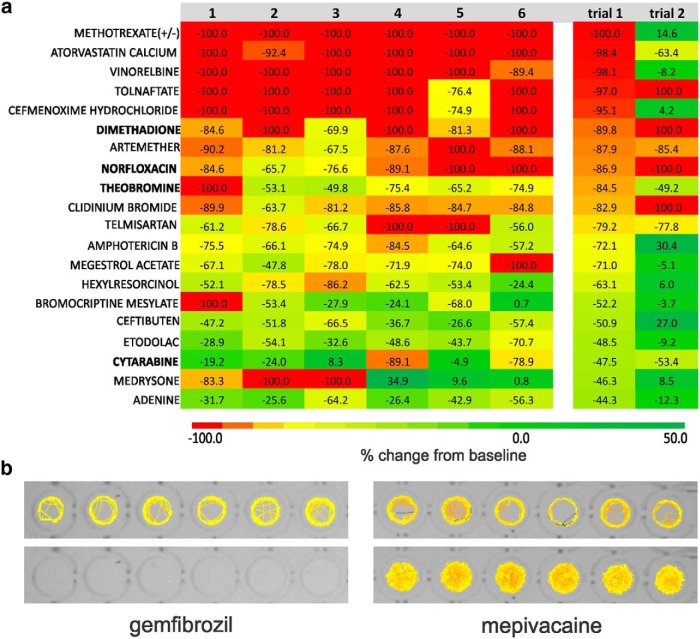
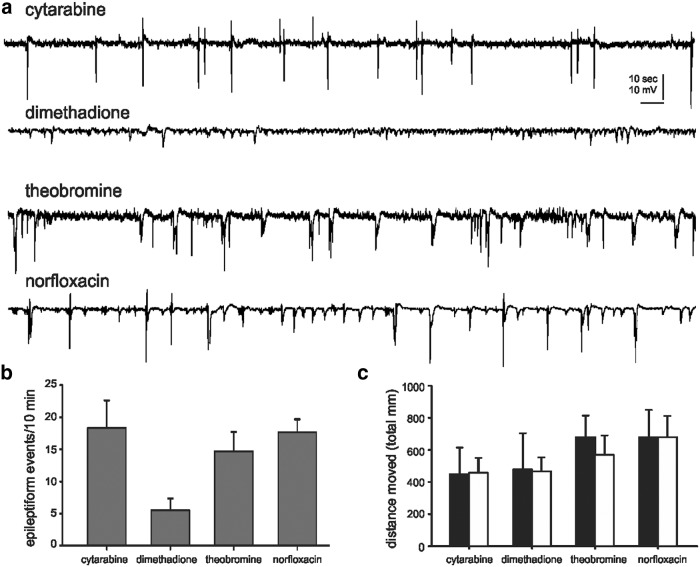
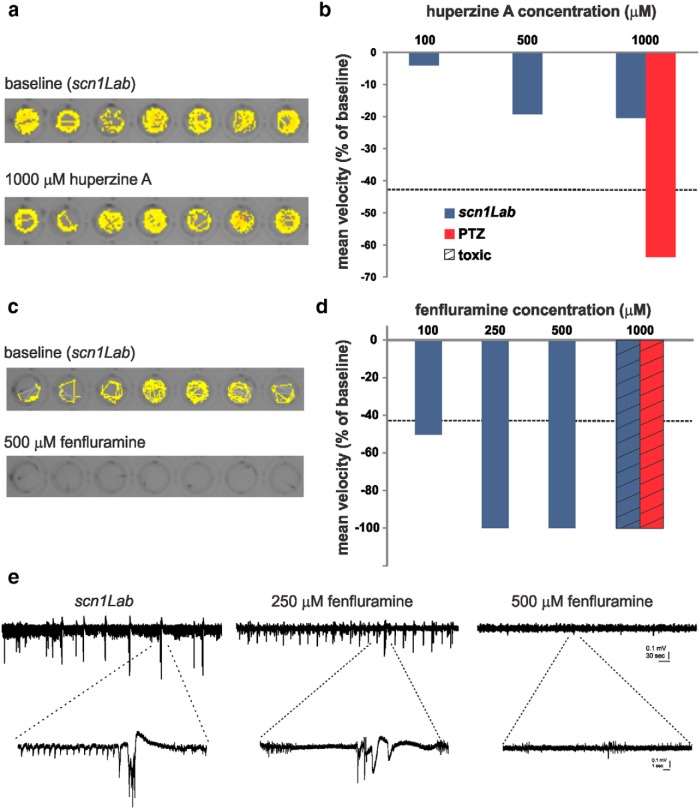
Mutations in a voltage-gated sodium channel (SCN1A) result in Dravet Syndrome (DS), a catastrophic childhood epilepsy. Zebrafish with a mutation in scn1Lab recapitulate salient phenotypes associated with DS, including seizures, early fatality, and resistance to antiepileptic drugs. To discover new drug candidates for the treatment of DS, we screened a chemical library of ∼1000 compounds and identified 4 compounds that rescued the behavioral seizure component, including 1 compound (dimethadione) that suppressed associated electrographic seizure activity. Fenfluramine, but not huperzine A, also showed antiepileptic activity in our zebrafish assays. The effectiveness of compounds that block neuronal calcium current (dimethadione) or enhance serotonin signaling (fenfluramine) in our zebrafish model suggests that these may be important therapeutic targets in patients with DS. Over 150 compounds resulting in fatality were also identified. We conclude that the combination of behavioral and electrophysiological assays provide a convenient, sensitive, and rapid basis for phenotype-based drug screening in zebrafish mimicking a genetic form of epilepsy.
Keywords: antiepileptic; drug discovery; epilepsy; high throughput; pharmacology; zebrafish.
Conflict of interest statement
The authors declare no competing financial interests.
Figures
References
-
- Azarbayjani F, Danielsson BR (2002) Embryonic arrhythmia by inhibition of HERG channels: a common hypoxia-related teratogenic mechanism for antiepileptic drugs? Epilepsia 43:457-468. - PubMed
-
- Baumann MH, Ayestas MA, Dersch CM, Brockington A, Rice KC, Rothman RB (2000) Effects of phentermine and fenfluramine on extracellular dopamine and serotonin in rat nucleus accumbens: therapeutic implications. Synapse 36:102-113. 10.1002/(SICI)1098-2396(200005)36:2<102::AID-SYN3>3.0.CO;2-# - DOI - PubMed
Grants and funding
LinkOut - more resources
Full Text Sources
Other Literature Sources
Molecular Biology Databases