


Isolation and Genomic Characterization of a Duck-Origin GPV-Related Parvovirus from Cherry Valley Ducklings in China
- PMID: 26465143
- PMCID: PMC4605506
- DOI: 10.1371/journal.pone.0140284
Isolation and Genomic Characterization of a Duck-Origin GPV-Related Parvovirus from Cherry Valley Ducklings in China
Abstract
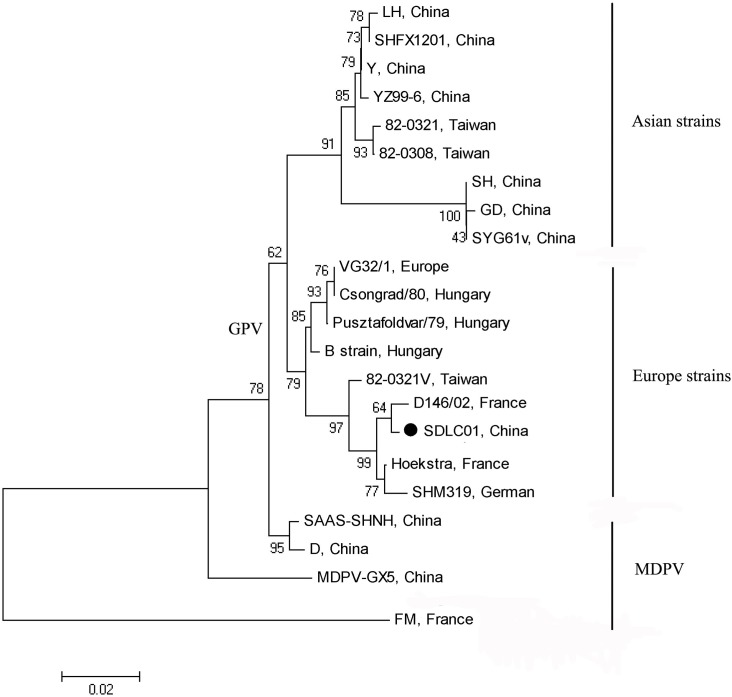
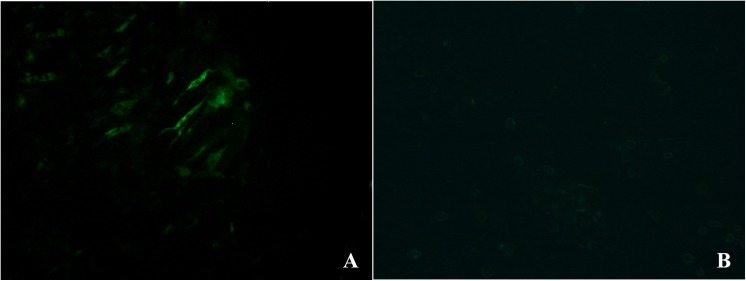
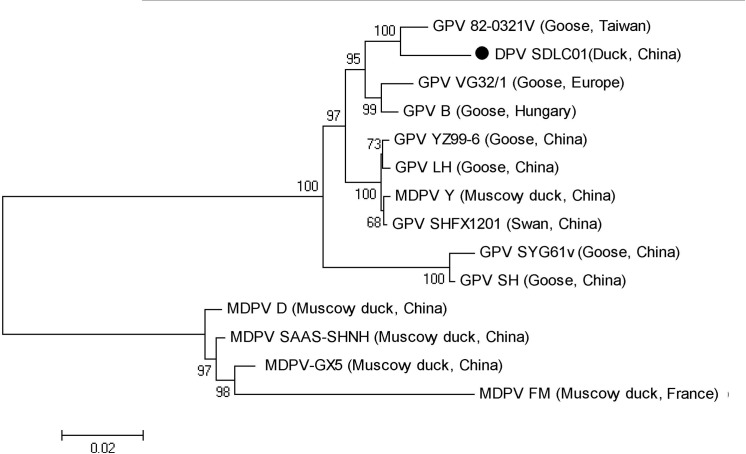
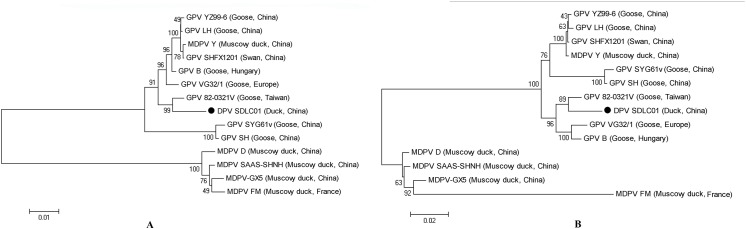
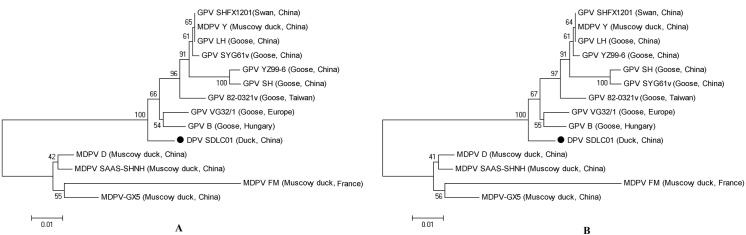
A newly emerged duck parvovirus, which causes beak atrophy and dwarfism syndrome (BADS) in Cherry Valley ducks, has appeared in Northern China since March 2015. To explore the genetic diversity among waterfowl parvovirus isolates, the complete genome of an identified isolate designated SDLC01 was sequenced and analyzed in the present study. Genomic sequence analysis showed that SDLC01 shared 90.8%-94.6% of nucleotide identity with goose parvovirus (GPV) isolates and 78.6%-81.6% of nucleotide identity with classical Muscovy duck parvovirus (MDPV) isolates. Phylogenetic analysis of 443 nucleotides (nt) of the fragment A showed that SDLC01 was highly similar to a mule duck isolate (strain D146/02) and close to European GPV isolates but separate from Asian GPV isolates. Analysis of the left inverted terminal repeat regions revealed that SDLC01 had two major segments deleted between positions 160-176 and 306-322 nt compared with field GPV and MDPV isolates. Phylogenetic analysis of Rep and VP1 encoded by two major open reading frames of parvoviruses revealed that SDLC01 was distinct from all GPV and MDPV isolates. The viral pathogenicity and genome characterization of SDLC01 suggest that the novel GPV (N-GPV) is the causative agent of BADS and belongs to a distinct GPV-related subgroup. Furthermore, N-GPV sequences were detected in diseased ducks by polymerase chain reaction and viral proliferation was demonstrated in duck embryos and duck embryo fibroblast cells.
Conflict of interest statement
Figures

References
-
- Glávits R, Zolnai A, Szabó É, Ivanics É, Zarka P, Mató T, et al. Comparative pathological studies on domestic geese (Anser anser domestica) and Muscovy ducks (Cairina moschata) experimentally infected with parvovirus strains of goose and Muscovy duck origin. Acta veterinaria Hungarica. 2005;53(1):73–89. - PubMed
-
- Glavits R, Zolnai A, Szabo E, Ivanics E, Zarka P, Mato T, et al. Comparative pathological studies on domestic geese (Anser anser domestica) and Muscovy ducks (Cairina moschata) experimentally infected with parvovirus strains of goose and Muscovy duck origin. Acta veterinaria Hungarica. 2005;53(1):73–89. Epub 2005/03/24. 10.1556/AVet.53.2005.1.8 . - DOI - PubMed
-
- Kisary J. Some growth characteristics of goose parvovirus strain "B". Acta veterinaria Academiae Scientiarum Hungaricae. 1974;24(3):329–33. Epub 1974/01/01. . - PubMed
-
- Takehara K, Hyakutake K, Imamura T, Mutoh K, Yoshimura M. Isolation, identification, and plaque titration of parvovirus from Muscovy ducks in Japan. Avian diseases. 1994;38(4):810–5. Epub 1994/10/01. . - PubMed
Publication types
MeSH terms
Associated data
- Actions
LinkOut - more resources
Full Text Sources
Other Literature Sources
Research Materials
