


Analyses of the Sequence and Structural Properties Corresponding to Pentapeptide and Large Palindromes in Proteins
- PMID: 26465610
- PMCID: PMC4605511
- DOI: 10.1371/journal.pone.0139568
Analyses of the Sequence and Structural Properties Corresponding to Pentapeptide and Large Palindromes in Proteins
Abstract
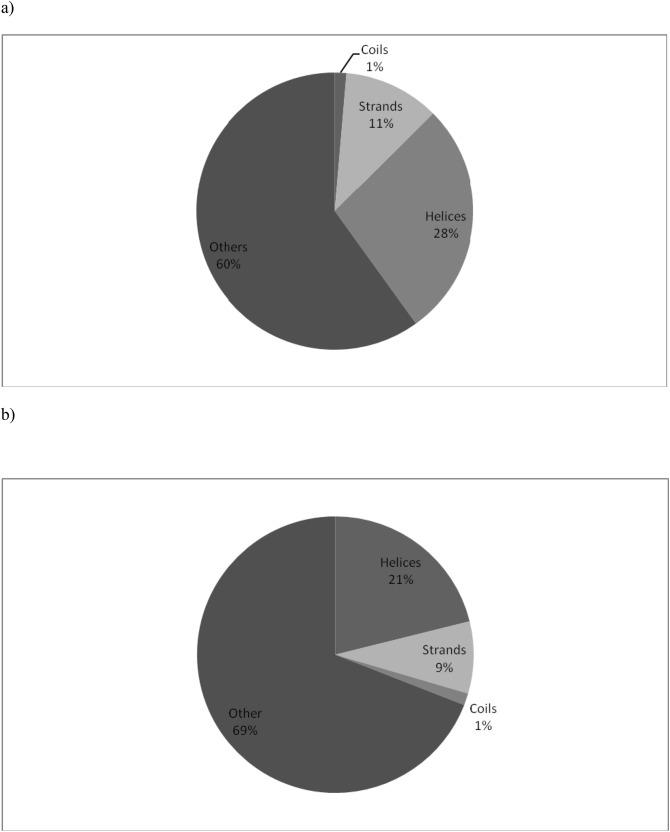
The analyses of 3967 representative proteins selected from the Protein Data Bank revealed the presence of 2803 pentapeptide and large palindrome sequences with known secondary structure conformation. These represent 2014 unique palindrome sequences. 60% palindromes are not associated with any regular secondary structure and 28% are in helix conformation, 11% in strand conformation and 1% in the coil conformation. The average solvent accessibility values are in the range between 0-155.28 Å2 suggesting that the palindromes in proteins can be either buried, exposed to the solvent or share an intermittent property. The number of residue neighborhood contacts defined by interactions ≤ 3.2 Ǻ is in the range between 0-29 residues. Palindromes of the same length in helix, strand and coil conformation are associated with different amino acid residue preferences at the individual positions. Nearly, 20% palindromes interact with catalytic/active site residues, ligand or metal ions in proteins and may therefore be important for function in the corresponding protein. The average hydrophobicity values for the pentapeptide and large palindromes range between -4.3 to +4.32 and the number of palindromes is almost equally distributed between the negative and positive hydrophobicity values. The palindromes represent 107 different protein families and the hydrolases, transferases, oxidoreductases and lyases contain relatively large number of palindromes.
Conflict of interest statement
Figures



References
-
- Ohno S (1992) Of palindromes and peptides. Hum Genet Dec 90:342–5. - PubMed
-
- Ohno S (1993) A song in praise of peptide palindromes. Leukemia 2:S157–9. - PubMed
-
- Marcin Hoffmann, Jacek Rychlewski (1999) Searching for palindromic sequences in primary structure of proteins. Computational Methods in Science and Technology 5: 21–24.
-
- Giel-Pietraszuk M, Hoffmann M, Dolecka S, Rychlewski J, Barciszewski J (2003) Palindromes in proteins. J Protein Chem 22:109–13. - PubMed
MeSH terms
Substances
LinkOut - more resources
Full Text Sources
Other Literature Sources
